
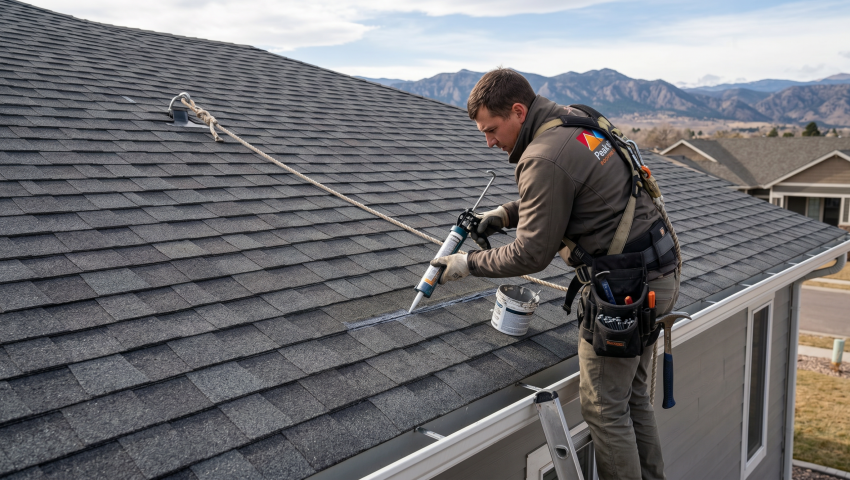
Most homeowners focus on price comparisons while missing critical warning signs. This guide reveals the evaluation process that prevents costly hiring mistakes.
Choosing the wrong roofer can turn a necessary home improvement into a financial nightmare that haunts you for years. Homeowners across Denver, Aurora, and Littleton regularly face inflated repair costs, voided warranties, and substandard work because they didn’t know what red flags to watch for during the hiring process. The difference between a successful roofing project and a disaster often comes down to spotting warning signs that most people miss entirely.
This guide walks you through six proven steps to evaluate roofing contractors before signing any agreement. You’ll learn how to verify credentials properly, interpret estimates accurately, and recognize the subtle indicators that separate experienced professionals from problematic operators. By the end, you’ll have the confidence to make an informed hiring decision that protects both your home and your budget.
Step 1: Research Local Licensing and Insurance Requirements
Understanding your area’s specific licensing requirements forms the foundation for evaluating any potential contractor. In Colorado, general contractor licensing varies significantly between municipalities, with cities like Denver requiring local business licenses while others operate under state-level regulations. This step involves checking both state and local requirements for your specific location, then using that knowledge to verify each contractor’s compliance status.
Skipping this research leaves you vulnerable to unlicensed operators who may lack proper training, insurance coverage, or accountability mechanisms. You’ll know this step is complete when you can clearly state what licenses and insurance minimums apply in your area, and you have the official verification methods ready to use. This groundwork makes the actual contractor verification process much more straightforward and reliable.
Step 2: Verify Credentials Through Official Channels
Many homeowners accept contractor-provided documentation at face value, but fake insurance certificates and expired licenses are surprisingly common in the roofing industry. Proper credential verification means contacting insurance companies directly and checking license status through official government databases rather than trusting photocopied documents. This step protects you from contractors who may have lapsed coverage or fabricated credentials entirely.
The verification process typically takes 15-20 minutes per contractor but can save thousands in potential liability issues. Watch for contractors who seem hesitant to provide policy numbers or license details, as legitimate professionals understand that verification is standard practice. Successful completion means you’ve confirmed active insurance coverage and valid licensing through independent sources.
Verification Essentials
- Insurance Verification: Call the insurance company directly using the policy number provided, confirm coverage amounts meet local minimums, and verify the policy remains active through your project completion date.
- License Status Check: Use official state or municipal databases to confirm license validity, check for any disciplinary actions or complaints, and verify the license category covers residential roofing work.
- Business Registration: Confirm the business is properly registered with your state’s Secretary of State office and check that the registered business name matches all provided documentation exactly.
Once you’ve verified credentials through official channels, you’ll have confidence that the contractor meets basic legal requirements for operating in your area. This verification step also demonstrates to the contractor that you’re an informed homeowner who takes proper precautions. With credentials confirmed, you’re ready to move into the more detailed evaluation of their actual work quality and business practices.
Step 3: Evaluate Written Estimates and Contract Terms
A detailed written estimate reveals more about a contractor’s professionalism and expertise than any sales presentation ever could. Vague estimates with line items like ‘roofing materials’ or ‘labor’ indicate either inexperience or intentional ambiguity that often leads to costly change orders later. Professional roofers provide specific material brands, quantities, and installation methods because they understand exactly what your project requires.
The estimate evaluation process also uncovers potential communication issues before they become project problems. Contractors who can’t clearly explain their pricing structure or provide detailed material specifications often struggle with project management and quality control. A thorough estimate should read like a roadmap that any qualified roofer could follow to complete your project successfully.
Here’s a comparison of estimate quality indicators that separate professional contractors from problematic ones.
| Professional Estimate | Warning Sign Estimate | Impact on Project |
|---|---|---|
| Specific material brands/models listed | Generic ‘roofing materials’ line items | Change orders and quality disputes |
| Detailed labor breakdown by task | Single ‘labor’ total with no details | Unclear scope and hidden costs |
| Realistic 5-7 day timeline | Promises 1-2 day completion | Rushed work and corner cutting |
| Written warranty terms included | Verbal promises only | No recourse for future issues |
| Permit and disposal costs itemized | All-inclusive pricing with no details | Surprise fees and legal issues |
Estimate Analysis
- Material Specifications: Look for specific brand names, model numbers, and quality grades rather than generic terms, ensuring the estimate includes underlayment, flashing, and ventilation components with exact specifications.
- Labor Breakdown: Verify that removal, installation, and cleanup are itemized separately with clear scope descriptions, and check that permit costs and disposal fees are explicitly included rather than buried in other line items.
- Timeline Details: Confirm the estimate includes realistic start and completion dates, weather contingency plans, and clear milestones for major project phases like material delivery and inspection scheduling.
- Warranty Terms: Review both manufacturer material warranties and contractor workmanship guarantees, ensuring coverage periods and claim procedures are clearly defined in writing rather than just verbally promised.
A comprehensive estimate analysis helps you identify contractors who understand project complexity and communicate clearly about their work process. This evaluation also provides the foundation for meaningful price comparisons since you’ll be comparing equivalent scopes of work. With estimate quality assessed, you can now focus on verifying the contractor’s actual track record and reputation in your community.
Step 4: Check References and Review Past Work
Contacting previous customers provides insights into a contractor’s work quality, communication style, and problem-solving abilities that no marketing material can convey. Focus on recent projects within the last two years, particularly those involving similar roofing materials and scope to your own project. Ask specific questions about timeline adherence, cleanup quality, and how the contractor handled any unexpected issues that arose during construction.
Weak reference responses or reluctance to provide contact information often signals quality or customer service problems. When contractors provide only glowing testimonials without specific contact details, it’s worth questioning whether these references represent genuine customer experiences. You’ll know this step is complete when you’ve spoken directly with at least three recent customers who can describe their experience in detail and would hire the contractor again.
Step 5: Assess Communication and Professionalism Standards
A contractor’s communication style during the sales process typically mirrors their approach throughout the entire project, making this evaluation critical for predicting your overall experience. Professional roofers return calls promptly, arrive on time for appointments, and provide clear explanations without high-pressure sales tactics. They also demonstrate knowledge of local building codes, weather considerations, and proper installation techniques relevant to Colorado’s climate conditions.
Poor communication patterns during initial interactions often escalate into project delays, misunderstandings, and frustration once work begins. Contractors who seem rushed, avoid direct questions, or pressure you to sign immediately typically continue these behaviors throughout the project. This assessment is complete when you feel confident about the contractor’s ability to keep you informed, address concerns promptly, and maintain professional standards under project stress.
Step 6: Establish Clear Project Expectations and Payment Terms
Many roofing disputes stem from misaligned expectations about project scope, timeline, and payment structure rather than actual work quality issues. Establishing clear agreements upfront prevents most common conflicts and ensures both parties understand their responsibilities throughout the project. This includes defining exactly what constitutes project completion, how weather delays will be handled, and what happens if additional work becomes necessary.
Payment terms deserve particular attention since they often reveal a contractor’s financial stability and business practices. Legitimate contractors typically request minimal upfront payment and structure remaining payments around project milestones rather than demanding large sums before work begins. Be especially cautious of contractors who request full payment upfront or seem eager to start work immediately without proper planning time.
Here are the key differences between fair payment structures and potentially problematic arrangements.
| Professional Payment Terms | Warning Sign Terms | Risk Level |
|---|---|---|
| 10% down, milestone payments | 50%+ upfront payment | High financial risk |
| Final payment after completion | Full payment before starting | No completion leverage |
| Written change order process | Verbal agreement for extras | Scope creep and disputes |
| Materials paid to supplier directly | All materials paid to contractor | Material quality uncertainty |
| Lien waiver provided with payments | No lien documentation | Legal complications possible |
Agreement Essentials
- Scope Definition: Document exactly what work is included, what materials will be used, and what areas of your property will be affected, ensuring cleanup responsibilities and protection of landscaping are clearly specified.
- Payment Schedule: Establish milestone-based payments tied to completed work phases, with no more than 10% down payment and final payment withheld until project completion and your satisfaction with the results.
- Change Order Process: Define how additional work will be priced and approved, requiring written authorization for any scope changes with detailed cost breakdowns before proceeding with modifications.
- Timeline Commitments: Set realistic start and completion dates with weather contingency provisions, establishing clear communication protocols for any schedule changes and defining what constitutes acceptable delay reasons.
Clear project expectations and fair payment terms protect both you and the contractor while establishing the foundation for a successful working relationship. These agreements also provide recourse if disputes arise later, since everything is documented in writing rather than relying on verbal understandings. With these elements in place, you’re ready to move forward with confidence in your contractor selection and project planning process.
Making Your Final Contractor Decision
You now have a systematic approach to evaluate roofing contractors that goes far beyond simple price comparisons. This process helps you identify professionals who combine technical expertise with solid business practices, reducing your risk of project problems and ensuring quality results. The time invested in thorough contractor evaluation typically saves both money and stress compared to dealing with issues that arise from hasty hiring decisions.
When you’re ready to move forward with your roofing project, consider working with experienced professionals who understand Colorado’s unique climate challenges. Our residential roofing services team brings proven expertise to every project, from initial assessment through final inspection. Whether you need help with insurance claims or want to explore metal roofing options, we’re here to guide you through the process with transparency and professionalism.
Author
JJ Hedden is the owner of Peak to Peak Roofing with 15 years of experience helping Colorado homeowners navigate the contractor selection process. His perspective on avoiding hiring pitfalls comes from witnessing both successful projects and costly mistakes throughout the Denver metro area. JJ’s approach emphasizes thorough vetting and clear communication to ensure homeowners make informed decisions about their roofing investments.