
Homeowner Resource
Healing Your Roof
You have spotted a leak, a stain, or storm damage. Now comes the part most homeowners find hardest: deciding what to actually do about it, and who to trust with the answer.
- Repair vs. replacement logic
- Insurance and tax credit help
- Step by step process
Certified, Accredited, And Reviewed







Start With A Certified Inspection
When you have identified a roof leak, tile discoloration, or any other sign of damage, there is really only one next step: bring in a certified roofing professional. A complimentary inspection assesses the problems and determines whether they can be fixed or whether a replacement is in order.
The value of that inspection is not the opinion at the end. It is the evidence: photographs of each finding, notes on where damage is concentrated, an attic evaluation, and a ventilation assessment. That record is what lets you compare bids honestly, and it is what an insurance adjuster will want to see if a claim is involved.
Be cautious of anyone who reaches a replacement conclusion without going into the attic or getting on the roof. A diagnosis made from the driveway is a sales pitch, not an assessment.
Repair, Restore, Or Replace
Many roofing problems can be repaired and many stains can be fixed. The decision comes down to whether the failure is local or systemic.
Targeted Repair
Right when damage is confined to specific details: a pipe boot, a run of step flashing, a wind-lifted section, or a small area of impact. The rest of the roof still has real service life.
Partial Slope Work
Sometimes one elevation takes the brunt of a storm while the others are untouched. Replacing that slope restores protection without paying for a full tear-off.
Full Replacement
When the consensus is that the roof is no longer working properly, replacing it is an important investment in preserving the overall value of your home rather than money spent on borrowed time.
Deck Repair First
If moisture has already reached the sheathing, that has to be corrected before any new covering goes on. Skipping it guarantees the new roof fails early.
Ventilation Correction
Undersized intake or exhaust shortens shingle life and drives ice dams. Fixing airflow during the project costs little and changes how long the new roof lasts.
Preventive Maintenance
Sealant refresh, boot replacement, and debris clearing on a sound roof are the cheapest work you will ever do on your house.
Insurance, Tax Credits, And Paying For The Work
As you begin making these decisions, remember that your homeowner's insurance policy may cover a portion or all of the costs when the damage came from a covered event such as hail or wind. Age-related wear is generally not covered, which is one more reason a documented inspection matters: it establishes what happened and when.
There are also tax credits and utility savings available for installing an energy efficient roof, including impact-rated and reflective products in some cases. Those incentives change from year to year, so verify current terms before counting on them.
We specialize in helping customers walk through this process, including meeting the adjuster on site and filling out insurance company paperwork. Having the same photo evidence in front of both parties keeps the scope conversation grounded in what is actually on the roof.
- Storm damage claims are strongest when filed with dated photo documentation
- Deductibles apply per claim, so understand your policy before you file
- Ask whether your policy is replacement cost value or actual cash value
- Impact-rated shingles can earn ongoing premium discounts in hail regions
- Get financing terms in writing before signing anything on a first visit
What The Project Actually Looks Like
A well-run replacement is predictable. Here is the sequence.
1. Inspection And Scope
Full roof and attic assessment with photos, followed by a written scope that states materials, quantities, and what is and is not included.
2. Materials And Scheduling
Color and product selection, permit filing, and a delivery and install date confirmed in writing rather than left open ended.
3. Property Protection
Tarps over landscaping, plywood at vulnerable surfaces, and equipment staged to keep driveways and walkways usable.
4. Tear-Off And Deck Review
Old covering removed down to the deck so sheathing can be inspected. Any soft or damaged panels are documented and replaced.
5. System Installation
Ice and water shield, underlayment, drip edge, new flashing, starter course, field shingles, and ridge ventilation installed in the correct order.
6. Cleanup And Final Walk
Magnetic sweep of the property, debris hauled, and a walkthrough with photos of the finished work plus your warranty documentation.
Do Not Underestimate Your Roof
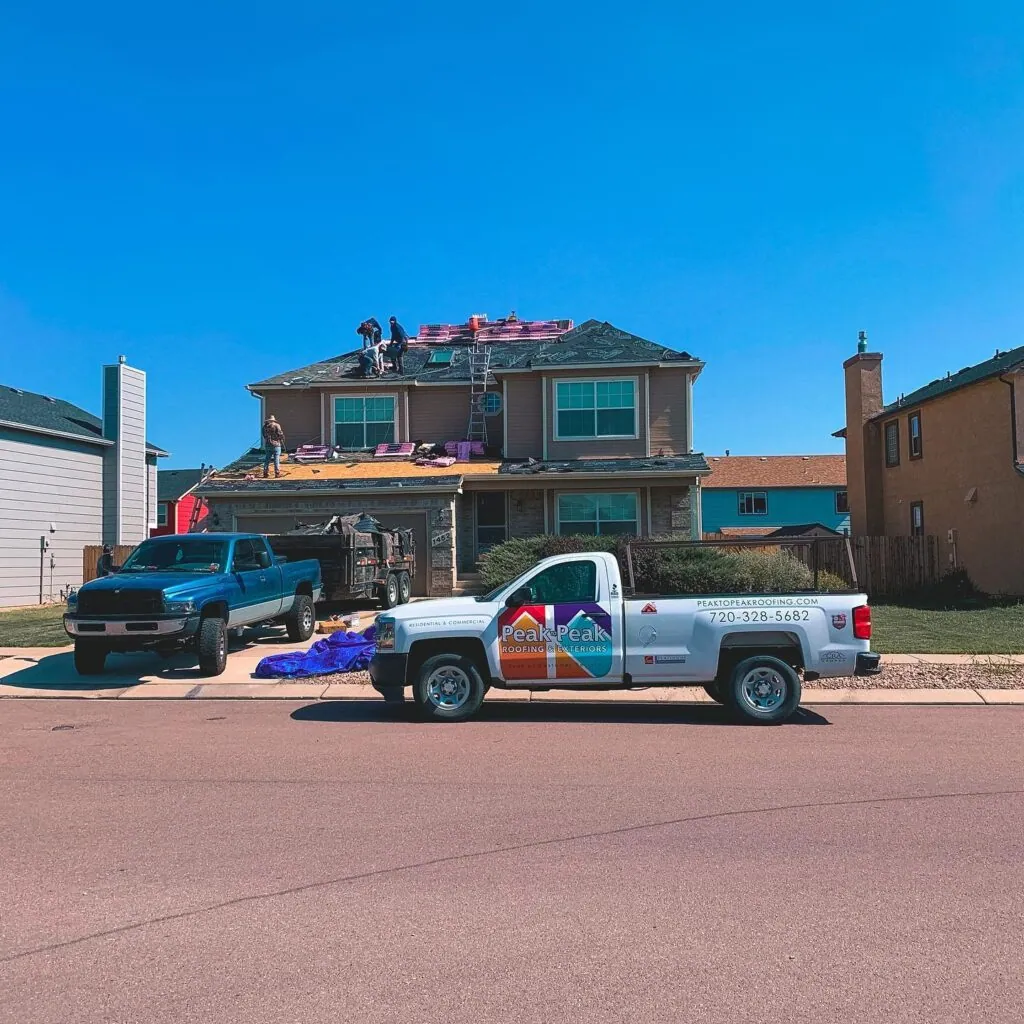
Peak to Peak Roofing & Exteriors recommends that you do not underestimate your roof, and that you make sure it really has you covered. By prioritizing maintenance and repair, you maintain the overall good health and ultimate value of your home.
A roof handled proactively is a maintenance line item. A roof handled reactively becomes a structural project with interior damage attached. The difference between the two is usually one inspection scheduled at the right time.
Frequently Asked Questions
Ready To Fix It Properly?
Start with a free inspection and a written recommendation that separates what is urgent from what can wait.