
Homeowner Resource
Is Your Roof Healthy?
It is easy to take your roof for granted. Most people know very little about it until something goes wrong. We believe in prevention as much as repair, and diagnosing a sick roof before the people inside notice any symptoms is where experience really pays off.
- Know the parts
- Seasonal self-check
- Weather and time

Certified, Accredited, And Reviewed






The Two Enemies Of Roof Health
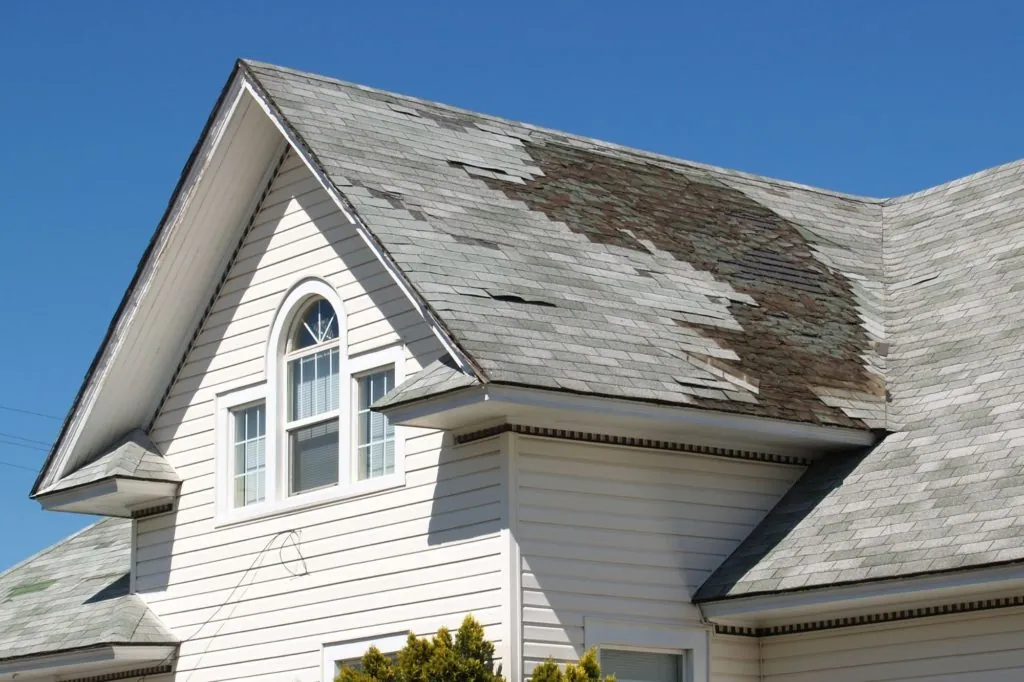
Weather and time are what wear a roof out. Everything else is a variation on those two. In Colorado both work faster than the national averages that manufacturers use to set warranty periods.
Weather here means intense high altitude UV, hail several times a season in the worst years, wind events that test every edge and ridge, and freeze and thaw cycling that can run through a full expansion and contraction swing in a single February day.
Time compounds all of it. Sealant strips lose tack, fasteners work loose, flashing separates at the joints, and the asphalt binder in shingles grows brittle. A roof does not usually fail at one dramatic moment. It accumulates small compromises until a storm finds one of them.
Get To Know Your Roof
You do not need to be a roofer to talk to one intelligently. These are the parts your contractor will name.
Flashing
Pieces of sheet metal used to cover and protect joints and angles, such as where a roof meets a wall or chimney, specifically to prevent leakage.
Roof Vent
A device used to ventilate an attic or roof cavity so heat and moisture can escape rather than accumulate against the sheathing.
Ridge Vent
A vent installed at the peak of a sloped roof that allows warm, humid air to escape the attic continuously along the ridge line.
Hip
A roof with sloping ends and sides, meeting at external angles rather than terminating in a vertical gable wall.
Eave
The overhanging lower edge of a roof, and the place where ice dams form when attic airflow is out of balance.
Fascia
Any relatively broad, flat, horizontal surface such as the outer edge of a cornice. On most homes it is the board the gutter hangs from.
Soffit
The underside of an architectural feature such as an eave or overhang, and the location of the intake vents that feed attic airflow.
Felt Underlayment
An extra layer of protection installed on top of the sheathing and beneath the roof covering as a secondary water barrier.
Drip Edge
A piece of metal or plastic at the roof edge used to control runoff and direct it into the gutter instead of behind the fascia.
Rafter
Any of a series of sloped timbers supporting the sheathing and covering of a roof, running from ridge down to the exterior wall.
Rake
The sloped sides of a gable end, and one of the first places wind tends to lift shingles when the edge was not sealed correctly.
Valley
The V-shaped channels that run up and down the folds of a roof, carrying the highest water volume of any area on the structure.
A Seasonal Roof Self-Check
Twice a year and after every major storm, spend fifteen minutes on this. Stay on the ground.
Keep the photos. A dated record of what your roof looked like before a storm is one of the most useful things you can have during a claim, and it costs you nothing but the time.
- Walk the perimeter with binoculars and look for lifted, curled, cracked, or missing shingles
- Check the gutters and downspout outlets for accumulated shingle granules
- Look at the flashing around chimneys, skylights, and wall transitions for gaps or rust
- Sight down the ridge line from a distance to check for sag or waviness
- Inspect soffit vents for paint, insulation, or debris blocking intake airflow
- Go into the attic with a flashlight and look for daylight, staining, or damp insulation
- Note any interior ceiling stains and photograph them with the date
Signs Your Roof Is Not Working At Peak Capacity
Some symptoms show up on the roof. Others show up on your utility bill or in how the house feels.
Uneven Upstairs Temperatures
Rooms directly under the roof running hot in summer often points at attic ventilation or insulation, not the HVAC system.
Recurring Ice Dams
Ice forming at the eaves every winter means warm attic air is melting snow that refreezes at the cold edge. That water can be forced back under the shingles.
Rising Energy Bills
Wet or compressed attic insulation loses most of its thermal value, and the roof assembly is usually the reason it got wet.
Musty Attic Odor
A damp smell near the attic hatch signals trapped moisture, and trapped moisture eventually becomes deck rot.
Frequently Asked Questions
Find Out Where Your Roof Actually Stands
A free inspection gives you a documented baseline, whether the answer is a repair, a replacement, or nothing at all.