





Residential roof replacement in Aurora by Peak to Peak Roofing
Aurora Roofers

Aurora Roof Repair and Replacement From Del Mar Parkway Ranches to Southlands Rooflines

Roofing in Aurora starts with understanding the house, not assuming every storm leaves the same damage. Peak to Peak Roofing brings repair, inspection, hail documentation, insurance support, metal roofing and replacement into one property-specific assessment. Peak to Peak Roofing has worked as a Denver and Aurora roofing company since 2008.

  • Start with the source. A ceiling stain in Original Aurora and lifted ridge shingles in a newer subdivision can need very different work. We assess flashing, roof surfaces and accessible attic conditions before recommending a repair or broader replacement.
  • Keep storm evidence specific. Aurora hail inspections connect dated photographs, affected roof slopes and damage to vents or gutters with the materials actually installed, without treating every dent as proof of covered roof damage.
  • Plan around the property. Aurora Building Division requirements, available HOA guidelines, steep roof access and connections to low-slope sections belong in the conversation before materials are ordered.
(720) 893-3823
4.9/5 average rating from 500+ locals

Certified, Accredited, And Reviewed

Peak to Peak Roofing certified contractor badge
C12 Business Forums member badge
A+ Better Business Bureau rating badge
Owens Corning Platinum Preferred Contractor badge
Google customer review rating badge
Peak to Peak Roofing accreditation badge

Customer Testimonials

What Aurora's Roof Setting Can Tell You

Aurora includes older, lower-profile houses, attached housing and newer production homes with taller rooflines. Their problems can look similar from the driveway while starting in different places.

Older ranches can need attention below the visible shingles
Original Aurora, Del Mar Parkway and Hoffman Heights include post-war houses where roof history deserves close attention. Lower-pitch surfaces, older decking and wall flashing can change a repair that initially appears limited to a few shingles. Tell us about previous reroofs, recurring stains and any known attic-access limitations.
A central Aurora leak may involve more than one roof surface
Aurora Hills, Village East, Heather Ridge and Expo Park include two-story homes, townhome rows and patio-home settings. A shingle slope can meet a wall or a lower entry roof, creating transitions that deserve separate inspection. Water appearing below that junction does not automatically identify the entry point.
Newer homes still need wind and hail checks
Southlands, Saddle Rock, Tallyn's Reach and nearby planned communities include steeper rooflines and exposed slopes. A relatively recent installation can still have lifted tabs, damaged ridge components or an isolated flashing problem after a storm. Northeast neighborhoods such as Painted Prairie and Murphy Creek also face open-plains conditions.
Hail marks do not all mean the same thing
Dents in gutters and vents help establish where impacts occurred, but they must be interpreted alongside the roof surface. Older galvanized fixtures and softer metal components found on newer homes can show impacts differently.
An attic stain can point to a roof leak or an interior moisture issue
An exterior inspection and an accessible attic check answer different questions. Failed flashing can admit rain, while ventilation or air-leakage problems can contribute to moisture below otherwise intact roofing. Finished attics and low-clearance access in older Original Aurora houses may limit what can be observed.

You do not need to climb onto the roof to prepare for an assessment. Ground-level photographs, the date you first noticed a problem and available repair records are useful starting points. If water is entering the house, describe the active condition when you contact us so the immediate concern is clear. When the source of a Aurora leak is still unclear, a professional roof leak repair service paired with a complete roof inspection and condition report helps separate the symptom from the cause.

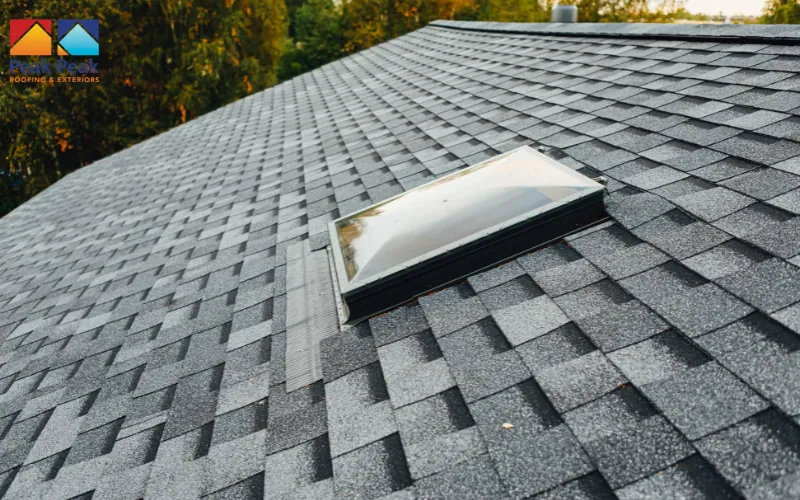
Skylight flashing detail on an Aurora roof

One Aurora Assessment Instead of Six Separate Pitches

Repair, inspection, hail review and replacement overlap on a real house. A good recommendation explains where they connect and where they do not. A small flashing defect should not become a replacement proposal simply because a storm passed nearby.

  • For Original Aurora houses, the conversation starts with the existing assembly and repair history. Older roof planes can have details that need individual attention, including nonstandard eave geometry or previous flashing changes.
  • For central Aurora's attached and closely grouped housing, ownership and access information can be as important as the visible defect. Tell us whether an association manages any roof areas and whether the affected surface connects to a neighboring unit.
  • For steep-pitch homes around Southlands, Blackstone and the reservoir area, roof geometry affects inspection access, material planning and the number of transitions in the work. Shingles, standing seam accents and the connection between them need compatible water-shedding details.
  • For Painted Prairie, Murphy Creek, Adonea and Horizon Uptown, storm evidence should stay tied to the specific property. Newer construction does not establish that damage is absent, and a neighboring claim does not establish that damage is present.
  • For an insurance-related project, the contractor's findings and the insurer's coverage decision have different roles. We can document roof conditions and explain the proposed construction scope. Your insurer determines coverage under your policy.

Your estimate should explain what this particular house needs and what remains uncertain. After a Aurora storm, our hail damage and insurance claim process covers the assessment, the adjuster meeting and the claim paperwork together.

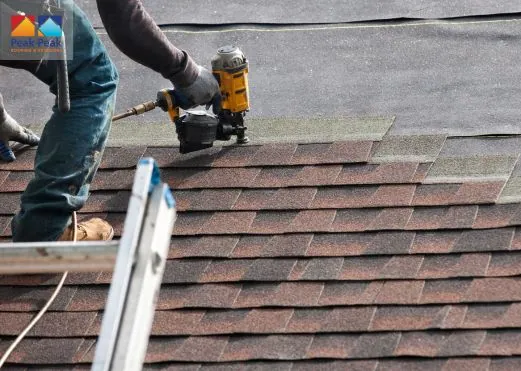
Shingle repair installation on an Aurora home

A Roofing Scope That Fits Your Aurora Property

The starting point may be a leak, a recent storm, a material change or a roof nearing replacement. These are connected decisions, but they should remain distinguishable in the written scope. We bring the inspection findings, local requirements and material choices together before treating the project as ready for installation. Aurora owners weighing a material change can compare standing seam metal roofing systems with a full roof replacement plan.

01

Inspection With Access Limits Recorded

We review visible roof conditions, flashing, drainage and accessible interior evidence. Original Aurora's smaller attic openings can limit an interior check, while taller Southlands rooflines can complicate exterior access. An unseen condition is not the same as a confirmed sound condition, so available observations are documented clearly.
02

Repair Where the Surrounding Roof Supports It

A repair can address damaged shingles, a failed penetration detail or a localized roof-to-wall problem. Around Del Mar Parkway, that may mean examining older step flashing alongside the visible defect. In newer neighborhoods, wind damage at hips and ridges may deserve particular attention.

03

Hail Findings Organized by Roof Area

Storm documentation brings together roof-surface observations, affected slopes, photographed test areas where appropriate and impacts on related components. We distinguish observed damage from assumptions about a storm's reach, so a homeowner or adjuster can understand what was actually found at this property.

04

Insurance Support Tied to Construction

Photographs, measurements and a clearly described repair or replacement scope can support an adjuster's review. Where an estimate omits work that appears necessary, the construction explanation should identify that difference rather than promise a supplement will be accepted.

05

Metal Considered as a Complete Assembly

Standing seam roofing or metal accents need more than a preferred finish. Exposed slopes around Southlands and Murphy Creek make panel movement, fastening and flashing details part of the discussion. Check available HOA guidelines before selecting a profile.

06

Replacement With Hidden Conditions Explained

A replacement scope should address removal, deck inspection, underlayment, flashing, ventilation and the selected roof covering. On older Aurora houses, the decking condition may remain partly unknown until existing materials come off. The estimate should explain how additional findings are documented and discussed.

Details That Matter Before Aurora Roof Work Begins

A roof covering is only part of the assembly. Aurora's hail and wind exposure makes product selection important, while winter moisture and strong sun make the supporting details worth equal attention. An impact rating does not eliminate damage risk, and a new surface does not correct every existing attic or drainage problem.

What to Resolve in the Written Scope

  • Deck condition and the existing layers. For older ranches near Del Mar Parkway or Hoffman Heights, ask how the contractor will assess the existing base and handle damaged sheathing discovered during removal. Current Aurora reroof requirements should be checked for the actual project rather than copied from an older estimate.

  • Flashing at walls, chimneys and penetrations. A sound shingle field can still leak at a transition. Central Aurora's roof-to-wall junctions and lower entry roofs deserve attention alongside the main slopes. The scope should identify which flashing components are being repaired or replaced.

  • Ventilation and accessible attic evidence. Deeper attics in newer planned communities and restricted access in older homes create different inspection conditions. Ask what was observed and what could not be reached. Do not assume that adding a ridge vent alone resolves an unexplained moisture problem.

  • Impact ratings and material specifications. Class 4 impact-rated shingles are an option to evaluate for Aurora's hail exposure, not a promise of a damage-free roof. If you are considering an insurance discount, ask your insurer whether the exact product qualifies under your policy before relying on any savings.

  • Metal movement, valleys and mixed materials. Open, sun-exposed lots around Southlands and Murphy Creek bring thermal movement into the panel-detail discussion. Where standing seam accents meet shingles, the transition needs to work as part of the complete roof.

  • Permit, association and closeout responsibilities. Confirm applicable requirements with Aurora Building Division and check whether an HOA reviews the selected material, color or profile. These are separate checks, not interchangeable approvals.

These questions also make competing estimates easier to compare. A short proposal can omit important differences in flashing, ventilation or hidden-deck procedures. The useful comparison is the work and materials included for your roof, with exclusions and unresolved conditions stated plainly. Single-family owners in Aurora can explore our residential roofing systems and materials, while building owners can review commercial and low-slope roofing options.

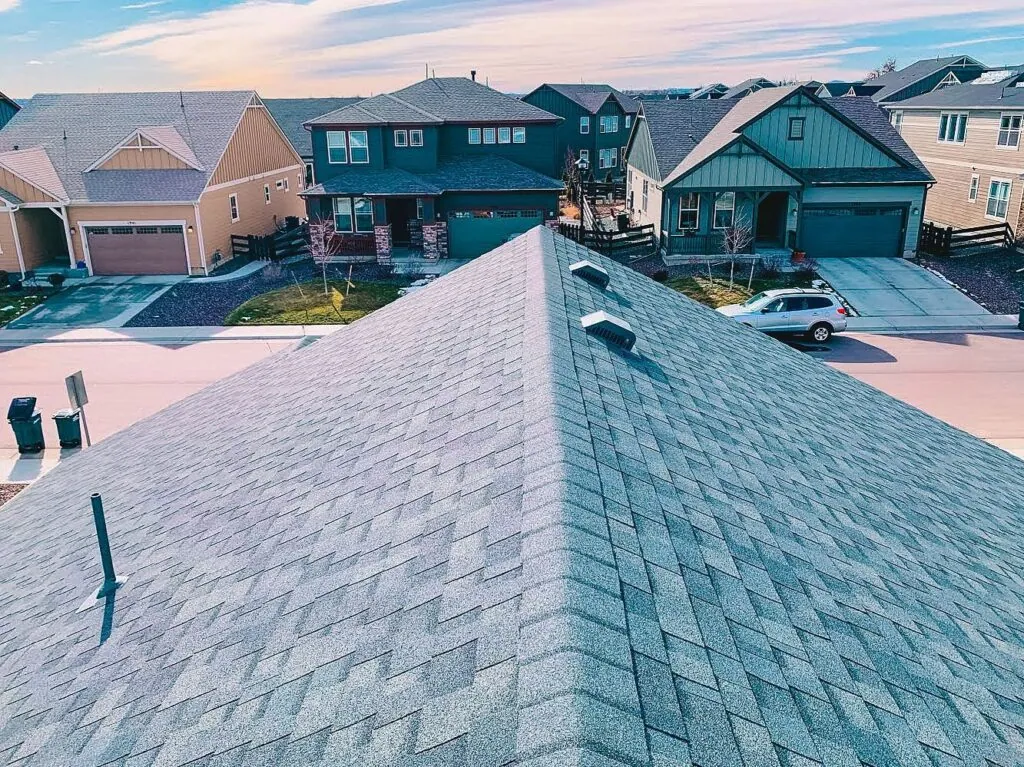
Shingle roof and ridge ventilation detail in Aurora

From the First Aurora Roof Concern to Closeout

The process should make the next decision clearer at each stage. You may begin with an active leak, storm photographs or a planned change from shingles to metal. We use that starting information to focus the assessment, then connect the findings to the proposed work, local requirements and records you may need afterward.

Describe the property and what changed
Share your Aurora neighborhood, the approximate roof age if known and the reason for the inquiry. Mention steep rooflines, limited attic access, attached units or association involvement. Available photographs and previous estimates can help establish context.
Review observations before choosing the scope
The findings should identify the affected components and explain whether the recommendation is a localized repair, further investigation or replacement. Ask which conclusions are supported by visible evidence and which depend on access or removal.
Separate insurer review from project approval
If you are using insurance, keep the construction scope, the adjuster's estimate and your policy questions distinct. Ask your insurer about coverage, deductibles, depreciation and required completion documents. No amount of photography guarantees a particular claim outcome.
Resolve material and local review questions
Before ordering, compare the proposed shingle or metal system with the roof's geometry and any available association guidelines. Tallyn's Reach, Saddle Rock and other planned communities are settings where checking architectural review needs is prudent.
Keep changes and completion records visible
During removal, concealed decking or flashing conditions may alter the work. Ask how those findings will be photographed, priced and approved before additional work proceeds. At completion, review the agreed scope, applicable inspection status and available product or warranty records.

Scheduling depends on the confirmed scope, access, materials, weather and any required reviews. The project conversation should identify the next dependency and who is responsible for it.

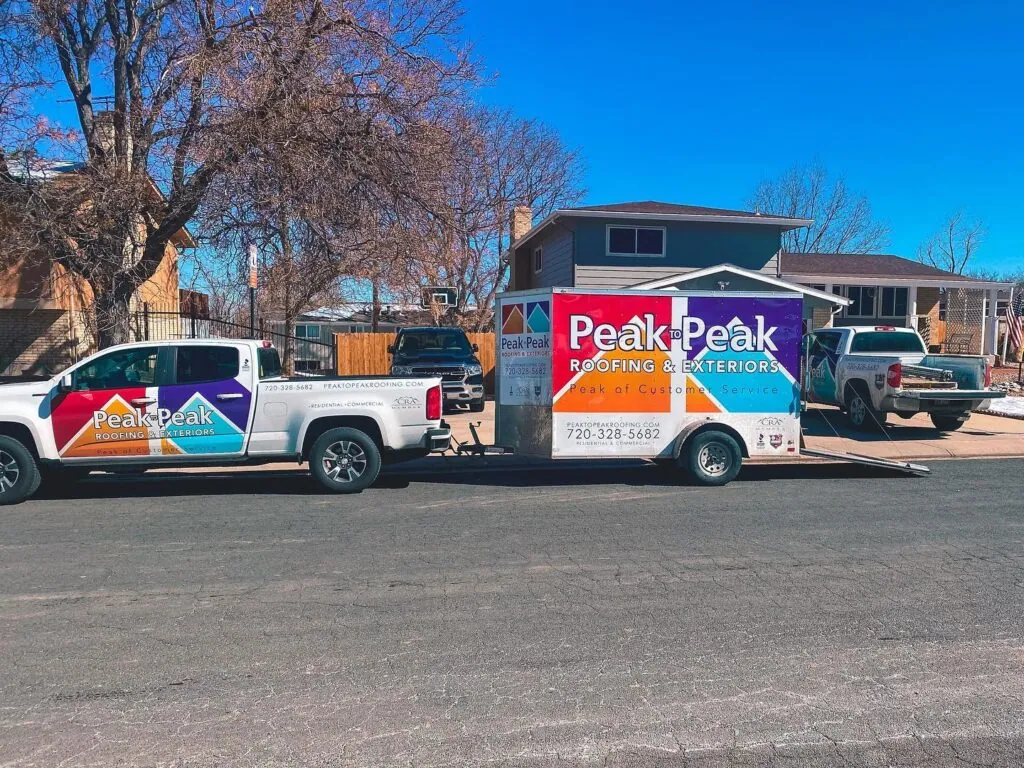
Peak to Peak Roofing vehicles serving Aurora

Service Area Coverage

Our Aurora roofing coverage brings the same property-specific approach to older neighborhoods and newer growth areas. The four neighborhood groups below describe local settings, not fixed assumptions about every house.

  • Original Aurora and North Aurora include Del Mar Parkway, Fitzsimons and Hoffman Heights, with post-war ranches and smaller bungalows near Del Mar Park and the Anschutz Medical Campus. Roof history, older flashing and attic access help focus the inspection.
  • Central Aurora includes Aurora Hills, Village East, Heather Ridge and Expo Park. Around Utah Park and The Gardens on Havana, two-story houses and attached housing bring roof-to-wall details, lower entries and shared responsibilities into the planning conversation.
  • Southeast Aurora includes Tallyn's Reach, Southshore, Saddle Rock and Beacon Point around the reservoir and Southlands area. Steeper rooflines, exposed slopes and available association guidelines help shape access planning and comparisons between shingles and metal accents.
  • Northeast Aurora includes Painted Prairie, Murphy Creek, Adonea and Horizon Uptown. Near Buckley Space Force Base and the Plains Conservation Center, newer residential and small commercial settings can combine shingle roofs with low-slope sections.

Provide the property address rather than relying on a neighborhood name or ZIP code to establish project requirements. Confirm the applicable permitting authority and any private review obligations for that address. For official requirements, see the City of Aurora Building Division permits page and the Aurora reroofing and deck sheathing requirements.

Aurora Roofing by Neighborhood

Older ranches, planned communities and exposed plains settings call for different roof checks.

Area & Neighborhoods

Original and North AuroraDel Mar Parkway, Hoffman Heights, Fitzsimons, near Anschutz Medical Campus

Target ZIP Codes

ZIP 80010, 80011, 80045

Typical Homes & Roof Setting

Post-war ranches and bungalows with low-pitch roofs, older decking and earlier reroofs.

Details to Share

Roof age, past reroofs, recurring ceiling stains and how the attic is reached.

How It Shapes the Roof Work

Older wall flashing and decking are checked before a shingle repair is called limited.

Local Rule or Constraint

Citywide: Aurora Building Division sets reroof permit and inspection requirements.

Area & Neighborhoods

Central AuroraAurora Hills, Village East, Heather Ridge, Expo Park, near Utah Park and The Gardens on Havana

Target ZIP Codes

ZIP 80012, 80014, 80017

Typical Homes & Roof Setting

Two-story homes, townhome rows and lower entry roofs that meet exterior walls.

Details to Share

Where water shows inside, and whether an association manages any shared roof.

How It Shapes the Roof Work

Roof-to-wall transitions and eave drainage are inspected alongside the main slopes.

Local Rule or Constraint

Shared or association roofs may need owner and HOA sign-off before work is scheduled.

Area & Neighborhoods

Southeast AuroraTallyn's Reach, Saddle Rock, Southshore, Beacon Point, near Aurora Reservoir and Southlands

Target ZIP Codes

ZIP 80013, 80015, 80016

Typical Homes & Roof Setting

Steep, complex planned-community roofs on open slopes exposed to plains hail and wind.

Details to Share

Storm dates, ground-level photos and any HOA material or color guidelines.

How It Shapes the Roof Work

Steep access is planned up front, and impact-rated shingles or metal accents are compared for the roofline.

Local Rule or Constraint

HOA architectural review is separate from the city permit and is checked before ordering.

Area & Neighborhoods

Northeast AuroraPainted Prairie, Murphy Creek, Adonea, Horizon Uptown, near Buckley Space Force Base

Target ZIP Codes

ZIP 80018, 80019

Typical Homes & Roof Setting

Newer homes and small commercial buildings, some pairing shingles with low-slope sections.

Details to Share

Storm dates, lifted ridge or hip shingles and the location of any flat sections.

How It Shapes the Roof Work

Damaged slopes are documented individually, and shingle-to-membrane transitions get their own review.

Local Rule or Constraint

A newer roof still follows Aurora permit and final-inspection steps when replaced.

Serving You From Our Denver Headquarters

Located at 4155 E Jewell Ave #1100, Denver, CO 80222. Our team provides storm damage assessments and Xactimate insurance documentation across every Aurora ZIP code.

Call (720) 893-3823

Nearby Communities We Also Serve

Same crews, same permit process, dispatched across the Front Range.

Frequently Asked Questions

JJ Hedden, founder and owner of Peak to Peak Roofing & Exteriors

JJ Hedden

Founder & Owner

Meet The Owner

JJ Hedden, Founder & Owner

JJ Hedden founded Peak to Peak Roofing & Exteriors so Aurora property owners would have a roofer who is still reachable after the truck pulls away. He came up through inspections, claims and installations, so the standards our crews work to are the ones he set on roofs himself.

He still reads the inspection photos, checks ventilation and flashing before a scope goes out, and meets adjusters on the complicated claims. In Aurora that matters, because the same storm can total one roof and leave the one next door fine.

  • 16+ years in Colorado roofing
  • Reviews scopes before work starts
  • Hands on with every insurance claim
  • Family owned, Denver based
Aurora Roofing Assessment

Start With What Your Aurora Roof Actually Needs

Tell us about the leak, storm concern or planned roof change. Share the neighborhood, available roof history and any access or association details. We can discuss an assessment that connects observed conditions with repair, hail documentation, metal options or replacement.

Property-specific findingsClear repair or replacement scopePermit and material questions identified
Happy Peak to Peak Roofing homeownerHappy Peak to Peak Roofing homeownerHappy Peak to Peak Roofing homeownerHappy Peak to Peak Roofing homeowner

4.9/5 from happy homeowners

Limited Time Offer!

● Inspectors Available Today in Aurora

Discuss Your Aurora Property

Bring your roof questions, existing photographs or previous repair records. An assessment provides a starting point for the next decision.

OR CALL DIRECTLY
(720) 893-3823
G

"Peak to Peak was great, they helped me with a repair on my roof. Helped me to extend the life of my roof."
- Luke Howard

Free inspection, same day answers

Call Now