TPO and PVC Membrane Maintenance
Our technicians probe heat-welded seams on TPO roofing systems, reseal terminations, and repair penetration flashings using manufacturer-approved methods that preserve warranty coverage instead of quietly voiding it.


Commercial roof maintenance programs fail when they ignore warranty terms and membrane-specific requirements. Peak To Peak Roofing structures maintenance around what your manufacturer actually requires, using infrared moisture mapping and documented condition scoring so Denver property managers can plan capital budgets instead of reacting to leaks. Programs that feed condition data into a building's capital reserve study give facility managers a maintenance record and a forecasting tool in one package, instead of two disconnected processes managed by different vendors.
Certified, Accredited, And Reviewed




Most commercial roof failures are not sudden. They are a small thing nobody looked at. A twice yearly cycle plus post storm checks catches almost all of them while they are still cheap.
| When | What gets done | What it prevents | Why this timing |
|---|---|---|---|
| Spring, after the last freeze | Full walk, seam probe, drain and scupper clearing, flashing and pitch pocket check, winter damage documentation. | Ponding, drain backup, and seam separations opening up in summer heat. | Freeze and thaw cycling over winter is the hardest thing a Colorado membrane goes through. |
| Fall, before first snow | Clear debris, verify drainage, reseal penetrations, check equipment curbs and gas lines, note any traffic damage. | Ice dams at drains, and small openings turning into winter leaks you cannot repair in the snow. | Repairs are far easier and cheaper in dry fall weather than in January. |
| After every severe hail or wind event | Targeted damage inspection with photo documentation and hail size reporting. | Missed insurance deadlines and hidden bruising that leaks months later. | Carrier policies require prompt notice, and documented storm dates support the claim. |
| After any rooftop trade works on the roof | Inspect the work area for punctures, dropped fasteners and displaced walkway pads. | HVAC and solar service punctures, which are a leading source of avoidable leaks. | Damage from other trades is usually recent, small and easy to fix if caught. |
| Quarterly on high traffic roofs | Walkway pad check, grease and chemical exhaust inspection, drain screens. | Membrane degradation from kitchen grease and repeated foot traffic. | Restaurants and food service buildings age their roofs faster than office buildings. |
Cadence follows National Roofing Contractors Association guidance to inspect low slope roofs at least twice per year and after severe weather events. Most manufacturer warranties also require documented periodic maintenance, and gaps in that record can jeopardize a warranty claim. We keep the inspection file for you so the record exists when you need it.
Warranty compliance, moisture detection, membrane-specific protocols, and condition scoring determine whether a commercial roofing maintenance program protects the asset or just documents its decline. Each program starts with measurement, not a generic checklist.
Maintenance programs only hold value when the contractor is still standing behind them years later. Peak To Peak Roofing brings verified credentials and Front Range commercial work since 2008 to every program.
Chris had two commercial roofs redone after deferred maintenance let isolated failures spread. Ryan moved to a scheduled program after his replacement so the new assembly stays inside warranty terms. Programs cover single-ply, built-up, drainage, and storm response, scaled to building count and roof age. Portfolio clients with multiple properties often ask for consistent report formatting across buildings so the data rolls up cleanly into a single capital forecast rather than a stack of unrelated PDFs.
Our technicians probe heat-welded seams on TPO roofing systems, reseal terminations, and repair penetration flashings using manufacturer-approved methods that preserve warranty coverage instead of quietly voiding it.
We inspect lap adhesion, restore base flashings, and address granule loss and surface degradation with compatible materials matched to the existing assembly chemistry.
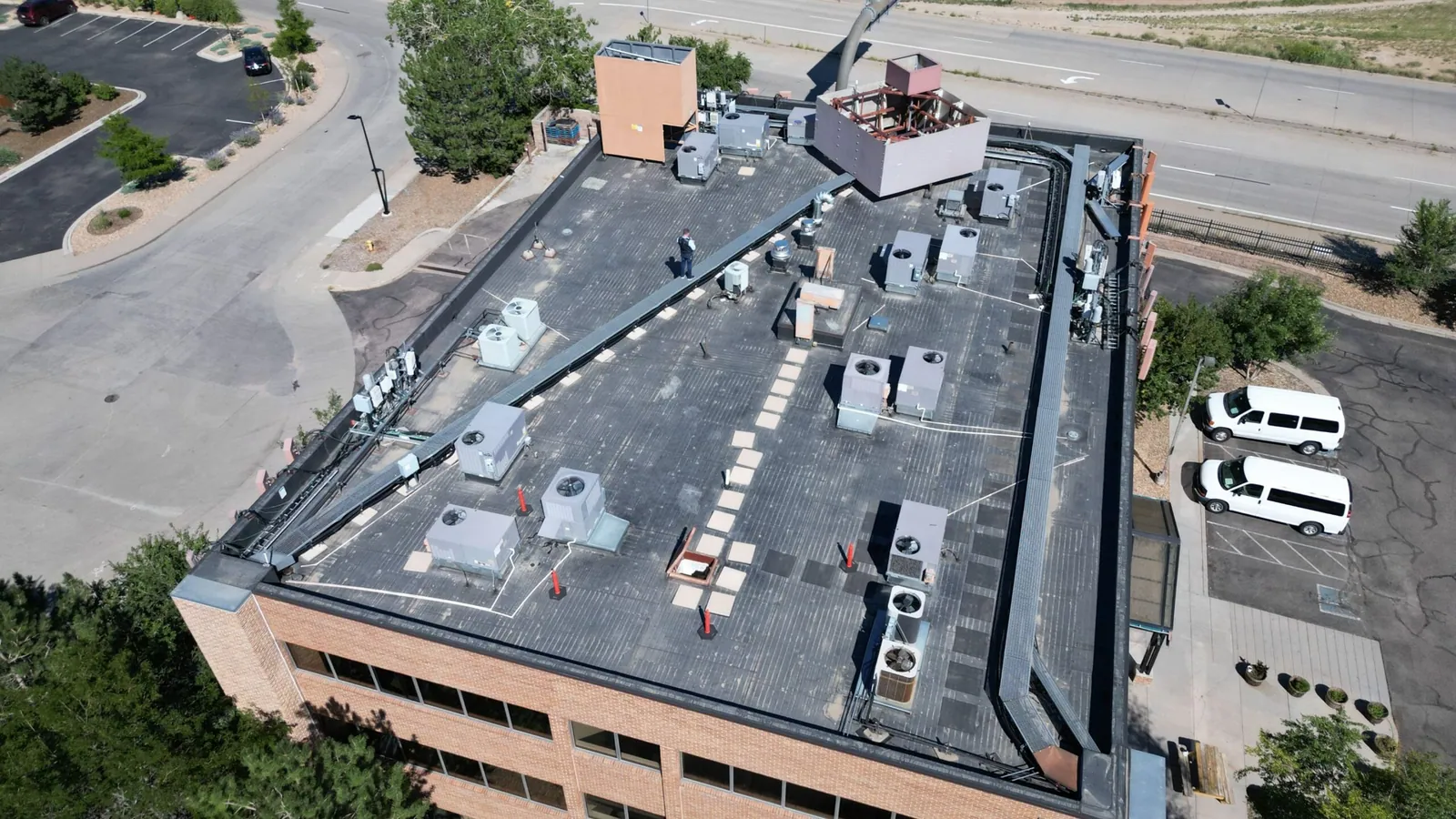
Our crews clear drains, scuppers, and gutters each season and document ponding zones, correcting slope deficiencies with tapered insulation before standing water breaks down the membrane.
We perform documented hail and wind inspections after major Front Range storms, and if damage requires urgent stabilization our commercial emergency roof services crew can respond, capturing photo evidence and condition notes that support insurance claims filed within policy deadlines.
A maintenance visit that produces no documentation produces no value. The standards below govern each inspection, so property managers receive evidence they can hand to a lender, insurer, or manufacturer.
Membrane-Specific Testing Protocol: Seam checks matched to assembly chemistry.
Infrared Scan Documentation: ASTM C1153 thermal mapping of wet insulation.
Drainage Verification: Drains flow tested, ponding zones photographed.
Photo-Documented Condition Scoring: Section-by-section ratings for capital planning.
For Denver Calvary, documentation from routine inspection work made the scope of their commercial roof replacement obvious before the first shingle came off. Programs that skip the record keeping cost the same and prove nothing when a claim gets reviewed.
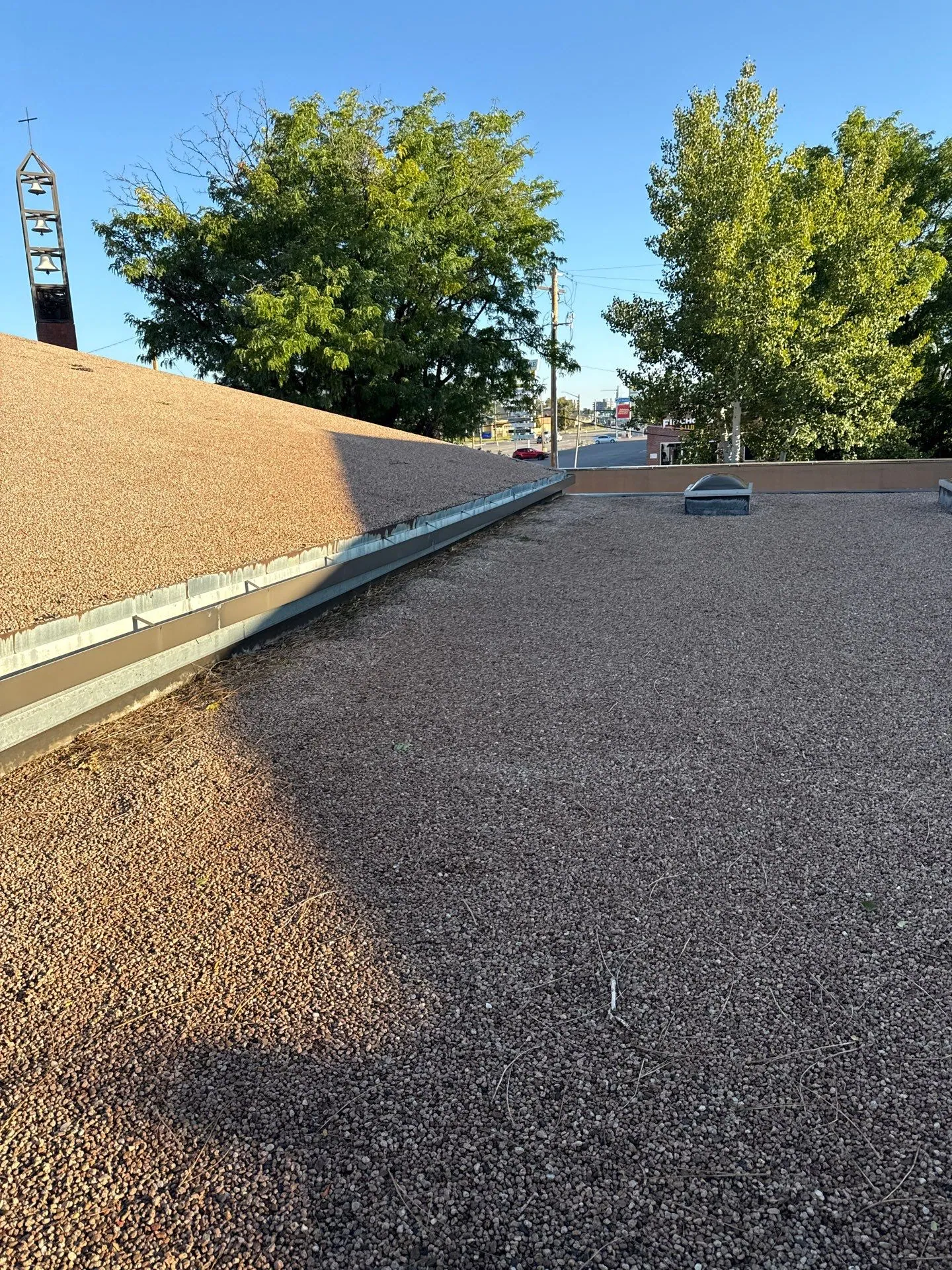
Owners ask what the program costs. The better questions are how often the roof gets inspected, what the contract actually includes, and whether the documentation will satisfy the manufacturer when a warranty claim is filed.
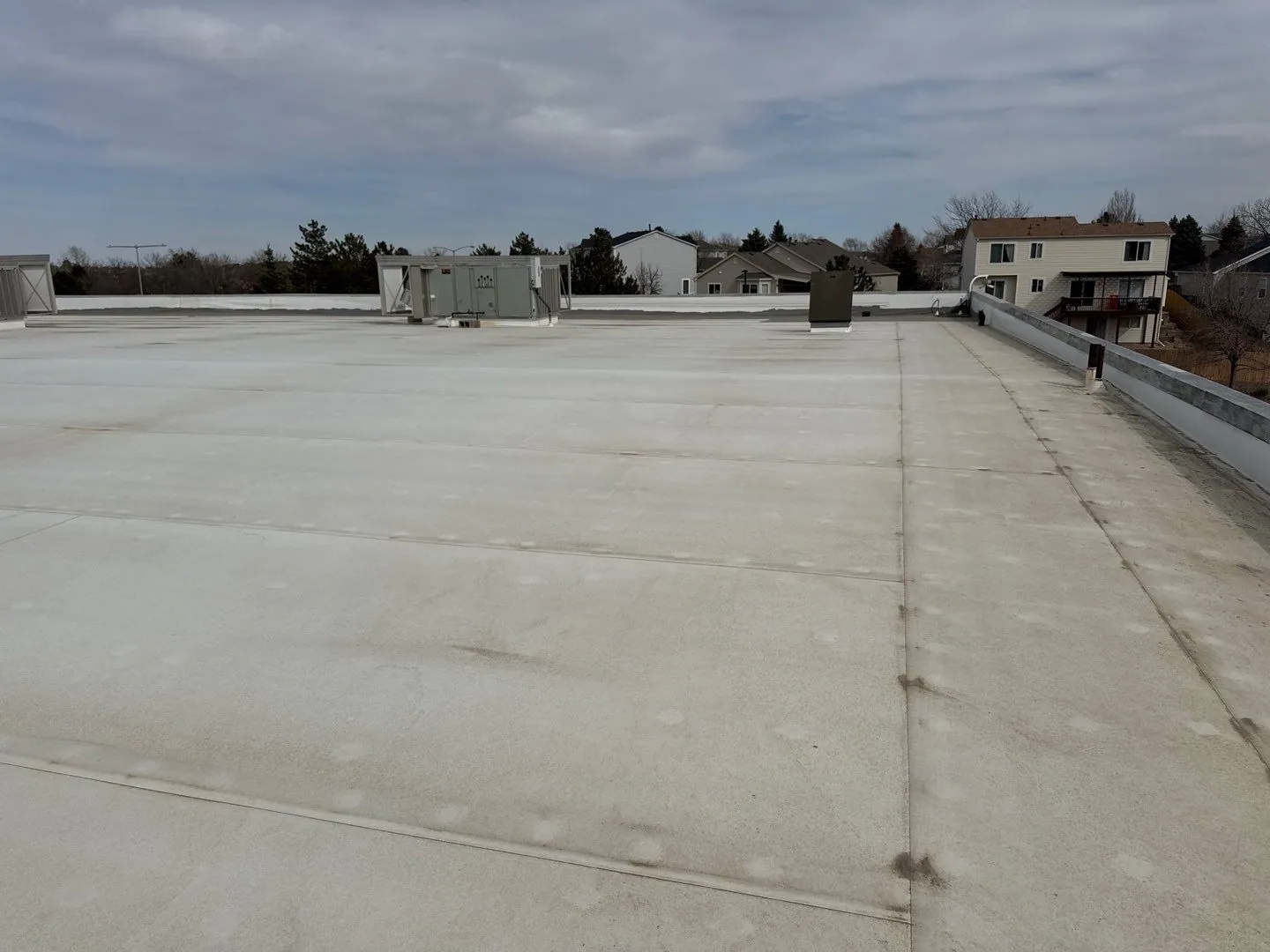
Peak To Peak Roofing delivers commercial roof maintenance programs throughout Denver and surrounding communities, servicing properties on site. The coverage area includes Denver, Aurora, Littleton, and Castle Pines, reached via I-25, I-70, C-470, and E-470. Inspection visits are scheduled around business hours and tenant activity. Restaurant pad sites and food service buildings on the program get added attention around kitchen exhaust discharge points, since grease contamination breaks down membrane surfaces faster than ordinary weathering.
Peak To Peak Roofing coordinates seasonal maintenance visits throughout Denver and surrounding areas, with post-storm assessments dispatched directly to your commercial property.

JJ Hedden
Founder & Owner
Meet The Owner
JJ Hedden founded Peak to Peak Roofing & Exteriors so Front Range property owners would have a roofer who is still reachable after the truck pulls away. He came up through inspections, claims and installations, so the standards our crews work to are the ones he set on roofs himself.
On commercial work he stays close to the details that cost building owners money later: seam and membrane quality, drainage and ponding, curb and penetration flashing, and a schedule that keeps the tenants working while the crew is on the roof.
Scheduled inspections, drain clearing, seam and flashing repairs, and a documented roof history that supports your warranty and your budget.




4.9/5 from happy homeowners
● Program Consults Available This Week
Inspection frequency, scope, and reporting built around your portfolio.
"Peak to Peak was great, they helped me with a repair on my roof. Helped me to extend the life of my roof."
- Luke Howard
Free inspection, same day answers