




Roof damage in Denver often starts at penetrations, valleys, and flashing transitions where water finds the smallest gap, not at the shingles themselves. Peak To Peak Roofing provides residential roof repair, replacement, and insurance claim support in Denver using forensic leak tracing and material-matched component integration to stop recurring failures. The process includes permit coordination and adjuster documentation, which matters because most insurance claims stall on incomplete scopes or missing code compliance proof.
Repairs fail when installers address the symptom without tracing the system. Color matching, concealed structural damage, and flashing geometry determine whether a patch lasts two years or twenty.
Asphalt shingles fade under Denver’s high UV exposure, and manufacturers discontinue colors within three to five years. Matching existing inventory becomes impossible. Peak To Peak Roofing sources archived lots when available, but most homeowners discover the mismatch only after installation when the new slope looks visibly different from adjacent areas.
Leak damage saturates OSB or plywood deck beneath intact shingles, invisible until removal. Moisture meters and IR scans miss localized rot pockets. For Aaron, we found deck failure extending two feet beyond the visible stain during tear-off, requiring structural sister joists and expanded material costs that weren’t in the original estimate.
Step flashing installed without counter-flashing or kick-out diverters channels water behind siding during freeze-thaw cycles. The repair stops the immediate leak but creates a secondary failure path. For Luke, we extended roof life by correcting flashing geometry at sidewall transitions, preventing capillary migration that would have surfaced as interior damage within eighteen months.
Homeowners across Denver look for verified performance and industry recognition when choosing a roof repair contractor. Peak To Peak Roofing holds manufacturer awards, association memberships, and a 4.9-star rating that reflect consistent quality in residential roofing work.
For Dan, we coordinated solar panel removal and reinstallation alongside roof and garage completion in a single day, managing all required inspections and post-work cleanup. When Mary Jo asked about adding eyebrow vents before insulating her attic, we confirmed her roof already met code ventilation requirements and discouraged modifications that typically introduce new leak points, saving unnecessary expense. Repair scopes that skip ventilation assessment often solve the visible leak while leaving the humidity problem that caused the deck saturation in the first place.
Our trained technicians respond quickly to active leaks, providing immediate dry-in with tarping or shrink-wrap while conducting infrared scans and hose tests to isolate the exact failure point before water damage spreads.
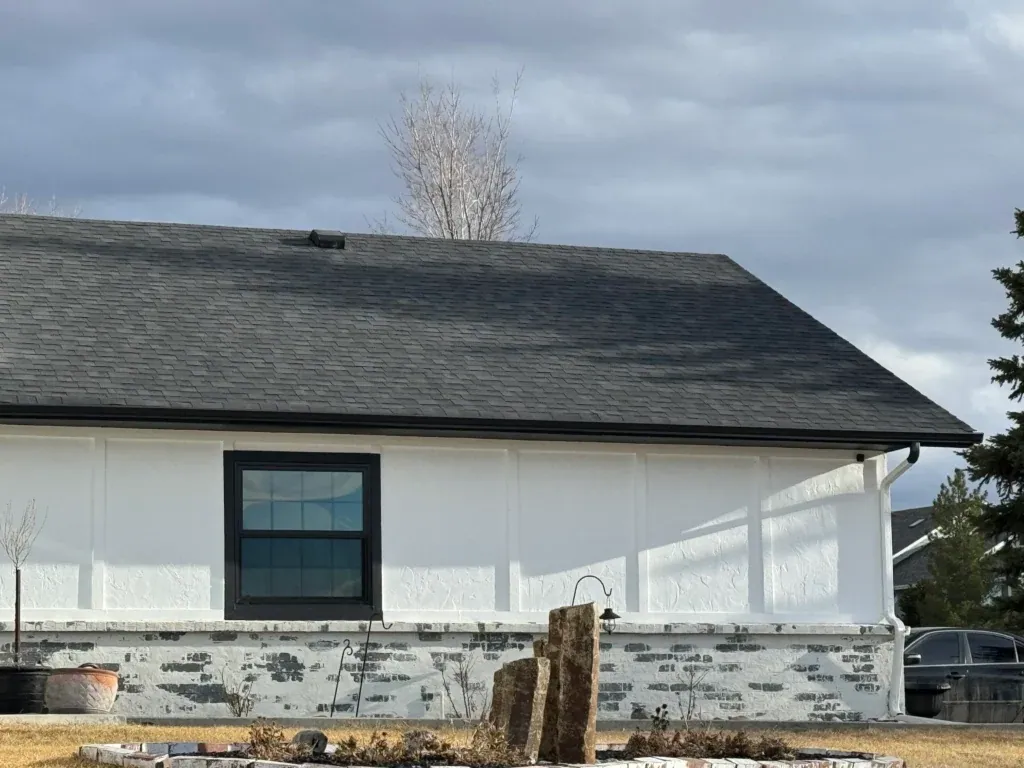
We assess impact bruising across shingle surfaces, match existing profiles and colors with UL 2218 Class 4 upgrades where requested, and document findings with photo reports that align with Denver insurance requirements.
Our skilled crews rebuild step flashing, counterflashing, and kick-out details using code-compliant materials, replace deteriorated pipe boots and valley metals, and verify proper lap sequences to prevent capillary leak paths in Denver’s freeze-thaw cycles.
We probe TPO and PVC seams for weld integrity, apply heat-welded patches with verified peel strength, re-terminate edges with bar and cover plates, and restore slope-to-drain at scuppers to eliminate ponding water.
Our experienced teams add soffit intake vents and ridge vents to achieve IRC R806 balance ratios, install baffles to maintain airflow paths, and reduce attic humidity that accelerates deck rot and ice dam formation during Colorado winters.
We handle Denver Community Planning and Development e-permit applications, schedule mid-roof and final inspections as required, and document compliance with Denver Building Code amendments to protect your insurability and resale value.
Repair work fails when contractors treat it like patch-and-go. The deck under a leak often shows moisture damage that extends two feet beyond the visible stain, and fasteners in that zone have lost holding strength even when the plywood looks intact.
For Rose, we replaced rotting wood and damaged tile after isolating the leak path with controlled diagnostics. When Denver Calvary needed a section of their church building replaced, the scope included deck verification and matched materials to maintain the existing assembly’s wind rating.
Repair timelines compress or stretch based on permit thresholds and concealed damage that surfaces during tear-off. The variable nobody plans for is moisture in the deck that infrared scans miss until fasteners pull through saturated OSB during the first lift.
Emergency dry-in happens within hours if leaks are active. Diagnostic work, permits, and material procurement typically span five to seven business days before repair starts. For Robert, we compressed the timeline to meet a sale deadline by coordinating inspections and material delivery in parallel. The work itself usually finishes in one to three days depending on scope and weather.
Concealed rot in OSB deck or saturated insulation surfaces during tear-off more often than initial scans predict. We document findings with photos, provide unit-cost pricing for the added scope, and pause for approval before proceeding. For Emily, we performed a no-cost age assessment that confirmed her roof was under five years old and Class 4 rated, avoiding unnecessary work entirely. Most change orders stem from moisture that infrared missed or fastener corrosion hidden under intact shingles.
Access to the exterior and attic is required for deck inspection and ventilation checks. You do not need to stay home during shingle or membrane work. We coordinate a walkthrough before tear-off and a final review after cleanup, but the work itself proceeds without occupant presence. Interior access matters only if leak tracing or insulation work extends into living spaces.
Peak To Peak Roofing serves homeowners throughout Denver and surrounding areas, providing roof repair directly at their properties. The service area covers Denver, Aurora, Littleton, and Castle Pines, accessible via I-25, I-70, and C-470, and serving communities including Cherry Creek, Highlands, Stapleton, and Greenwood Village. Technicians respond quickly to requests throughout the area, offering convenient scheduling that works around customers’ availability in Denver and beyond.
Service Area Coverage
Peak To Peak Roofing offers flexible scheduling throughout Denver and surrounding areas, with emergency response available directly at your location when storm damage or active leaks require immediate attention.
Roof leaks require attention within days, not weeks, to prevent structural damage and mold growth. Delay costs compound rapidly once water reaches insulation or framing.
Water does not wait for convenient scheduling. A small leak can saturate insulation, rot decking, and create mold colonies in under a week, particularly during Colorado’s spring thaw cycles. Homeowners who call within 48 hours of noticing interior stains avoid the secondary damage that triples repair scope. The leak you see inside started weeks earlier on the exterior. Temporary tarping buys time, but only if arranged immediately. Waiting for multiple estimates while water migrates through your ceiling cavity is a costly mistake.
Hail damage, wind-lifted shingles, and ice dam deterioration account for most repairs in Colorado’s climate. Severity varies based on roof age, material type, and exposure to weather patterns.
Hail is the dominant culprit across the Denver metro. We see more impact fractures in a single summer storm than most roofers in other regions encounter in five years. Wind damage comes second, particularly on west-facing slopes where gusts peel back shingles that looked fine the day before. Ice dams create a slower failure mode. Water backs up behind frozen ridges, seeps under materials, and rots decking from the inside out. Homeowners notice the stain months after the damage starts. Flashing failures around chimneys and valleys round out the common list, often because the original install cut corners on waterproofing details.
Peak To Peak Roofing handles each damage type differently because the repair scope changes with the cause. Hail requires shingle replacement and underlayment inspection. Wind calls for fastener upgrades. Ice damage means decking evaluation before any cosmetic fix happens. Misdiagnosing the source wastes money and guarantees callback visits.
DIY roof repairs fail when homeowners misdiagnose underlying damage, use incompatible materials, or compromise waterproofing layers. Professional assessment prevents costly secondary damage that often exceeds the original repair cost.
Mismatched shingle products cause more callbacks than any other DIY error. Homeowners buy what looks similar at the hardware store without checking manufacturer specs, age compatibility, or sealant activation temperatures. Colorado’s temperature swings make this worse. A shingle that bonds fine in July can lift by October if the adhesive strip wasn’t formulated for freeze cycles. We have pulled off patches where three different shingle generations were layered together, each with different expansion rates.
The costliest mistake is stopping at the visible symptom. A missing shingle is obvious. The soaked decking underneath is not. Roof damage progresses in reverse order from how it presents. By the time a stain appears on your ceiling, the structural wood has been wet for weeks.
Hail damage assessment requires checking shingles for bruising and granule loss, inspecting metal components for dents, and examining gutters for accumulation. Interior ceiling stains often indicate compromised underlayment that needs immediate attention.
Granule loss shows up in downspouts first. After a storm passes through the Denver area, check for dark patches on asphalt shingles where protective coating has been knocked off. Metal flashing and vents will show visible denting if the hail was large enough to compromise the roof deck. We have watched homeowners miss soft spots on shingles that feel spongy when pressed, a sign the mat underneath took impact damage. Interior water stains can appear weeks later if underlayment tore during the storm but the shingle stayed attached.