
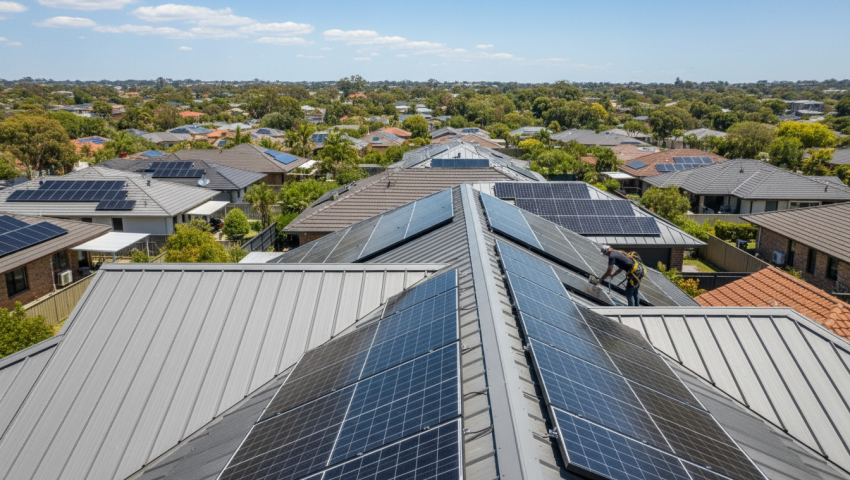
Expert Insight: Most solar failures happen at flashing details, not panels themselves. Roof type determines everything from mounting strategy to electrical configuration.
You’ve probably heard that solar panels can go on any roof, but here’s what installers don’t tell you upfront: the type of roof you have determines not just how panels attach, but whether your integration will last 25 years or start failing within five. The difference between a watertight installation and one that creates expensive leak problems often comes down to details most homeowners never see.
For Denver, Colorado residents considering solar panel roof integration, understanding these compatibility factors can save thousands in repairs and maximize your system’s performance. We’ll walk through the real-world challenges each roof type presents, from structural load limits that change your panel layout to flashing techniques that prevent the most common failure points.
Key Takeaways
- Flashing Integration: Proper flashing around mounting points requires roof-specific techniques, with metal roofs offering the most reliable seal options compared to asphalt shingles.
- Load Distribution: Your roof’s structural capacity determines panel placement more than sun exposure, especially for Denver’s snow loads that can exceed 40 pounds per square foot.
- Electrical Configuration: Roof pitch and shading patterns dictate whether micro-inverters or string systems work better, affecting both performance and long-term maintenance costs.
- Warranty Coordination: Smart contractors coordinate roofing and solar warranties to eliminate coverage gaps that leave homeowners vulnerable during the first critical years.
- Installation Timing: Installing panels during roof replacement saves $3,000 in re-work costs and creates better integration than retrofitting to existing roofs.
Why Most Solar Roof Integrations Fail at the Flashing Details
The most expensive solar failures don’t happen because panels break or inverters fail. They happen because water finds its way through improperly flashed mounting points, creating damage that can cost more than the original installation. Most installers focus on electrical connections and panel positioning, but the real expertise shows in how they handle the transition between your roof surface and the mounting hardware.
Each roof material requires completely different flashing approaches, and this is where generic solar companies often fall short. What works perfectly on standing seam metal creates disaster on tile roofs, and the techniques that seal asphalt shingles will fail catastrophically on slate. Understanding these material-specific requirements helps you evaluate whether your installer truly knows your roof type.
Here’s how different roof materials affect flashing complexity and long-term reliability:
| Roof Material | Flashing Complexity | Seal Longevity | Leak Risk |
|---|---|---|---|
| Standing Seam Metal | Low | 25+ years | Very Low |
| Asphalt Shingles | Medium | 15-20 years | Medium |
| Clay/Concrete Tile | High | 20-25 years | Medium-High |
| Slate | Very High | 25+ years | High |
| Built-up/Modified | Medium | 10-15 years | Medium |
Critical Sealing Points
- Lag Bolt Penetrations: Every mounting point creates a hole through your roof’s weather barrier that must be sealed with compatible materials and proper torque specifications.
- Flashing Compatibility: Metal roofs allow mechanical seaming while tile requires flexible boot flashings that accommodate thermal movement without cracking the surrounding material.
- Membrane Integration: Low-slope roofs need flashing that bonds chemically with the existing membrane, not just mechanical attachment that creates stress concentration points.
- Thermal Movement: Denver’s temperature swings from -10°F to 100°F mean flashing must accommodate significant expansion without compromising the seal integrity.
- Ice Dam Prevention: Proper flashing extends beneath the ice and water shield to prevent backup during Denver’s freeze-thaw cycles that characterize spring weather.
The installers who get flashing right understand that they’re not just mounting panels, they’re modifying your roof’s water management system. They carry roof-specific sealants, know which fasteners work with your decking material, and can explain exactly how their flashing details will perform over decades of weather exposure.
The Load-Bearing Reality That Changes Your Panel Layout Completely
Your roof wasn’t designed to carry solar panels, and that fact shapes everything about your installation. Most Denver homes built before 2010 have roof structures engineered for basic snow loads, not the additional 2-4 pounds per square foot that panels add on top of potential snow accumulation. This means the structural analysis often determines your panel layout more than optimal sun exposure.
The load-bearing assessment reveals which sections of your roof can handle panels and which can’t, sometimes creating surprising layouts that maximize structural safety over theoretical energy production. Smart installers know how to work within these constraints while still delivering strong performance, but it requires understanding your specific roof framing and local snow load requirements.
Structural Limitations
- Rafter Spacing: Older Denver homes often have 24-inch rafter spacing that limits mounting options compared to modern 16-inch spacing that distributes loads more effectively.
- Snow Load Multiplication: Denver’s 30-40 psf ground snow load can increase to 60+ psf on roofs when combined with panel weight and drifting patterns.
- Truss vs Rafter: Engineered trusses typically handle additional loads better than stick-framed rafters, but both require professional evaluation before panel placement.
- Deck Thickness: Thin OSB or plywood decking may need reinforcement at mounting points, especially where multiple panels create concentrated load transfer.
- Span Limitations: Long unsupported spans between structural members limit panel placement options and may require additional blocking for proper load distribution.
The best installations balance structural reality with energy goals, sometimes placing fewer panels in optimal locations rather than maxing out roof coverage in structurally questionable areas. A proper structural assessment by a qualified engineer provides the foundation for a safe, long-lasting installation that won’t compromise your roof’s integrity.
Micro-Inverters vs String Systems: What Your Roof Pitch Actually Decides
The choice between micro-inverters and string inverters isn’t just about budget or monitoring preferences. Your roof’s pitch, orientation, and shading patterns create electrical conditions that strongly favor one technology over the other. A steep south-facing roof with minimal shading works beautifully with string inverters, while complex rooflines with multiple orientations practically demand micro-inverters for optimal performance.
Denver’s abundant sunshine and dramatic mountain views create unique shading challenges that influence this decision. Morning shadows from neighboring homes, afternoon shadows from mature trees, and even seasonal shading from snow accumulation on upper roof sections all factor into which electrical configuration will deliver the best long-term performance for your specific roof.
Configuration Factors
- Pitch Optimization: Steep roofs (8/12 pitch or greater) benefit from string inverters’ cost efficiency when panels share similar orientation and shading conditions.
- Multi-Plane Layouts: Complex roofs with east/west/south orientations require micro-inverters to optimize each panel independently rather than limiting entire strings to lowest performance.
- Shading Mitigation: Even partial shading on one panel can reduce an entire string’s output by 20-30%, making micro-inverters essential for tree-lined properties.
- Snow Shedding Patterns: Denver’s snow creates temporary shading patterns that micro-inverters handle better by allowing unshaded panels to operate at full capacity.
- Future Expansion: String systems require careful planning for additions, while micro-inverter systems allow easy expansion without redesigning the entire electrical layout.
The electrical configuration decision should happen after your roof assessment, not before. Installers who understand your specific roof conditions can recommend the technology that maximizes performance while staying within your budget, rather than pushing their preferred solution regardless of your roof’s characteristics.
How Warranty Overlap Between Roofers and Solar Installers Protects You
The gap between roofing warranties and solar installation warranties creates a dangerous no-man’s land where leak repairs become finger-pointing exercises between contractors. Most homeowners discover this problem only after water damage appears, when both the roofer and solar installer claim the other party’s work caused the issue. Smart planning eliminates this risk by creating overlapping warranty coverage that protects you regardless of the failure source.
According to residential solar safety standards, proper warranty coordination requires clear documentation of roof condition before installation and specific language addressing penetration-related failures. The best installations create warranty structures where both contractors have skin in the game for long-term performance.
Here’s how different warranty approaches protect homeowners during common failure scenarios:
| Failure Type | Standard Coverage | Coordinated Coverage | Homeowner Risk |
|---|---|---|---|
| Mounting Point Leak | Disputed | Joint Responsibility | Low |
| Panel Removal for Roof Repair | Homeowner Cost | Included Service | Low |
| Flashing Failure | Disputed | Solar Installer | Low |
| Roof Damage During Install | Insurance Claim | Installer Covers | None |
Warranty Protection
- Penetration Coverage: Quality installers provide specific warranties for mounting point integrity separate from general workmanship warranties, typically 10-15 years minimum.
- Roof Condition Documentation: Pre-installation roof inspections with photos create baseline conditions that prevent disputes about existing versus installation-related damage.
- Coordinated Response: The best warranty agreements specify joint inspection protocols when leaks occur, eliminating delays while contractors argue about responsibility.
- Material Compatibility: Warranties should explicitly cover interactions between roofing materials and solar mounting hardware, not just individual component performance.
- Transfer Provisions: Home sale situations require warranties that transfer cleanly to new owners without gaps or additional fees that reduce property value.
Warranty coordination isn’t just paperwork, it’s risk management that protects your investment. Contractors who understand this provide clear warranty language, document everything thoroughly, and maintain good working relationships with other trades to resolve issues quickly when they arise.
The Timing Mistake That Costs Homeowners $3,000 in Re-Work
Installing solar panels on a roof that needs replacement within 10 years creates an expensive timing problem that most homeowners don’t anticipate. Removing and reinstalling a solar array costs $3,000-$5,000, money that could have been saved by coordinating the roof replacement with the solar installation. The challenge is that many roofs appear fine from ground level but show their age once installers start working on them.
Denver’s intense UV exposure and dramatic temperature swings accelerate roof aging in ways that aren’t always visible until mounting hardware installation begins. Asphalt shingles that look acceptable from below may be brittle enough that mounting hardware installation causes cracking or granule loss that compromises the roof’s remaining lifespan.
Timing Considerations
- Roof Age Assessment: Asphalt shingles older than 12-15 years in Denver’s climate often need replacement within 5-7 years, making solar removal inevitable.
- Mounting Impact: Installation foot traffic and mounting hardware attachment can accelerate deterioration on marginal roofs, shortening their remaining useful life significantly.
- Coordination Savings: Installing panels during roof replacement eliminates removal costs and creates better integration with proper flashing installation from the start.
- Inspection Timing: Professional roof inspections before solar contracts prevent surprises that delay projects or create unexpected costs during installation.
- Weather Window Planning: Denver’s weather patterns create optimal timing windows for combined projects that maximize both roof and solar installation quality.
The smartest approach involves honest roof assessment before solar planning begins. Experienced contractors can evaluate your roof’s remaining lifespan and help you decide whether to proceed with solar installation, replace the roof first, or coordinate both projects for maximum value and performance.
Why Tesla Solar Roof Tiles Work Better on Some Roof Styles Than Others
Tesla Solar Roof tiles represent a completely different approach to solar roofing integration, replacing your entire roof surface rather than mounting panels on top. This building-integrated photovoltaic (BIPV) approach works brilliantly on some roof styles and creates expensive complications on others. The key factors are roof complexity, pitch, and the ratio of solar tiles to regular tiles needed for your energy goals.
Simple roof geometries with moderate pitches showcase solar roof tiles beautifully while delivering strong performance. Complex roofs with multiple dormers, valleys, and pitch changes require extensive custom work that can double installation costs while reducing system efficiency. Understanding these trade-offs helps determine whether solar roof tiles make sense for your specific home.
Design Compatibility
- Roof Complexity: Simple gable or hip roofs work best, while complex rooflines with multiple intersections require custom fabrication that increases costs significantly.
- Pitch Requirements: Solar roof tiles perform optimally on 4/12 to 8/12 pitches, with steeper or flatter roofs creating installation and performance challenges.
- Aesthetic Integration: Modern and contemporary home styles complement solar roof tiles naturally, while traditional styles may clash with the uniform tile appearance.
- Size Economics: Larger roof areas justify the higher per-square-foot costs better than smaller roofs where fixed costs dominate the project budget.
- Energy Density: Solar roof tiles produce less energy per square foot than conventional panels, requiring larger roof areas to meet household energy needs.
Solar roof tiles work best when the roof replacement timeline aligns with solar goals and the home’s architecture complements the technology. For the right applications, they create stunning results that integrate energy production seamlessly with home design, but they’re not universally suitable for every roof or budget.
The Code Compliance Issue That Stops Projects After Installation
The most frustrating solar project failures happen after installation is complete, when building inspectors identify code violations that require expensive corrections before the system can operate. These issues often stem from outdated electrical panels, inadequate grounding systems, or fire safety clearances that weren’t properly planned during design. What makes this particularly painful is that the problems were preventable with proper pre-installation assessment.
Denver’s building codes incorporate comprehensive solar installation requirements that address structural, electrical, and fire safety concerns. Experienced installers know these requirements and design systems that pass inspection on the first try, while inexperienced contractors often discover code issues only when the inspector arrives for final approval.
Compliance Requirements
- Electrical Panel Capacity: Many older Denver homes need panel upgrades to accommodate solar interconnection safely, requiring electrical permits and utility coordination.
- Fire Setback Requirements: Panels must maintain specific distances from roof edges and penetrations, sometimes limiting usable roof area more than structural factors.
- Grounding Systems: Proper equipment grounding and bonding requires specific conductor sizing and connection methods that vary with system size and configuration.
- Rapid Shutdown Compliance: NEC requirements for rapid shutdown during emergencies require specific equipment placement and labeling that affects system design significantly.
- Structural Documentation: Building departments may require engineered drawings for systems over certain sizes or on older homes with questionable structural capacity.
Code compliance isn’t just about passing inspection, it’s about safety and system reliability over decades of operation. Contractors who understand local requirements design systems that meet code requirements from the start, avoiding delays and additional costs that can derail project timelines and budgets.
Making Smart Solar Roof Decisions
Solar panel roof integration success depends on matching the right technology to your specific roof conditions, not just choosing the cheapest option or following generic recommendations. From flashing details that prevent water damage to structural assessments that ensure safe installations, every roof presents unique challenges that require experienced evaluation and planning.
If you’re considering solar for your Denver, Colorado home, start with an honest assessment of your roof’s condition, structural capacity, and remaining lifespan. The best solar investments happen when roof and solar planning work together to create systems that perform reliably for decades. We can help evaluate your roof’s solar potential and coordinate the right approach for your specific situation, ensuring your investment delivers the performance and protection you expect.
Author
JJ Hedden is the owner of Peak to Peak Roofing with 15 years of experience helping Denver homeowners navigate the intersection of roofing and solar installations. Having overseen 6,000 roofing projects, he understands how different roof types affect solar integration success and the critical timing decisions that can save homeowners thousands in re-work costs.