
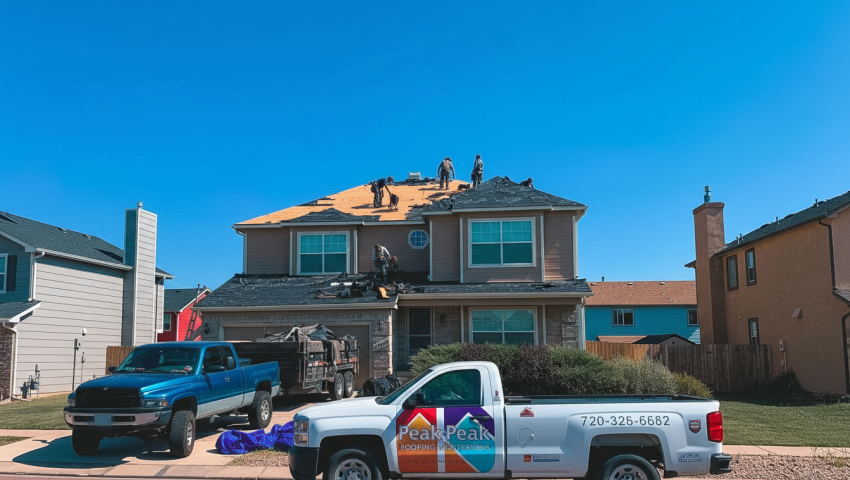
Most Denver homeowners wait until they see water stains to call for repairs. By then, structural damage has already tripled repair costs.
You’re standing in your living room staring at a brown water stain spreading across your ceiling, wondering how long it’s been there and what it’s going to cost. The reality is that by the time you notice interior damage, your roof has been failing for months, and what could have been a $500 repair has now become a $5,000 problem. Denver’s unique climate creates specific failure patterns that most homeowners miss until it’s too late.
Understanding the early warning signs of roof damage in Denver isn’t just about preventing leaks, it’s about protecting your home’s structural integrity and avoiding insurance claim complications. From hail bruising that weakens shingles to UV degradation at our high altitude, Denver roofs face challenges that require a trained eye to spot. This guide will teach you exactly what to look for and when to act, potentially saving you thousands in unnecessary repairs.
Key Takeaways
- Timing Matters: Schedule roof inspections in late fall after hail season ends, not in spring when contractors are overwhelmed and prices peak.
- Hidden Damage: Look for granule loss patterns and exposed mat on asphalt shingles, which indicate UV damage that insurance adjusters often classify as wear rather than storm damage.
- Flashing Failures: Check step flashing around chimneys and dormers for rust stains or separation, as these areas fail first in Denver’s freeze-thaw cycles.
- Emergency Response: Avoid hasty tarping in Denver’s high winds, which can cause more damage than the original leak if not properly secured with battens and weighted edges.
- Permit Requirements: Denver requires permits for repairs exceeding 25% of roof area or $1,000 in value, with inspections needed before final approval.
Why Denver’s Hail Season Makes Spring Roof Inspections a Costly Mistake
Every spring, thousands of Denver homeowners climb ladders or hire inspectors to check their roofs after winter, thinking they’re being proactive. What they don’t realize is that they’re entering the most expensive time of year to discover damage. Hail season in Denver typically runs from April through August, with peak activity in May and June, meaning your ‘early’ spring inspection could reveal damage that gets compounded by the season’s worst storms.
The smarter approach is scheduling inspections in late September or early October, after hail season ends but before winter weather arrives. This timing allows you to address any accumulated damage from the year’s storms while contractors have normal availability and pricing. More importantly, you can make repairs before freeze-thaw cycles worsen existing problems, and you’ll have a documented baseline for any future insurance claims.
Here’s how inspection timing affects both cost and effectiveness in Denver’s climate:
| Inspection Period | Contractor Availability | Average Cost Premium | Weather Risk |
|---|---|---|---|
| Spring (Mar-May) | Low (storm season) | 25-40% higher | High hail risk |
| Summer (Jun-Aug) | Very Low (peak season) | 50-75% higher | Peak hail season |
| Fall (Sep-Nov) | High | Standard rates | Minimal weather risk |
| Winter (Dec-Feb) | Moderate | 10-20% higher | Snow/ice complications |
Seasonal Inspection Strategy
- Post-Storm Documentation: Schedule inspections within 72 hours of any hail event larger than quarter-size to document damage before weathering obscures impact marks.
- Annual Baseline: Establish yearly inspection records in fall to create a damage timeline that strengthens insurance claims and warranty coverage.
- Weather Window Planning: Book fall inspections before November when snow can hide damage and make roof access dangerous for several months.
- Contractor Scheduling: Reserve inspection slots in August for September completion, as quality contractors book up once homeowners realize the seasonal advantage.
- Insurance Coordination: Time inspections to align with policy renewal dates, ensuring any discovered damage can be addressed before coverage changes or exclusions take effect.
The difference between a $800 repair caught in October and a $4,000 emergency fix discovered in May isn’t just about contractor availability. It’s about preventing secondary damage from freeze-thaw cycles, avoiding the insurance adjuster backlog that peaks during storm season, and having time to properly research roofing installation options rather than making rushed decisions under a tarp.
The Insurance Adjuster Red Flags That Kill Denver Roof Claims
Insurance adjusters in Denver see hundreds of roof damage claims every storm season, and they’ve developed a keen eye for what constitutes legitimate storm damage versus normal wear. The most common claim killer isn’t obvious damage like missing shingles, it’s the subtle signs that suggest long-term neglect or maintenance issues. Adjusters are specifically trained to identify granule loss patterns, exposed mat conditions, and deteriorated flashing that predates the claimed storm event.
Understanding what adjusters look for can mean the difference between a covered claim and a denial that leaves you paying out of pocket. They document everything with high-resolution photos, measure granule loss percentages, and use specific criteria to distinguish between impact damage and UV degradation. The key is knowing how to present your roof’s condition in a way that clearly demonstrates storm-related damage rather than gradual deterioration.
Claim Documentation Essentials
- Impact Mark Preservation: Avoid walking on damaged areas or attempting temporary repairs that could obscure hail impact marks or compromise the damage pattern evidence.
- Granule Loss Mapping: Document areas where granule loss exposes the underlying mat in concentrated patterns rather than uniform aging across the entire roof surface.
- Flashing Condition Records: Photograph step flashing and valley conditions before storms to establish baseline condition, as deteriorated flashing often gets blamed for storm damage.
- Maintenance Documentation: Keep records of recent roof maintenance, repairs, and inspections to demonstrate proper care and rule out neglect as a contributing factor.
- Storm Correlation Evidence: Gather weather service data, radar images, and neighbor damage reports to establish the specific storm event that caused documented damage.
The most expensive mistake Denver homeowners make is calling their insurance company immediately after discovering roof damage without first documenting the scene properly. Adjusters arrive with predetermined criteria for what constitutes covered damage, and once they’ve made their initial assessment, it’s extremely difficult to change their determination. Taking time to properly document and understand your damage before filing can be the difference between a covered claim and a costly denial.
How Denver’s 300+ Sunny Days Actually Accelerate Shingle Deterioration
Denver’s reputation for sunshine might be great for outdoor activities, but it’s devastating for asphalt shingles. At 5,280 feet elevation, UV radiation is approximately 25% more intense than at sea level, and with over 300 sunny days annually, Denver roofs endure UV exposure equivalent to coastal areas receiving 400+ sunny days. This accelerated aging process causes granule loss, mat exposure, and thermal cycling stress that most homeowners mistake for normal wear when it’s actually environmental damage.
The problem compounds because Denver’s dramatic temperature swings, sometimes 40-50 degrees in a single day, create constant expansion and contraction cycles that stress already UV-weakened shingles. What appears as gradual aging is actually cumulative environmental damage that follows predictable patterns. Recognizing these patterns helps distinguish between normal aging and damage that may be covered under certain insurance policies or manufacturer warranties.
UV Damage Recognition
- Granule Loss Patterns: Look for concentrated granule loss on south and west-facing slopes where UV exposure is most intense, creating bald spots that expose the underlying mat.
- Thermal Cracking: Check for small cracks running parallel to shingle edges, indicating thermal stress from repeated expansion and contraction cycles in Denver’s variable climate.
- Color Fading Zones: Notice areas where shingle colors have faded unevenly, particularly around roof penetrations where heat reflection accelerates UV damage in concentrated patterns.
- Curling Progression: Monitor shingle edges for upward curling that starts on south-facing slopes and gradually spreads, indicating progressive thermal damage from intense altitude UV exposure.
- Mat Exposure Timeline: Document areas where the fiberglass mat becomes visible, as this represents the final stage before complete shingle failure and water infiltration begins.
Understanding UV damage progression is crucial for Denver homeowners because this type of deterioration often accelerates rapidly once it begins. A roof showing early UV damage signs may have only 2-3 years of remaining life, compared to 10-15 years for the same shingles at lower elevations. This knowledge helps you plan for replacement timing and avoid emergency situations where commercial roof repair becomes necessary during inconvenient weather windows.
What a $12,000 Denver Roof Repair Quote Should Include
When a contractor hands you a five-figure repair quote, you need to understand exactly what you’re paying for and whether the scope matches the actual damage. A legitimate $12,000 repair in Denver typically involves significant structural work, multiple roof sections, or complete system replacements for smaller homes. However, the line-item breakdown should clearly justify every dollar, from materials and labor to permits and disposal costs.
The most important aspect isn’t the total price but the thoroughness of the damage assessment and repair methodology. Quality contractors provide detailed explanations of why specific repairs are necessary, how they’ll prevent future problems, and what warranties cover the work. They also break down costs transparently, showing material specifications, labor hours, and any subcontractor work required for specialized tasks like solar panel installation integration.
Quote Components
- Material Specifications: Detailed listing of shingle grade, underlayment type, flashing materials, and fastener specifications with manufacturer part numbers and warranty information.
- Labor Breakdown: Clear separation of removal, installation, cleanup, and disposal costs with estimated hours for each phase of the repair process.
- Permit and Inspection: Inclusion of Denver building permit fees, inspection costs, and any required engineering assessments for structural repairs or additions.
- Waste Management: Comprehensive disposal costs for old materials, including dumpster rental, dump fees, and any hazardous material handling for older roofing components.
- Warranty Coverage: Detailed explanation of manufacturer material warranties, contractor workmanship guarantees, and what specific conditions void or maintain coverage.
A quality repair quote should read like a roadmap that you can follow and understand, not a mysterious list of charges. If a contractor can’t explain why specific materials or methods are necessary for your Denver roof, or if they pressure you to sign immediately, that’s a red flag. The best contractors welcome questions and provide references from recent similar projects in your neighborhood where you can see their work firsthand.
The Flashing Failure Pattern We See on Every 1980s Denver Ranch
Denver’s 1980s ranch homes were built during an era when flashing installation was less standardized, and the galvanized steel flashing used then has now reached the end of its useful life. These homes consistently show the same failure pattern: step flashing around chimneys begins rusting through, valley flashing develops pinhole leaks, and the interface between different roof planes allows water intrusion. The problem is compounded by the fact that these homes often had minimal roof pitch, which makes proper water shedding more critical.
What makes this particularly problematic is that flashing failures often go unnoticed until significant structural damage has occurred. Unlike missing shingles or obvious storm damage, flashing leaks create slow, persistent water intrusion that rots roof decking, damages insulation, and can compromise wall framing before homeowners notice interior signs. The repair costs escalate quickly because addressing flashing failures properly often requires removing and replacing surrounding roofing materials.
Common Failure Points
- Chimney Step Flashing: Look for rust stains or white mineral deposits around chimney bases, indicating water penetration through deteriorated galvanized steel flashing systems.
- Valley Intersections: Check for granule accumulation or discoloration in valleys where old flashing allows water to pond and gradually seep through aging sealants.
- Roof-to-Wall Transitions: Examine areas where roof planes meet vertical walls for gaps, caulk failure, or missing kickout flashing that directs water away from the building.
- Vent Penetrations: Inspect rubber boot seals around plumbing vents for cracking, shrinkage, or separation that allows water to enter around the penetration.
- Drip Edge Deterioration: Notice areas where drip edge has pulled away from fascia boards or where caulk joints have failed, allowing water behind gutters.
The good news about 1980s ranch flashing failures is that they’re predictable and, when addressed comprehensively, can be permanently resolved with modern materials and techniques. The key is recognizing that piecemeal repairs often fail because the underlying flashing system needs complete replacement. When planning siding or exterior work on these homes, it’s often cost-effective to address flashing issues simultaneously rather than accessing the same areas multiple times.
Why Emergency Tarping in Denver’s Wind Causes More Damage Than It Prevents
When Denver homeowners discover a roof leak during a storm, the instinct is to get a tarp up immediately to stop water intrusion. However, Denver’s notorious wind conditions make improper tarping extremely dangerous, both for the person installing it and for the roof structure itself. Chinook winds can exceed 100 mph, and even moderate winds of 30-40 mph can turn an unsecured tarp into a destructive force that tears off additional roofing material or damages neighboring properties.
The bigger issue is that most emergency tarping attempts fail to address the actual water intrusion points and instead create new problems. Tarps that aren’t properly secured with battens and adequate overlap often channel water to different areas, creating secondary leaks that can be harder to locate and repair. Additionally, walking on a compromised roof during or immediately after a storm can cause additional structural damage that complicates insurance claims and repair processes.
Proper Emergency Response
- Interior Protection First: Focus on protecting interior contents with buckets, plastic sheeting, and furniture relocation rather than attempting dangerous roof access during active weather.
- Professional Assessment: Contact qualified contractors who have proper safety equipment and experience working in Denver wind conditions rather than attempting roof access yourself.
- Documentation Priority: Photograph damage from ground level and inside the home before any temporary repairs that might obscure the original damage pattern for insurance purposes.
- Wind-Resistant Techniques: If tarping is absolutely necessary, use weighted edges, multiple anchor points, and proper overlap techniques designed for high-wind environments.
- Temporary vs. Permanent: Understand that emergency tarping is only meant to last 24-48 hours until professional repairs can begin, not as a long-term solution.
The most effective emergency response to roof damage in Denver focuses on damage control rather than immediate repair attempts. Professional contractors have the equipment, experience, and insurance coverage to safely secure damaged roofs in challenging weather conditions. Attempting emergency repairs yourself not only puts you at physical risk but can also void insurance coverage if your efforts cause additional damage to the property.
The Permit Requirement Most Denver Homeowners Don’t Know About
Denver requires building permits for roof repairs that exceed 25% of the total roof area or $1,000 in value, but most homeowners and even some contractors aren’t aware of this threshold. The permit process isn’t just bureaucratic red tape, it ensures that repairs meet current building codes, include proper inspections, and maintain your home’s insurance and resale value. Unpermitted work can create serious problems when you try to sell your home or file future insurance claims.
The permit process in Denver typically takes 2-3 weeks from application to approval, but the inspection requirements can actually protect you from substandard work. City inspectors verify that repairs use appropriate materials, follow manufacturer specifications, and meet current wind and snow load requirements. This oversight is particularly valuable for major repairs where structural integrity is concerned, and the permit documentation provides valuable records for warranty claims and future maintenance.
Here’s what triggers permit requirements for different types of roof work in Denver:
| Repair Type | Permit Required | Inspection Stages | Typical Timeline |
|---|---|---|---|
| Shingle replacement <25% | No | None required | 1-2 days |
| Shingle replacement >25% | Yes | Rough, final | 2-3 weeks |
| Structural repairs | Yes | Framing, rough, final | 3-4 weeks |
| Complete replacement | Yes | Multiple stages | 4-6 weeks |
Permit Process Navigation
- Application Timing: Submit permit applications before beginning work, as retroactive permitting is more expensive and can delay project completion significantly.
- Contractor Verification: Ensure your contractor is licensed to pull permits in Denver and understands current code requirements for roofing materials and installation methods.
- Inspection Scheduling: Plan for mandatory inspection points that can’t be covered up until approved, including structural framing, underlayment installation, and final completion.
- Code Compliance Updates: Understand that permitted work must meet current codes, which may require upgrades beyond the minimum repair scope originally planned.
- Documentation Benefits: Keep all permit documentation for insurance purposes, warranty claims, and future property sales where proof of permitted work adds value.
Working with contractors who understand Denver’s permit requirements saves time and prevents complications down the road. Quality contractors factor permit costs and timelines into their initial quotes and handle the application process as part of their service. When evaluating contractors, ask specifically about their experience with Denver permits and request references from recent permitted projects to verify their competence with the process.
Protecting Your Denver Investment
Recognizing when your Denver roof needs repair isn’t about waiting for obvious problems like missing shingles or interior leaks. It’s about understanding the subtle signs of damage that Denver’s unique climate creates and acting before small issues become expensive emergencies. From UV damage at our high altitude to hail impact patterns that insurance adjusters scrutinize, being proactive with roof maintenance protects both your home’s structural integrity and your financial investment.
The key to successful roof maintenance in Denver is timing your inspections strategically, documenting conditions properly, and working with contractors who understand local climate challenges and permit requirements. Whether you’re dealing with emergency repairs or planning preventive maintenance, having a clear understanding of what constitutes necessary work versus unnecessary upgrades helps you make informed decisions. If you’re concerned about your roof’s condition or need professional assessment of potential damage, our experienced team can provide thorough inspections and honest recommendations tailored to Denver’s unique roofing challenges.
Author
JJ Hedden is the owner of Peak to Peak Roofing with 15 years of experience helping Denver homeowners navigate roof repairs and insurance claims. Having overseen over 6,000 roofing projects across Colorado’s Front Range, he understands the specific challenges that Denver’s hail, wind, and UV exposure create for residential roofing systems. His expertise in identifying early damage signs and working with insurance adjusters has saved Denver homeowners millions in unnecessary replacement costs.