
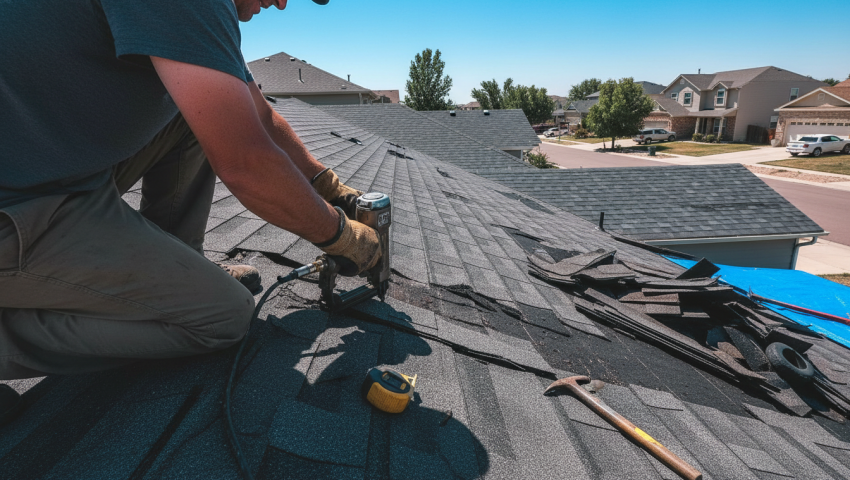
Installation timelines vary dramatically based on damage scope and weather windows. Emergency repairs take hours while full replacements need weeks.
You’ve got water dripping through your ceiling after last night’s hailstorm, and you’re wondering how long you’ll be dealing with tarps and buckets before your roof is actually fixed. The timeline for Denver roof repair projects depends heavily on whether you’re patching a few damaged shingles or replacing an entire system, but most homeowners are surprised by the factors that actually control the schedule.
Understanding realistic timelines helps you plan around the disruption and avoid contractors who promise unrealistic completion dates. From emergency patches that happen the same day to complex installations that stretch across multiple weeks, we’ll break down what drives these schedules and what you should expect when you need roof work in Denver, Colorado.
Key Takeaways
- Emergency Repairs: Simple leak patches and shingle replacements typically complete within 4-8 hours, weather permitting, but may require follow-up visits for permanent solutions.
- Partial Replacements: Section repairs covering 200-500 square feet usually take 2-3 days, including tear-off, deck inspection, and new material installation with proper integration.
- Full Roof Replacement: Complete residential installations range from 5-12 days depending on size, complexity, and weather delays, with larger homes requiring extended timelines.
- Weather Dependencies: Denver’s afternoon thunderstorms and winter conditions can extend any project by days or weeks, making seasonal timing crucial for project planning.
- Permit Processing: Major roof work requires city permits that add 3-7 business days to the timeline, plus mandatory inspections that can delay final completion.
Why Denver’s Hail Season Makes Temporary Repairs Your Worst Enemy
Denver sits squarely in Hail Alley, where severe thunderstorms between April and July produce golf ball-sized hail that can destroy a roof in minutes. When your shingles get hammered, the immediate instinct is to patch the obvious damage and move on, but this approach often creates bigger problems than the original storm. Temporary fixes during hail season frequently fail within weeks because they can’t handle the next weather event.
The reality is that hail damage rarely affects just the visible areas where granules are knocked off or shingles are cracked. Impact testing shows that even moderate hail compromises the structural integrity of surrounding materials, creating weak points that fail under normal wind loads or thermal expansion. What looks like a simple repair job often reveals extensive hidden damage once contractors start working.
Hidden Complications
- Granule Loss: Hail strips protective granules even where shingles don’t crack, accelerating UV degradation and reducing lifespan by 30-50% within two years of impact.
- Seal Failure: Impact breaks the adhesive seals between shingle tabs, allowing wind uplift that tears off seemingly undamaged sections during the next storm.
- Deck Damage: Large hail can drive through shingles and crack or puncture roof decking, requiring structural repairs that aren’t visible from ground level inspection.
- Flashing Displacement: Hail impact shifts step flashing and valley metals out of position, creating leak points that won’t show up until the next heavy rain.
- Gutter Integration: Damaged gutters and downspouts from hail often need replacement during roof work, extending timelines when discovered mid-project and requiring coordination.
Smart homeowners in Denver schedule comprehensive inspections after any significant hail event rather than attempting quick fixes. Professional roof installation services can assess the full scope of damage and determine whether a patch job will actually hold up through the next storm season, potentially saving thousands in repeated repairs.
The Insurance Adjuster Red Flags That Signal a Denied Claim
Insurance adjusters arrive at your property with a checklist designed to minimize claim payouts, and they’re trained to spot inconsistencies that suggest damage wasn’t caused by the covered storm event. The most common denial trigger is evidence that suggests pre-existing damage or maintenance issues, which adjusters can use to argue that the storm simply exposed problems that were already present. Understanding these red flags helps you document your claim properly and avoid statements that inadvertently undermine your coverage.
Timing becomes critical when adjusters start questioning the relationship between the storm date and when you first noticed problems. They’ll look for signs that damage occurred gradually over time rather than suddenly during the specific weather event listed in your claim. Xactimate documentation standards require clear evidence linking visible damage to the date of loss, and any ambiguity can result in partial or complete claim denial.
Here are the most common adjuster concerns that lead to claim complications and how to address them proactively.
| Red Flag | Adjuster Concern | Prevention Strategy |
|---|---|---|
| Pre-existing wear | Damage was gradual, not storm-related | Document roof condition before storm season |
| Maintenance neglect | Poor upkeep caused or worsened damage | Keep records of regular inspections and repairs |
| Timing inconsistencies | Damage reported too long after storm | File claims within 72 hours of discovery |
| Multiple storm events | Can’t prove which storm caused damage | Photograph damage after each weather event |
| Conflicting estimates | Contractor and adjuster scope don’t match | Get detailed written assessments before adjuster visit |
Documentation Essentials
- Photo Timeline: Take dated photos of your roof before storm season and immediately after any significant weather event to establish clear damage progression.
- Weather Correlation: Match your damage discovery to specific storm dates using National Weather Service reports that document hail size and wind speeds in your area.
- Professional Assessment: Have contractors document damage using industry-standard terminology that matches insurance company expectations rather than homeowner descriptions of problems.
- Maintenance Records: Keep receipts and photos from regular roof maintenance to demonstrate that damage wasn’t caused by neglect or deferred upkeep issues.
- Witness Statements: Gather neighbor accounts of the storm event and any immediate visible damage they observed to support your timeline and damage claims.
Successful insurance claims depend more on proper documentation than on the actual extent of damage. Adjusters appreciate homeowners who can provide clear evidence linking specific storm events to visible damage, making their job easier and your claim more likely to be approved without lengthy disputes or appeals.
How Altitude Changes Everything About Roofing Material Performance
Denver’s 5,280-foot elevation creates unique challenges for roofing materials that most contractors from lower altitudes don’t fully understand. The thinner atmosphere means 25% more UV radiation reaches your roof compared to sea level, accelerating the breakdown of asphalt shingles and synthetic materials at rates that surprise even experienced roofers. Solar radiation measurements show that Denver receives UV exposure equivalent to locations 500 miles further south, effectively aging roofing materials faster than manufacturer warranties account for.
Temperature swings at altitude are more extreme than the daily averages suggest, with roof surface temperatures fluctuating 40-60 degrees between morning and afternoon even on mild days. This constant expansion and contraction stresses fasteners, sealants, and material joints in ways that coastal or low-elevation installations never experience. The result is that standard installation techniques often fail prematurely unless they’re adapted for high-altitude conditions.
Altitude Adaptations
- UV Protection: Standard asphalt shingles lose granules 30% faster in Denver’s thin air, requiring upgraded materials with enhanced UV inhibitors for normal lifespan expectations.
- Thermal Movement: Metal roofing expands and contracts more dramatically at altitude, necessitating specialized fastening systems and expansion joints that accommodate greater movement ranges.
- Sealant Selection: Standard roofing sealants become brittle and crack within 2-3 years at Denver’s elevation, requiring high-altitude formulations that maintain flexibility through extreme temperature cycles.
- Fastener Specifications: Wind uplift calculations change at altitude due to lower air density, but thermal stress on fasteners increases, requiring careful balance in fastening schedules.
- Ventilation Requirements: Thinner air affects attic ventilation efficiency, requiring larger vent areas and different intake-to-exhaust ratios to maintain proper air circulation and temperature control.
Contractors experienced with high-altitude installations understand these factors and adjust their material selections and installation techniques accordingly. When evaluating residential roofing services in Denver, ask specifically about their experience with altitude-related challenges and what modifications they make to standard installation procedures.
What a $12,000 Repair Quote Actually Includes (and What Gets Added Later)
Roofing estimates in Denver typically start around $12,000 for moderate repairs, but understanding what’s included versus what gets discovered during the work prevents budget surprises. Most contractors base their initial quotes on visible damage and standard repair procedures, but they can’t account for hidden issues until they start removing damaged materials. The difference between a thorough initial assessment and a quick visual estimate can mean thousands of dollars in unexpected additions to your final bill.
Legitimate change orders occur when contractors uncover structural damage, code violations, or additional problems that weren’t visible during the initial inspection. However, some contractors deliberately low-ball initial estimates knowing they’ll add costs later, while others simply lack the experience to accurately assess repair scope from ground level. Understanding common add-ons helps you evaluate whether quotes are realistic and whether additional charges are justified.
Here’s a breakdown of typical repair costs and the most common add-ons that appear during Denver roof projects.
| Repair Category | Base Cost Range | Common Add-ons |
|---|---|---|
| Partial re-roof (500 sq ft) | $6,000-$9,000 | Deck repair, code upgrades, permit fees |
| Storm damage repair | $3,000-$8,000 | Hidden hail damage, gutter replacement, flashing |
| Leak repair and patching | $800-$2,500 | Insulation replacement, structural repairs, ventilation |
| Full roof replacement | $15,000-$35,000 | Chimney work, skylight replacement, electrical |
| Emergency repairs | $500-$1,500 | Temporary protection, multiple trips, material premium |
Cost Variables
- Deck Condition: Rotted or damaged roof decking adds $3-$8 per square foot to repair costs, but can’t be assessed until old materials are removed.
- Code Upgrades: Denver building code changes require updated ventilation, ice barriers, and flashing details that weren’t part of the original roof system installation.
- Access Challenges: Steep roofs, multiple stories, or tight property lines increase labor costs by 15-30% due to safety equipment and slower work pace requirements.
- Material Matching: Older roofs may require custom-ordered materials or complete section replacement when exact matches aren’t available, extending timelines and costs significantly.
- Weather Delays: Extended project timelines due to weather can trigger additional mobilization fees, material storage costs, and premium pricing for rush completion schedules.
Reputable contractors provide detailed written estimates that separate base work from likely additional costs, giving you a realistic budget range rather than an artificially low initial number. Ask for worst-case scenarios and typical add-on percentages so you can plan financially for the complete project scope rather than just the minimum estimate.
The One Inspection Step That Reveals Hidden Structural Damage
Most roof inspections focus on surface conditions and visible damage, but the critical step that reveals serious structural issues is checking the roof deck from inside the attic space. Professional inspectors use moisture meters and visual examination to identify areas where water has penetrated the decking, causing rot or delamination that compromises the structural integrity of the entire roof system. This interior inspection often reveals damage that’s completely invisible from the exterior, even to experienced contractors.
Structural damage typically shows up as sagging areas, soft spots where fasteners pull through, or discoloration patterns that indicate chronic moisture intrusion. The problem is that by the time these issues become visible from outside, the damage has often spread to multiple roof sections and may require extensive repairs that far exceed the scope of the original problem. Early detection through proper attic inspection can save thousands in structural repairs.
Critical Indicators
- Moisture Readings: Electronic moisture meters detect elevated water content in roof decking before visible rot appears, identifying problem areas for targeted repair.
- Fastener Integrity: Loose or pulled fasteners in the decking indicate structural movement or water damage that requires immediate attention before complete failure occurs.
- Insulation Staining: Water stains or compressed insulation reveal leak patterns and help trace water intrusion paths back to their source points on the roof surface.
- Ventilation Airflow: Blocked or inadequate attic ventilation creates moisture buildup that accelerates structural deterioration and reduces the effectiveness of roof repairs over time.
- Support Member Condition: Sagging or damaged rafters and trusses may require structural engineering evaluation before any roof work can proceed safely and meet code requirements.
Professional contractors always include attic inspection as part of their assessment process because surface repairs won’t hold if the underlying structure is compromised. When getting estimates for Denver roof repair, insist on interior inspection and ask contractors to explain what they found and how it affects their repair recommendations and timeline.
Why Emergency Tarping Often Causes More Damage Than the Original Storm
Emergency tarping seems like the obvious solution when your roof is leaking, but improper installation often traps moisture, creates new leak points, and damages materials that could have been salvaged with the right approach. Most emergency tarp jobs involve nailing or screwing through existing roofing materials, creating dozens of new penetrations that become leak sources once the tarp is removed. The urgency of the situation leads to shortcuts that compound the original damage.
Wind uplift under improperly secured tarps can tear off additional shingles and damage flashing that survived the original storm intact. OSHA safety requirements for roof work are often ignored during emergency situations, leading to both property damage and safety risks that professional contractors would avoid. The key is understanding when tarping is necessary versus when it creates more problems than it solves.
Tarping Problems
- Penetration Damage: Emergency tarps typically require 50-100 new fastener holes that become permanent leak points requiring individual sealing during permanent repairs.
- Moisture Trapping: Tarps that don’t breathe trap condensation underneath, creating mold growth and accelerating rot in roof decking and structural members over time.
- Wind Damage: Loose or improperly secured tarps act like sails, generating uplift forces that can tear off undamaged roofing materials adjacent to the original problem area.
- Access Complications: Tarps covering large areas make it difficult for contractors to properly assess damage scope, often leading to incomplete repairs that require multiple return visits.
- Material Degradation: Tarps left in place for weeks or months can bond to roofing materials, making removal difficult and damaging surfaces that were originally repairable.
Professional emergency repairs focus on stopping immediate water intrusion with minimal additional damage, using techniques like temporary flashing and strategic material placement rather than wholesale tarping. When you need emergency protection, call experienced contractors who understand how to minimize collateral damage while providing effective temporary weather protection.
The 72-Hour Window That Determines Your Insurance Coverage Success
Insurance companies expect prompt notification of storm damage, and delays beyond 72 hours can trigger questions about whether the damage was actually caused by the reported weather event. The critical window starts from when you discover the damage, not when the storm occurred, but adjusters become suspicious if there’s a significant gap between obvious damage and your claim filing. This timing requirement means you need to inspect your property immediately after any severe weather event that could have caused roof damage.
The 72-hour rule also affects your ability to get emergency repairs covered under your policy’s additional living expenses or loss mitigation provisions. Insurance regulations require policyholders to take reasonable steps to prevent further damage, but they also want documentation of the original damage before any repairs begin. This creates a challenging balance between protecting your property and preserving evidence for your claim.
Timeline Requirements
- Immediate Documentation: Photograph all visible damage within 24 hours of discovery using dated images that clearly show the extent and nature of storm-related problems.
- Claim Filing: Submit your initial claim within 72 hours of damage discovery, even if you don’t have complete damage assessment or repair estimates yet available.
- Emergency Mitigation: Document any emergency measures you take to prevent further damage, including tarping, water removal, or temporary repairs with receipts and photos.
- Professional Assessment: Schedule contractor inspection within the first week to get detailed damage documentation that supports your claim scope and repair estimates for adjuster review.
- Adjuster Coordination: Request adjuster inspection as soon as possible after filing, as delays in scheduling can push your claim resolution into busy season backlogs.
Success with insurance claims depends more on proper timing and documentation than on the severity of damage. Establish a post-storm inspection routine that includes checking your roof from multiple angles and filing claims promptly when damage is discovered, even if the full extent isn’t immediately clear.
Planning Your Denver Roof Project
The timeline for your Denver roof repair depends on factors beyond just the scope of work, from weather windows and permit processing to hidden damage discovery and material availability. Understanding these variables helps you set realistic expectations and choose contractors who can deliver on their promised schedules rather than those who make unrealistic commitments they can’t keep. Smart planning around Denver’s weather patterns and insurance requirements can save weeks of delays and thousands in additional costs.
Whether you’re dealing with emergency storm damage or planning a proactive replacement, working with experienced local contractors who understand Denver’s unique challenges makes the difference between a smooth project and a frustrating experience. If you’re ready to move forward with professional roof repair or installation, we can provide detailed timeline estimates and help you navigate the permitting and insurance process efficiently.
Author
JJ Hedden is the owner of Peak to Peak Roofing with 15 years of experience helping Denver homeowners navigate complex roof repair and replacement projects. His expertise in insurance claims, high-altitude installation challenges, and Denver’s unique weather patterns has guided over 6,000 families through successful roofing projects. JJ’s practical approach focuses on realistic timelines and transparent communication to help homeowners make informed decisions about their roof investments.