
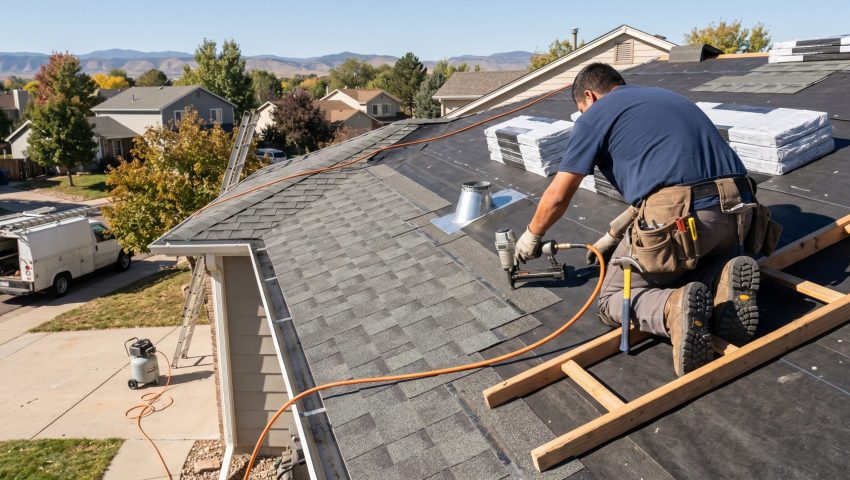
Most homeowners think any roof will survive Denver’s hail, but material choice, seam detail and insulation together dictate true resilience. This guide shows how to pick and install a system that beats wind, UV and freeze‑thaw cycles.
Most people assume a cheap shingle will hold up through a Colorado hailstorm, yet the combination of high‑altitude UV and rapid temperature swings often cracks low‑grade membranes. The reality is that without the right impact rating and reflective coating, a roof can fail within a few seasons. That misconception leads to frequent repairs and higher insurance premiums. Understanding the hidden performance metrics changes the whole equation.
What you’ll notice after reading this guide is a clear picture of how advanced roofing systems protect your home in Denver, Aurora, Littleton and beyond. You’ll see why a Class 4 impact‑rated membrane, proper flashing and a cool roof coating matter more than the color of the tiles. The steps focus on practical actions that keep your roof resilient, energy‑efficient and code‑compliant.
Step 1: Assess the Roof Deck and Load Requirements
You probably glance at the roof and think the deck is fine, but in Denver the snow load and wind uplift demand a precise evaluation. Overlooking the deck’s condition leads to premature seam failure and water intrusion. This step fixes that by matching the deck material to ASCE 7‑16 load criteria and confirming it can support a high‑R insulation layer.
Watch for warped OSB, moisture stains or rusted metal decking; these are common red flags that many homeowners ignore. A successful assessment ends with a documented load rating and a clean, level surface ready for membrane or shingle installation.
Key Checks
- Deck Type: Verify whether the deck is OSB, plywood or metal and confirm it meets the minimum thickness for the chosen system; Denver codes often require 5/8‑inch OSB for steep‑slope roofs.
- Load Rating: Calculate snow and wind loads using ASCE 7‑16 tables; a typical Denver roof must handle at least 30 psf snow and 90 psf wind uplift.
- Moisture Test: Perform a moisture probe or infrared scan to locate hidden water; any detected moisture must be repaired before proceeding.
- Flatness: Use a straightedge to check for deflection greater than 1/8 inch over 10 feet; excessive sag can cause ponding on low‑slope membranes.
By confirming the deck’s integrity and load capacity you eliminate the biggest source of early roof failure. The next step will let you choose the right membrane or shingle that meets those structural demands while delivering the energy performance Colorado homeowners expect.
Step 2: Select a High‑Performance Membrane or Shingle
Choosing the right covering is more than picking a color; it involves matching UL 2218 impact class, FM wind uplift ratings and solar reflectance to Denver’s hail‑prone, sunny climate. A Class 4 impact‑rated TPO membrane with a 70 SRI cool roof rating can reduce cooling loads by up to 15 percent according to the Cool Roof Rating Council.
If you select a low‑grade shingle, you’ll see granule loss after the first hailstorm, which compromises waterproofing. A proper selection is confirmed when the product data sheet shows UL 790 Class A fire resistance, FM 1‑90 wind uplift and a manufacturer warranty that covers hail damage.
Step 3: Prepare the Surface and Install Underlayment
Many installers skip the underlayment step, assuming the membrane alone will seal the roof, but in Denver the combination of UV and freeze‑thaw cycles can drive moisture through tiny gaps. This step adds a synthetic underlayment that provides an extra barrier and improves insulation performance.
Common mistakes include using felt underlayment that degrades under UV and failing to overlap seams correctly. A successful preparation leaves a smooth, dry surface with a fully taped underlayment that meets the manufacturer’s overlap requirements.
What You Need
- Synthetic Underlayment: Use a 30‑lb felt‑replacement roll rated for high UV exposure; it should be installed with a 6‑inch overlap on all joints.
- Ice‑and‑Water Barrier: Apply a self‑adhered membrane at eaves and valleys to prevent ice dam formation during Denver winters.
- Fasteners: Choose corrosion‑resistant screws with washers; spacing should follow the membrane’s wind uplift rating, typically 12 inches on slopes over 4:12.
- Sealant: Use a polyurethane sealant at all penetrations; it must be compatible with the chosen membrane and rated for temperature extremes from –20 °F to 150 °F.
With a properly prepared substrate and high‑quality underlayment, the roof system gains a robust secondary defense against water and UV damage. The next phase will focus on sealing the membrane seams and flashing to create a watertight envelope.
Step 4: Install Membrane, Flashing and Edge Details
You might think that a hot‑air welder will seal every seam automatically, yet in practice improper heat settings cause weak bonds that fail under wind uplift. This step ensures each seam meets the manufacturer’s shear strength specification and that flashing is correctly integrated at valleys, roof, and skylights.
A frequent error is neglecting to install a drip edge, which leads to water tracking under the membrane. Successful installation is evident when all seams pass a pull‑test and flashing details are fully sealed with compatible tape.
Critical Details
- Seam Welding: Set the welder to the temperature range specified by the membrane maker, typically 350‑380 °F for TPO; verify weld strength with a pull‑test of at least 150 lbf per inch.
- Flashing: Install step, counter and headwall flashing using the same membrane material; overlap flashing over the membrane by at least 4 inches and seal with compatible tape.
- Drip Edge: Attach a metal drip edge along all eaves and rakes, ensuring a 1‑inch overhang to direct water away from the deck.
- Ventilation: Balance intake and exhaust vents, such as ridge vents and soffit vents, to maintain a 1:1 ratio that prevents moisture buildup.
- Inspection: Conduct a visual walk‑through and use a handheld infrared camera to spot any cold spots that indicate missing insulation or sealant gaps.
After sealing seams and flashing, the roof envelope is ready to resist Denver’s wind, hail and UV on. The next step will address insulation and reflective coatings that boost energy efficiency.
Step 5: Add Insulation and Cool‑Roof Coating
Insulation isn’t just about R‑value; in Denver the combination of polyiso boards with a reflective coating can lower roof surface temperature by up to 40 °F, cutting cooling costs. Install tapered polyiso to promote drainage on low‑slope roofs and apply a silicone‑based cool‑roof coating that meets CRRC SRI standards.
If you skip the coating, the membrane can overheat, causing premature aging and loss of flexibility. A proper installation is confirmed when the coating cures to a uniform finish and the insulation joints are taped and sealed.
Step 6: Perform Final Inspection and Register Warranty
Many contractors finish the job and walk away, but without a thorough final inspection you may miss a loose fastener that could pop under a Chinook wind gust. This step validates every detail and secures the manufacturer’s warranty by completing the required documentation.
A common oversight is forgetting to register the roof system with the manufacturer’s NDL portal, which can void coverage. Successful completion is marked by a signed inspection checklist, a photo log of critical details and an active warranty registration.
Inspection Checklist
- Fastener Tightness: Use a torque wrench to verify all screws are tightened to the manufacturer’s spec, typically 90 in‑lb for TPO systems.
- Seam Integrity: Run a handheld moisture detector along all seams; any reading above 0.5 % indicates a leak that must be repaired before sign‑off.
- Warranty Paperwork: Submit the completed NDL registration form online within 30 days of installation; include photos of the roof deck, membrane, and flashing details.
- Documentation: Compile a project file with material data sheets, load calculations and inspection reports for future reference.
With the final inspection signed off and the warranty registered, your advanced roofing system is fully protected against Denver’s weather extremes. The next phase is regular maintenance to keep performance at peak levels.
Putting the System to Work
You’ve now walked through a complete process that turns a standard roof into a high‑performance envelope capable of handling hail, wind and UV in Denver and the surrounding communities. By assessing the deck, selecting the right membrane, sealing seams, adding insulation and registering the warranty, you’ve built a roof that delivers energy savings and long‑term durability.
The next step is to schedule bi‑annual inspections, keep the drainage clear and stay up‑to‑date with any code changes from the Denver Building Department. When you’re ready for a solar upgrade or siding refresh, our team can integrate those systems without compromising the roof’s performance.
Author
JJ Hedden is the owner of Peak To Peak Roofing and brings 15 years of hands‑on experience installing advanced roofing systems across Denver, Aurora and the broader Colorado market. His practical perspective helps homeowners choose membranes and flashing that truly stand up to high‑altitude hail and UV exposure. Readers benefit from his field‑tested insights on durability, energy efficiency and warranty protection.