
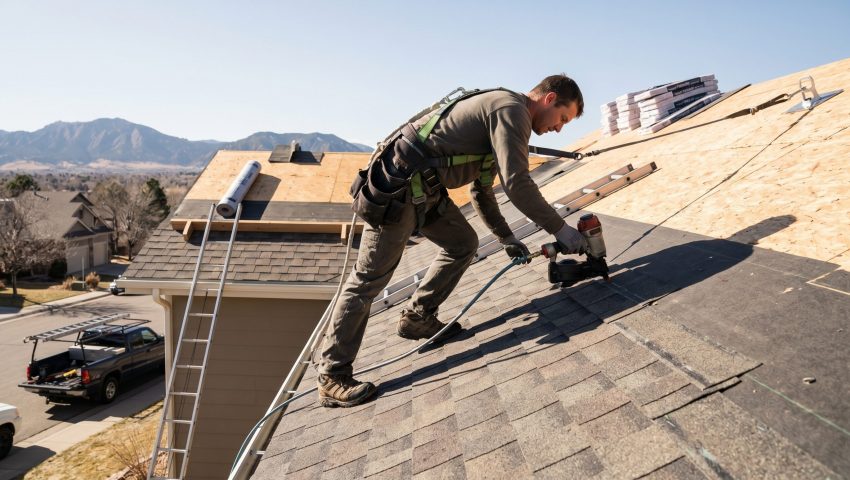
Most crews think a quick harness check is enough, but real safety comes from a full, coordinated plan that matches Denver’s wind and altitude challenges.
Many contractors assume that putting a guardrail on the edge of a roof solves all fall risks, yet the most common injuries still happen when workers lose footing on a slippery deck. In Denver’s high‑altitude climate, sudden gusts and icy patches turn a simple trip into a serious fall. The real problem is a fragmented safety approach that ignores the full chain of hazards from ladders to debris. Ignoring this leads to costly downtime and insurance claims that could have been avoided.
This guide looks at safety measures during roof installation from a holistic, on‑site perspective, not just a checklist of gear. You’ll see how to align OSHA fall‑protection rules with local building codes and the specific weather patterns of Denver, Aurora, Littleton, and Castle Pines. By the end, you’ll be able to spot the hidden gaps that most crews miss and feel confident that every worker returns home safe.
Step 1: Conduct a Site‑Specific Hazard Survey
Before any material arrives, walk the job site with a notebook and a handheld anemometer to record wind speeds, roof pitch, and any nearby power lines. This step uncovers hidden dangers that a generic safety plan would overlook, such as a low‑lying tree that could fall onto the roof during a thunderstorm. In practice, crews often skip this survey and later discover that a sudden gust exceeded the 25 mph threshold set by OSHA, forcing an unexpected shutdown.
If the survey shows wind speeds above 20 mph, schedule work for calmer periods and set up temporary windbreaks using tarps anchored to the ground. Verify that all ladders are positioned at a 4:1 angle with at least three feet of extension above the landing, a detail that prevents ladder slip incidents. When the survey is complete and the site is marked, you’ll have a clear go/no‑go decision and a solid foundation for the next safety actions.
Step 2: Install Edge Protection and Anchor Points
A common belief is that a single guardrail along the roof edge is sufficient, but workers still fall when they step beyond its reach or when the rail isn’t properly anchored. The real fix is a combination of guardrails, warning lines, and personal fall arrest system (PFAS) anchor points that meet OSHA 29 CFR 1926 Subpart M requirements.
Watch for loose bolts on the guardrail brackets and ensure the warning line is set at least six feet from the edge, as recommended by the fall‑protection guidelines on Wikipedia. Successful installation looks like a sturdy rail at 42 inches high, a taut warning line, and anchor points rated for at least 5,000 lb pull‑out strength.
Key Components
- Guardrails: Install steel guardrails with a top rail height of 42 inches, toe‑board extensions, and a mid‑rail at 21 inches to prevent tools from falling off the edge.
- Warning Lines: Place a high‑visibility rope or tape at a minimum of six feet from the roof edge, anchored with temporary stakes that can withstand wind gusts up to 30 mph.
- PFAS Anchors: Set up permanent or temporary anchorage connectors that support at least 5,000 lb, spaced every ten feet along the work zone, and test each with a pull‑test device.
- Self‑Retracting Lifelines: Attach lifelines to the anchors, allowing workers to move freely while the system automatically locks if a fall occurs, reducing free‑fall distance to under six feet.
With edge protection and anchor points in place, the crew now has a reliable barrier against falls and a clear system for personal fall arrest. This setup also satisfies the OSHA fall‑protection standard and prepares the site for safe material handling. The next step will focus on securing ladders and scaffolds so that access is just as safe as the work area.
Step 3: Secure Ladders, Scaffolds, and Material Handling
Many teams think that a ladder placed on a flat roof is automatically safe, yet the combination of wind and an uneven deck often leads to ladder slip or collapse. The fix is a disciplined ladder‑standoff system, properly rated scaffolds, and a debris‑catch plan that follows the OSHA scaffold standards.
Common pitfalls include over‑loading scaffolds and neglecting to secure ladders with standoffs, which can cause the ladder to shift under wind pressure. A successful setup features a scaffold with a load capacity four times the intended crew weight, ladders locked at a 4:1 angle, and debris chutes that channel waste into covered containers.
Safety Controls
- Ladder Standoffs: Use standoffs with a minimum of three feet of extension above the roof surface, set at a 4:1 angle to keep the ladder stable on snow or ice.
- Scaffold Load Rating: Choose scaffolds rated for at least four times the maximum crew load, and inspect all joints and base plates before each shift.
- Debris Chutes: Install a debris chute with a netted catch platform that directs nails and shingle fragments away from the edge, reducing the risk of falling objects.
- Material Hoists: Employ a powered hoist with a rated capacity of 500 lb to lift heavy tiles or metal panels, keeping workers on the ground during the lift.
- PPE Checklist: Ensure every worker wears a hard hat, safety glasses, gloves, and slip‑resistant footwear, as outlined in the OSHA roofing safety publication.
By securing ladders, scaffolds, and material handling equipment, you eliminate the most frequent sources of on‑site injuries. This stage also creates a clean, organized work area that speeds up the installation while keeping the crew protected. The final step will tie all these measures together with a comprehensive safety briefing and documentation.
Step 4: Run a Pre‑Work Safety Brief and Document Compliance
Some contractors skip the safety briefing because they think the crew already knows the basics, yet a short, focused talk can catch gaps that paperwork alone misses. The real advantage is a documented toolbox talk that references the specific hazards identified in the site survey and the controls you’ve installed.
Be aware of the tendency to gloss over the emergency evacuation plan; in Denver, lightning can strike unexpectedly, so a clear protocol is essential. Completion looks like a signed attendance sheet, a checklist of completed guardrails, anchor points, and scaffold inspections, and a clear go‑no‑go decision logged in the project file.
Briefing Checklist
- Hazard Review: Walk through the roof edge, pointing out guardrails, warning lines, and PFAS anchors, and explain the wind‑speed limits that trigger a work stop.
- Emergency Plan: Outline steps for lightning, fire, and medical emergencies, including the location of fire extinguishers and the nearest first‑aid station.
- Tool Inspection: Verify that all harnesses, lanyards, and lifelines have been inspected for wear, and that the personal fall arrest system is locked and ready.
- Documentation: Have each crew member sign a safety checklist that records completion of guardrail installation, scaffold load verification, and ladder standoff setup.
With a thorough safety brief and proper documentation, you close the loop on the safety measures during roof installation, ensuring that every worker knows the plan and that the project meets OSHA and local Denver code requirements. This final layer of communication turns a set of procedures into a living safety culture that can be repeated on any future roof job.
Putting Safety Into Practice
You’ve now built a complete safety framework that starts with a site‑specific hazard survey, adds robust edge protection, secures access and material handling, and ends with a documented safety briefing. Each step aligns with OSHA regulations, the International Building Code adopted by Denver, and the unique weather challenges of Colorado’s Front Range. By following this sequence, you reduce the risk of falls, ladder accidents, and debris injuries, protecting both workers and the homeowner’s property.
The next move is to schedule regular refresher talks before each new roof project and to keep a copy of the safety checklist on every job site. If you need help reviewing your current safety plan or want a professional crew that follows these measures, consider contacting our experts for a free consultation. Maintaining this routine will keep your team safe and your installations compliant for years to come.
Author
JJ Hedden is the owner of Peak To Peak Roofing, a Denver‑based roofing company with 15 years of hands‑on experience installing and repairing roofs across the metro area. He has overseen thousands of installations, mastering the safety protocols that keep crews protected in Colorado’s variable climate. His practical insights stem from daily field work, not theory, making his guidance especially useful for contractors and homeowners alike.