
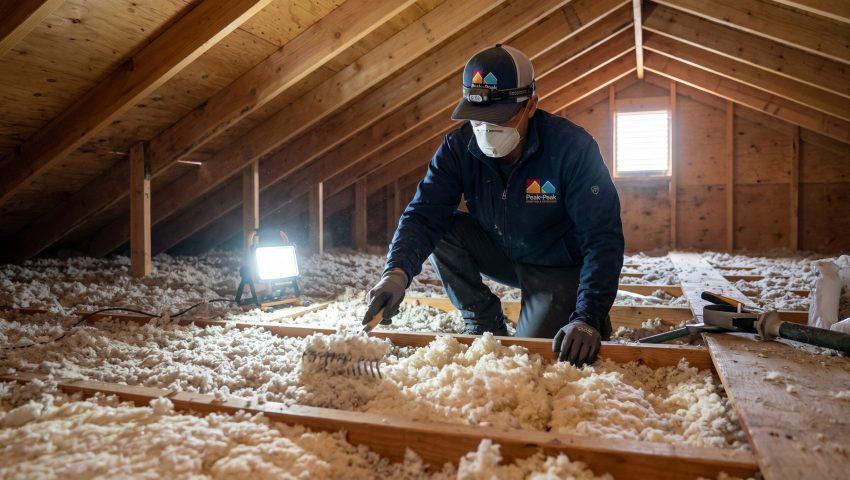
Most homeowners check their insulation once and forget it. Regular maintenance prevents 20-40% energy loss from settling and air gaps.
Your attic insulation quietly works around the clock, but it’s not a ‘set it and forget it’ system. Over time, cellulose settles by 15-20%, fiberglass gets compressed by foot traffic, and air leaks develop around new penetrations or shifting building materials. Without regular maintenance, you’ll see utility bills creep up, uneven room temperatures, and ice dams forming on your roof during Denver’s cold snaps. The reality is that even professionally installed insulation loses effectiveness without periodic attention.
This guide walks you through the five essential steps to maintain attic insulation effectively, from visual inspections to depth measurements and air sealing touch-ups. You’ll learn how to spot the warning signs of degraded insulation, when to add material versus when to address underlying problems, and how to keep your R-values performing at their intended levels. By following these steps annually, you’ll maintain consistent energy efficiency and avoid the costly surprises that come with neglected attic systems.
Step 1: Conduct a Comprehensive Visual Inspection
Most insulation problems start small and compound over time, which is why a thorough visual inspection catches issues before they become expensive. Rodent damage, moisture staining, and compressed areas are easy to miss in a quick glance but become obvious when you know what to look for. Skipping this step means you’ll address symptoms like high energy bills without fixing the root causes, leading to repeated problems and wasted money on temporary solutions.
Focus on areas where insulation commonly fails: around chimneys and flues, near attic access points, and along the perimeter where roof meets walls. Look for dark streaks in the insulation that indicate air movement, water stains on the ceiling below, or gaps where you can see the drywall underneath. The Department of Energy guidelines emphasize that visual inspection should happen before any maintenance work begins, as underlying issues will compromise new insulation.
Inspection Checklist
- Moisture indicators: Check for water stains, mold growth, or damp insulation around roof penetrations, especially after recent storms or snow melts in areas like Boulder and Westminster where ice dams are common.
- Pest activity: Look for droppings, nesting materials, or tunnels through the insulation that create thermal bypasses and reduce R-value effectiveness throughout the coverage area.
- Settling patterns: Measure areas where loose-fill insulation appears lower than surrounding sections, particularly cellulose which can settle 15-20% over five years in Colorado’s temperature extremes.
- Air leakage signs: Identify dark streaks or discolored insulation that indicate conditioned air is escaping through gaps in the air barrier beneath the insulation layer.
- Compression damage: Note areas where foot traffic or stored items have compressed batt insulation, reducing its thickness and thermal resistance significantly below rated R-values.
Document any problem areas with photos and measurements, as this baseline will help you track improvements over time and identify recurring issues. Pay special attention to the relationship between roof condition and insulation performance, since residential roofing problems often show up as insulation damage first. With your inspection complete, you’re ready to measure the actual depth and coverage of your existing insulation.
Step 2: Measure Insulation Depth and Calculate R-Values
Accurate depth measurements tell you whether your insulation is performing at its designed R-value or has degraded over time. Use a ruler or measuring tape to check depth at multiple points across the attic, since settling and compression create uneven coverage that reduces overall thermal performance. For Denver’s Climate Zone 5, you’ll want to maintain R-49 to R-60 in your attic, which translates to roughly 14-20 inches depending on your insulation type.
Compare your measurements against the manufacturer’s specifications for R-value per inch: cellulose provides about R-3.6 per inch when properly installed, while loose-fill fiberglass delivers R-2.5 per inch. If you’re finding depths significantly below target levels, you’ll need to add material in the next step. ENERGY STAR recommendations suggest measuring at least six points across your attic to get an accurate picture of overall performance, since isolated thin spots can create thermal bridges that affect your entire home’s energy efficiency.
Step 3: Add Insulation Material Where Needed
Adding insulation without addressing air leaks first is like putting a sweater on someone with holes in their shirt, the underlying problems will limit the effectiveness of your efforts. Most homeowners rush to blow in more material without sealing the gaps that allow conditioned air to escape, which means the new insulation performs well below its rated R-value. The sequence matters: air sealing comes before adding insulation, and proper installation technique determines whether you achieve the thermal performance you’re paying for.
Choose your insulation type based on existing material and access constraints. Loose-fill cellulose works well over existing fiberglass and provides excellent air sealing properties, while blown fiberglass integrates seamlessly with existing fiberglass installations. Expert guidance on insulation types shows that mixing materials is acceptable as long as you maintain consistent coverage and avoid creating air gaps between layers.
Here’s a comparison of common attic insulation materials and their performance characteristics:
| Material Type | R-Value per Inch | Typical Installed Cost | Best Applications |
|---|---|---|---|
| Loose-fill Cellulose | R-3.6 | $1.20-1.80/sq ft | Over existing insulation, air sealing |
| Loose-fill Fiberglass | R-2.5 | $1.00-1.50/sq ft | New installation, easy application |
| Fiberglass Batts | R-3.1-3.4 | $0.90-1.40/sq ft | Between joists, precise fitting |
| Spray Foam (Open-cell) | R-3.7 | $2.50-4.00/sq ft | Air sealing, irregular spaces |
Installation Guidelines
- Depth targeting: Install material to achieve uniform depth across the attic floor, using rulers or depth markers to maintain consistent R-value coverage without creating thin spots.
- Edge details: Pay special attention to perimeter areas where roof meets walls, as these zones often have the least insulation but contribute significantly to heat loss patterns.
- Ventilation clearance: Maintain proper clearance from soffit vents using baffles to prevent insulation from blocking airflow while ensuring complete coverage of the thermal envelope.
- Penetration sealing: Seal around pipes, wires, and ductwork with appropriate materials before covering with insulation, as these penetrations create significant thermal bypasses when left unsealed.
- Safety considerations: Use proper protective equipment and avoid stepping on ceiling joists, as compressed insulation loses R-value permanently and damaged drywall creates expensive repair needs.
Work systematically across the attic to ensure even coverage, and take photos of your progress to document the work for warranty purposes and future reference. Quality installation at this stage prevents the need for frequent touch-ups and ensures your investment delivers the expected energy savings. With fresh insulation in place, the next step focuses on the critical air sealing that makes insulation perform at its rated capacity.
Step 4: Seal Air Leaks and Thermal Bypasses
Air sealing delivers more immediate energy savings than adding insulation, yet it’s the step most homeowners skip or do incompletely. Focus on the largest leaks first: around attic access hatches, recessed lights, plumbing penetrations, and electrical boxes that penetrate the ceiling plane. Use expanding foam for gaps larger than 1/4 inch, caulk for smaller cracks, and weatherstripping for moveable components like attic access doors.
The areas that feel like minor details often create the biggest problems. Unsealed top plates where interior walls meet the attic, gaps around ductwork, and spaces around chimneys can move as much air as leaving a window cracked open year-round. Professional air sealing techniques emphasize working from the largest to smallest leaks, since sealing the big ones first makes it easier to identify remaining problem areas with a blower door test or simple smoke pencil.
Step 5: Verify Ventilation Balance and Document Results
Proper attic ventilation prevents the moisture buildup and heat accumulation that can degrade even the best insulation over time. Without balanced intake and exhaust airflow, you’ll see ice dams in winter, excessive heat in summer, and potential mold growth that compromises both insulation performance and indoor air quality. Many homeowners add insulation without checking whether their ventilation system can handle the improved thermal envelope, leading to moisture problems that weren’t present before the upgrade.
Calculate your net free area (NFA) requirements based on attic square footage: you’ll need 1 square foot of ventilation for every 150 square feet of attic space, split evenly between soffit intake and ridge exhaust. Check that soffit vents aren’t blocked by new insulation and that ridge vents provide adequate exhaust capacity for your attic size. Manufacturer guidance from Owens Corning shows that ventilation balance becomes more critical as insulation levels increase, since better thermal performance creates sharper temperature differentials that drive moisture movement.
Here’s a maintenance schedule to keep your attic insulation performing optimally:
| Maintenance Task | Frequency | Season | Key Focus Areas |
|---|---|---|---|
| Visual Inspection | Annually | Fall | Pest damage, settling, moisture signs |
| Depth Measurement | Every 2 years | Spring | Settling assessment, coverage gaps |
| Air Sealing Check | Every 3 years | Fall | New penetrations, weatherstripping |
| Ventilation Balance | Every 5 years | Summer | Blockages, capacity verification |
Final Verification
- Airflow testing: Use a smoke pencil or tissue paper to verify air movement at soffit vents and ridge vents, ensuring the system creates a complete ventilation pathway.
- Documentation photos: Take before and after photos of insulation depth, air sealing work, and ventilation components to track performance and support warranty claims if needed.
- Performance monitoring: Set up a simple system to track energy bills and indoor comfort over the next few months, establishing a baseline for future maintenance decisions.
Schedule your next inspection for one year from now, or sooner if you notice changes in energy bills or comfort levels throughout your home in Denver, Aurora, Littleton, or surrounding areas. Proper maintenance extends insulation life and maintains energy efficiency, but it also gives you early warning of roof problems that could affect your home’s thermal envelope. Consider consulting with our roofing professionals if you discover moisture issues or structural concerns during your maintenance routine.
Maintaining Long-Term Performance
You’ve now established a systematic approach to maintain attic insulation that will keep your home energy-efficient and comfortable year-round. Regular inspection, proper depth maintenance, strategic air sealing, and balanced ventilation work together to preserve the thermal envelope that protects your investment. These steps become routine once you understand what to look for, and the energy savings compound over time as you catch small problems before they become expensive repairs.
Set a calendar reminder for your annual inspection, and don’t hesitate to address issues promptly when you find them. Whether you need metal roofing upgrades to support better attic performance or solar installation to maximize your energy efficiency gains, maintaining your attic insulation provides the foundation for any home energy improvements. The time you invest in this maintenance pays dividends in lower utility bills, improved comfort, and peace of mind knowing your home’s thermal system is operating as designed.
Author
JJ Hedden is the owner of Peak to Peak Roofing with 15 years of experience helping homeowners optimize their home’s thermal performance through integrated roofing and insulation solutions. His hands-on approach to attic system maintenance has helped over 6,000 Colorado families reduce energy costs while preventing moisture and structural issues. JJ’s expertise in connecting roof condition to insulation performance provides homeowners with comprehensive strategies that address both immediate comfort and long-term home protection.