
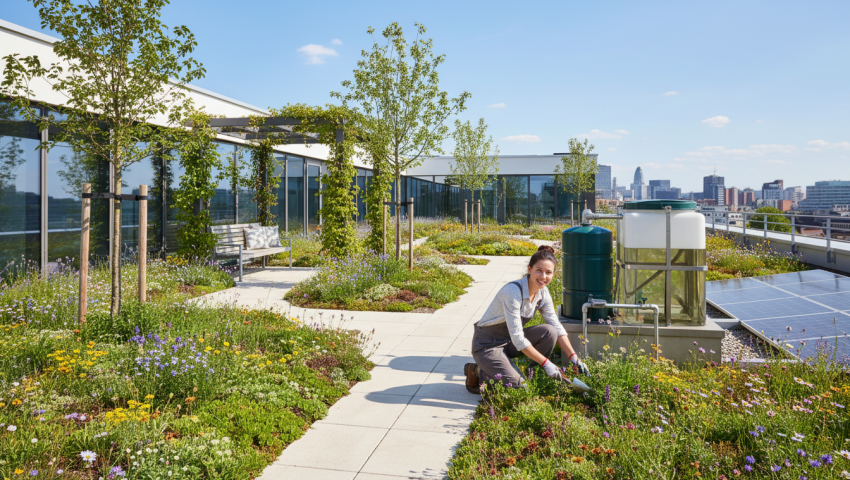
Expert Insight: Green roofs in Denver fail more from poor structural planning than plant selection. The real benefits emerge when engineering matches Colorado’s unique climate demands.
Most property owners in Denver, Colorado think green roofing benefits start and end with energy savings and environmental appeal. That’s exactly why so many projects turn into expensive headaches within five years. The reality is that successful green roofs depend more on understanding load calculations, drainage engineering, and membrane compatibility than choosing the right plants.
Here in Denver, Colorado, the combination of intense UV exposure, dramatic temperature swings, and sudden hailstorms creates unique challenges that separate amateur installations from professional systems. You’ll discover why structural analysis matters more than sustainability goals, how drainage design prevents insurance claims, and which maintenance decisions determine whether your investment pays off or becomes a liability.
Key Takeaways
- Structural Priority: Load analysis must account for saturated soil weight plus snow accumulation, often requiring reinforcement that doubles initial project costs in Denver’s climate zone.
- Drainage Engineering: Proper drainage systems prevent 90% of green roof failures, requiring specific membrane slopes and overflow protection designed for Colorado’s intense summer storms.
- Plant Selection Impact: Extensive systems with drought-resistant species cost 60% less to maintain annually than intensive gardens, making them ideal for Denver’s semi-arid conditions.
- Membrane Compatibility: Root barrier integration with existing waterproofing determines system longevity more than brand selection, especially critical for buildings under 15 years old.
- Warranty Reality: Most green roof warranties exclude plant replacement after year three, shifting maintenance costs entirely to property owners regardless of initial installation quality.
Why Green Roofs Fail When Structural Engineers Skip the Load Analysis
The most expensive green roof mistakes in Denver happen before the first shovel hits the growing medium. Structural engineers who treat green roofs like standard installations consistently underestimate the saturated weight loads, especially when Colorado’s heavy wet snow combines with water-logged soil. A typical extensive system weighs 80-150 pounds per square foot when fully saturated, but add 12 inches of wet snow and you’re looking at 200+ pounds per square foot on a roof designed for 40.
What makes this worse in Denver, Colorado is that many buildings constructed in the last 20 years used engineered lumber and lightweight steel framing to meet minimum code requirements. These structures simply can’t handle the additional loads without significant reinforcement. Professional structural analysis becomes critical because retrofitting support beams after installation costs three times more than doing it right initially.
Load Calculation Factors
- Saturated Weight: Growing medium holds 40-60% of its volume in water, turning a 4-inch extensive system into 120 pounds per square foot when fully soaked.
- Snow Loading: Denver’s wet spring snow can add 80-100 additional pounds per square foot, requiring structural capacity beyond standard roof design parameters.
- Drainage Backup: Clogged drains create ponding that doubles the effective load, making overflow systems and structural redundancy essential for long-term safety.
- Seismic Considerations: Green roof mass affects building dynamics during earthquakes, requiring updated seismic calculations even in Colorado’s moderate seismic zone.
- Future Expansion: Many owners want to upgrade from extensive to intensive systems later, requiring initial structural design to accommodate potential load increases.
The bottom line is that structural analysis isn’t optional for green roofs in Denver, Colorado. Engineers who understand the local climate patterns and building practices can design systems that handle worst-case scenarios without compromising safety. Skipping this step to save money upfront typically results in emergency structural work that costs far more than the original green roof installation.
The Drainage Detail That Separates Successful Projects From Insurance Claims
More green roofs fail from water management problems than all other issues combined, and Denver’s intense summer thunderstorms make drainage design absolutely critical. The typical afternoon downpour can dump 2-3 inches of rain in 30 minutes, overwhelming drainage systems that work fine in steady precipitation. When drains back up, the growing medium becomes waterlogged, plants die from root rot, and the additional water weight can exceed structural capacity.
The key difference between successful and failed installations lies in understanding that green roof drainage isn’t just about getting water off the roof. Stormwater management systems must balance retention for plant health with rapid overflow capacity during extreme weather events. In Denver, Colorado, this means designing for both drought conditions and flash flooding within the same system.
Critical Drainage Components
- Membrane Slope: Minimum 1/4 inch per foot slope prevents ponding, but Denver installations often need 1/2 inch per foot to handle intense rainfall rates.
- Overflow Protection: Secondary drainage systems activate when primary drains reach capacity, preventing catastrophic water buildup during summer storms.
- Filter Fabric: Prevents growing medium particles from clogging drains, but must allow rapid water movement during peak flow conditions.
- Drainage Layer: Gravel or synthetic drainage mats create water pathways, requiring 4-6 inch depth for extensive systems in Colorado’s climate.
- Inspection Access: Drain cleanouts and inspection ports allow maintenance access without disturbing established vegetation or damaging waterproofing membranes.
Proper drainage design costs about 15% more upfront but prevents 90% of the insurance claims we see on green roof projects. The investment in redundant overflow systems and properly sloped membranes pays for itself by avoiding emergency repairs and protecting the building structure underneath.
Extensive vs Intensive: How Plant Selection Drives Your Maintenance Budget
The difference between extensive and intensive green roofs isn’t just about plant variety, it’s about committing to completely different maintenance schedules and budgets. Extensive systems with sedums and native grasses require 2-4 maintenance visits per year once established, while intensive systems with diverse plantings need weekly attention during growing season. In Denver, Colorado, where water costs continue rising and drought restrictions become more common, this choice determines your long-term operating expenses.
Most property owners underestimate the ongoing costs because they focus on installation prices rather than 20-year maintenance projections. Landscape architecture principles show that intensive systems can cost $8-15 per square foot annually to maintain properly, while extensive systems typically run $2-4 per square foot. The math changes dramatically when you factor in Denver’s water restrictions and the specialized knowledge required for rooftop horticulture.
Here’s how maintenance costs compare between extensive and intensive green roof systems over a typical 10-year period:
| Maintenance Category | Extensive System | Intensive System |
|---|---|---|
| Annual Water Costs | $0.50-1.00/sq ft | $1.50-3.00/sq ft |
| Plant Replacement | $0.25-0.50/sq ft | $1.50-2.50/sq ft |
| Labor Requirements | 2-4 visits/year | 12-24 visits/year |
| Fertilization Costs | $0.15-0.25/sq ft | $0.75-1.25/sq ft |
| 10-Year Total | $15-25/sq ft | $65-120/sq ft |
Maintenance Cost Drivers
- Irrigation Demand: Intensive systems need 2-3 times more water than extensive plantings, making them expensive during Denver’s frequent drought periods.
- Plant Replacement: Diverse intensive plantings require 15-25% annual replacement rates, while hardy extensive species maintain 90%+ survival in Colorado’s climate.
- Fertilization Schedule: Intensive gardens need quarterly fertilization and soil amendments, extensive systems typically require annual feeding at most.
- Pest Management: Complex plantings attract more pests and diseases, requiring integrated pest management programs that extensive monocultures rarely need.
- Access Requirements: Intensive maintenance needs walkways and tool storage, adding infrastructure costs that extensive systems avoid through minimal intervention design.
The smart money in Denver, Colorado goes toward extensive systems designed for local climate conditions. While intensive green roofs create beautiful spaces, they’re essentially rooftop gardens that require garden-level maintenance indefinitely. Extensive systems deliver most environmental benefits at a fraction of the ongoing cost.
Why We Recommend Against Green Roofs on Buildings Under 15 Years Old
Installing green roofs on newer buildings often creates more problems than benefits, especially in Denver, Colorado where building practices changed significantly after 2010. Modern roofing membranes are designed for specific thermal expansion patterns and UV exposure rates that green roof installations completely alter. When you add growing medium and vegetation over a membrane that’s still curing and settling, you can void warranties and create leak points that won’t show up for years.
The issue becomes more complex with buildings constructed using newer synthetic materials and engineered systems. Energy efficiency standards for modern construction assume specific thermal performance from roofing assemblies, and green roof modifications can disrupt these calculations. We’ve seen cases where green roofs on buildings less than 10 years old actually increased energy costs because they interfered with designed thermal bridging and ventilation systems.
New Building Complications
- Warranty Conflicts: Most roofing warranties become void when you install growing medium over membranes, leaving you without protection during the critical early years.
- Thermal Disruption: Green roofs change heat transfer patterns that newer buildings rely on for energy efficiency, potentially increasing HVAC loads rather than reducing them.
- Structural Settlement: Buildings continue settling for 5-10 years, and green roof loads can accelerate this process or create uneven settlement patterns.
- Code Compliance: Newer buildings meet current energy codes through specific roof assembly designs that green roof modifications can compromise, creating compliance issues.
- Insurance Issues: Adding green roofs to buildings still under construction loans or new building warranties can create coverage gaps that leave owners exposed.
The sweet spot for green roof installation in Denver, Colorado is typically buildings 15-25 years old that need roof replacement anyway. At that point, you can integrate green roof design with necessary structural updates and new waterproofing systems without compromising existing warranties or energy performance.
The Membrane Choice That Actually Matters More Than Waterproofing Brand
Property owners obsess over waterproofing membrane brands when the real decision that determines green roof success is root barrier integration. The most expensive membrane in the world won’t prevent leaks if plant roots penetrate the waterproofing layer, and Denver’s intense UV exposure makes root barrier degradation happen faster than in most climates. The key is understanding that root barriers aren’t add-on products but integral parts of the waterproofing system that must be engineered together.
What makes this critical in Denver, Colorado is that our dramatic temperature swings cause more thermal expansion and contraction than most regions experience. National Park Service research shows that membrane systems without properly integrated root barriers fail within 7-10 years, while integrated systems routinely last 25+ years. The difference isn’t the membrane quality but how well the root barrier bonds with the waterproofing during thermal cycling.
Here’s how different membrane and root barrier integration approaches compare in terms of performance and warranty coverage:
| Integration Method | Typical Lifespan | Warranty Coverage | Failure Risk |
|---|---|---|---|
| Separate Products | 7-12 years | Limited/Disputed | High |
| Same Manufacturer | 15-20 years | Full System | Moderate |
| Factory Integrated | 20-25 years | Complete | Low |
| Liquid Applied | 12-18 years | Variable | Moderate |
Integration Requirements
- Chemical Compatibility: Root barriers must chemically bond with membrane materials to prevent delamination during thermal expansion cycles common in Colorado’s climate.
- Seam Integrity: Root barrier seams must align with membrane seams and use compatible adhesives to maintain waterproof continuity across the entire system.
- Penetration Details: Roof penetrations require special root barrier treatments that maintain both waterproofing and root protection without creating thermal bridges.
- UV Stability: Root barriers exposed during installation must resist Denver’s high-altitude UV exposure without degrading before growing medium installation.
- Inspection Access: Integrated systems need testable seams and inspection points that don’t compromise root protection or waterproofing performance.
The best approach is selecting membrane and root barrier systems from manufacturers who engineer them to work together. This typically costs 10-15% more than mixing products from different suppliers, but it eliminates the finger-pointing when problems develop and ensures warranty coverage for the complete system.
How Climate Zone 4 Changes Everything About Growing Medium Depth
Denver’s Climate Zone 4 classification creates unique growing medium requirements that most green roof installers get wrong by following guidelines designed for milder climates. The combination of intense solar radiation, dramatic diurnal temperature swings, and periodic drought conditions means that standard 4-inch extensive growing medium depths simply don’t provide enough thermal mass and water storage for plant survival. We consistently see better performance with 6-8 inch depths that cost more upfront but eliminate plant replacement cycles.
The physics behind this involves understanding how growing medium depth affects root zone temperature stability and moisture retention in high-altitude environments. Climate resilience research shows that shallow growing mediums in Denver, Colorado can experience 40-degree temperature swings daily, while deeper mediums moderate these extremes to 15-20 degree ranges that plants can actually tolerate long-term.
Depth Optimization Factors
- Thermal Mass: Deeper growing medium provides thermal buffering that prevents root zone temperature extremes during Denver’s intense summer heat and winter cold snaps.
- Water Storage: Additional depth increases water holding capacity by 30-40%, reducing irrigation needs during Colorado’s frequent drought periods and water restrictions.
- Root Development: Native plants adapted to Denver’s climate develop deeper root systems that require 6+ inches of growing medium for proper establishment.
- Wind Protection: Deeper growing medium provides better anchorage for plants during Colorado’s strong chinook winds that can uproot shallow-rooted vegetation.
- Nutrient Retention: Additional growing medium depth prevents nutrient leaching during intense summer thunderstorms that can wash away plant food from shallow systems.
The extra cost of deeper growing medium typically pays for itself within three years through reduced plant replacement and lower maintenance requirements. In Denver, Colorado’s challenging climate, the choice is between doing it right initially or dealing with ongoing plant mortality and replacement costs.
What Your Green Roof Warranty Really Covers After Year Three
Most green roof warranties sound comprehensive until you read the fine print and discover that plant coverage typically expires after 24-36 months, leaving you responsible for all vegetation replacement and maintenance costs. The waterproofing warranty continues, but it often excludes damage caused by ‘normal’ root penetration or growing medium settlement that develops after the initial establishment period. In Denver, Colorado, where plant stress from climate extremes accelerates after the third year, this timing creates expensive surprises for property owners.
The warranty gap becomes more problematic when you realize that most green roof problems don’t appear until years 4-7, after initial plant establishment but before the system reaches full maturity. Government building studies show that 60% of green roof failures occur during this warranty gap period, when systems experience their first major stress cycles but manufacturers no longer provide coverage for vegetation-related issues.
Coverage Limitations
- Plant Mortality: Most warranties exclude plant replacement after year two, regardless of installation quality or environmental factors beyond normal parameters.
- Growing Medium Settlement: Soil compaction and settling that occurs naturally over time isn’t covered, even when it affects drainage and plant health.
- Irrigation System Maintenance: Drip lines, controllers, and emitters require regular replacement that warranties typically exclude after the first year of operation.
- Weather Damage: Hail, wind, and extreme temperature damage to vegetation is often excluded as ‘acts of nature’ beyond manufacturer control.
- Access Damage: Maintenance activities that damage plants or growing medium during roof repairs aren’t covered under green roof warranties.
Understanding warranty limitations helps you budget for long-term green roof ownership costs and choose systems designed for minimal maintenance rather than maximum initial impact. The best warranties focus on waterproofing integrity and structural components rather than making unrealistic promises about vegetation performance in Colorado’s challenging climate.
Making Green Roofs Work in Denver
Successfully implementing green roofing benefits in Denver, Colorado requires understanding that environmental advantages come second to engineering fundamentals. The projects that deliver long-term value prioritize structural capacity, drainage design, and climate-appropriate plant selection over aesthetic goals or sustainability marketing. When you focus on these technical requirements, the environmental benefits follow naturally without the expensive failures that plague poorly planned installations.
If you’re considering a green roof for your Denver property, start with a comprehensive structural analysis and work with professionals who understand Colorado’s unique climate challenges. The investment in proper engineering and installation typically pays for itself through reduced maintenance costs and extended system life, while delivering the energy savings and environmental benefits that make green roofs attractive in the first place.
Author
JJ Hedden is a roofing contractor who has navigated the complexities of green roof installations across Denver’s challenging climate for over a decade. His experience with both successful projects and costly failures has taught him that engineering fundamentals matter more than environmental enthusiasm when it comes to green roof longevity. Through thousands of roofing projects, he’s learned to spot the structural and drainage issues that separate long-term successes from expensive maintenance headaches.