
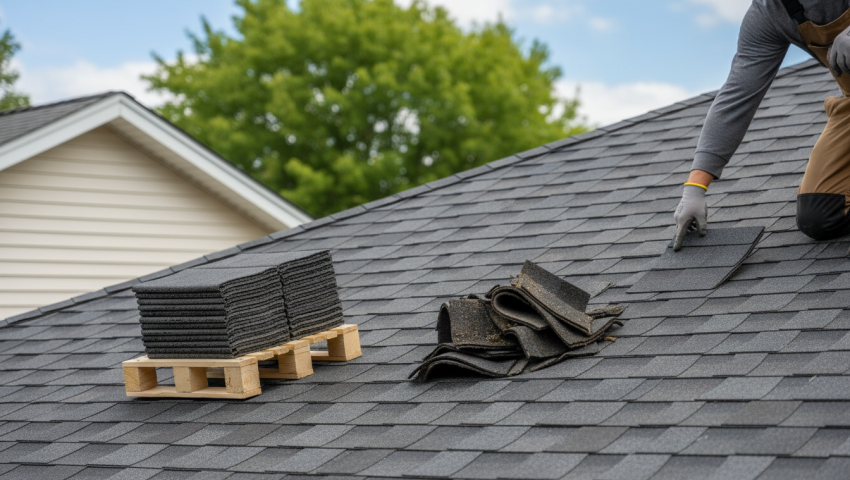
Expert Insight: Three-tab shingles cost more long-term than architectural despite lower upfront pricing. Color choice affects lifespan more than most homeowners realize.
You’re weighing asphalt shingles pros and cons for your Denver home, but most guides skip the details that actually matter in Colorado’s climate. While asphalt shingles dominate 80% of American roofs, their performance here at 5,280 feet elevation with intense UV exposure, frequent hail, and dramatic temperature swings tells a different story than what you’ll read in generic roofing advice.
Understanding asphalt shingles pros and cons means looking beyond basic cost comparisons to factors like wind ratings, impact resistance, and how Denver’s unique weather patterns affect different shingle types. You’ll discover why certain color choices can add a decade to your roof’s lifespan, how architectural shingles actually hide installation mistakes better than premium materials, and why proper ventilation matters more in Colorado than almost anywhere else in the country.
Key Takeaways
- Long-Term Economics: Three-tab shingles often cost more over 20 years due to frequent repairs and earlier replacement needs, despite lower initial investment compared to architectural options.
- Wind Performance: Certainteed Landmark and similar architectural shingles with 130 mph wind ratings significantly outperform basic shingles in Colorado’s chinook wind events and severe thunderstorms.
- Color Impact: Light-colored shingles can extend lifespan by 8-12 years in Denver’s high-altitude UV environment, while dark colors accelerate granule loss and thermal cycling damage.
- Hail Resilience: Class 4 impact-resistant shingles reduce hail damage claims by 60% in Denver’s hail corridor, often qualifying homeowners for insurance premium discounts of 10-25%.
- Installation Forgiveness: Architectural shingles’ dimensional design masks minor installation inconsistencies that would be visible with three-tab or premium materials, reducing callback risks for contractors.
Why Three-Tab Shingles Are Actually More Expensive Long-Term
Three-tab asphalt shingles seem like the budget-friendly choice at $3.50-4.50 per square foot installed in Denver, but that initial savings disappears fast when you factor in Colorado’s harsh conditions. These single-layer shingles lack the mass and dimensional stability to handle our freeze-thaw cycles, leading to cracking, curling, and granule loss within 8-12 years instead of their rated 15-20 year lifespan.
The real cost comes from premature repairs and replacement cycles that architectural shingles avoid. In practice, three-tab roofs in Denver typically need major repairs around year 10, partial replacement by year 15, and complete reroof by year 18-20, while quality architectural shingles often reach 25-30 years with minimal maintenance.
Here’s a 20-year cost comparison showing why three-tab shingles cost more long-term:
| Cost Factor | Three-Tab Shingles | Architectural Shingles |
|---|---|---|
| Initial Installation | $4.25/sq ft | $5.75/sq ft |
| 10-Year Repairs | $2,800 | $800 |
| 15-Year Replacement | $12,000 | $0 |
| Insurance Premium Impact | +$150/year | Standard rates |
| Total 20-Year Cost | $18,800 | $12,600 |
Hidden Costs
- Repair Frequency: Three-tab shingles require wind damage repairs 3x more often than architectural due to weaker seal strips and thinner construction.
- Granule Loss: Single-layer design accelerates UV degradation, causing visible granule loss and streaking within 5-7 years in Denver’s high-altitude sun exposure.
- Thermal Movement: Lack of dimensional stability leads to cracking at nail penetrations during temperature swings from 90°F summers to -10°F winters.
- Resale Impact: Homes with aging three-tab roofs often face $8,000-12,000 price reductions during sale negotiations compared to architectural shingle properties.
- Insurance Issues: Many carriers now classify three-tab roofs over 10 years as ‘high-risk,’ potentially affecting coverage or requiring higher deductibles for wind/hail claims.
When you calculate total cost of ownership over 25 years, three-tab shingles typically cost $2,000-4,000 more than architectural shingles due to these factors. The ‘budget’ option becomes the expensive choice when you account for repairs, early replacement, and potential insurance complications in Denver’s weather environment.
The Wind Rating That Determines Whether Your Roof Survives Colorado Storms
Wind ratings on asphalt shingles aren’t marketing numbers, they’re survival thresholds for Colorado’s severe weather events. Denver experiences chinook winds exceeding 100 mph, severe thunderstorm downbursts, and mountain wave effects that can generate sustained winds of 70-90 mph across the Front Range, making wind resistance the most critical performance factor for shingle selection.
The difference between 70 mph and 130 mph rated shingles comes down to sealant quality, nail placement requirements, and dimensional weight. ASTM D3161 testing shows that shingles rated below 90 mph fail catastrophically in sustained winds above their rating, while properly installed 130 mph shingles maintain integrity even when tested at 140-150 mph wind speeds.
Rating Breakdown
- 70 MPH Standard: Basic three-tab rating that fails in typical Front Range wind events, requiring 4 nails per shingle with minimal sealant strip coverage.
- 90 MPH Enhanced: Mid-grade rating suitable for moderate wind zones but insufficient for Denver’s chinook events and severe thunderstorm microbursts.
- 110 MPH Premium: Architectural shingle standard with improved sealant and 6-nail requirement, handles most Colorado weather but struggles with extreme events.
- 130 MPH Maximum: Highest residential rating requiring enhanced sealant strips, specific nail patterns, and often starter strip upgrades for optimal wind resistance performance.
- Installation Critical: Even 130 mph shingles fail if installed with wrong nail count, placement, or during temperatures below 45°F when sealant won’t activate properly.
For Denver homes, 110 mph minimum wind rating is essential, with 130 mph preferred for exposed areas or homes near mountain foothills where wind acceleration occurs. The $0.50-1.00 per square foot premium for higher wind ratings pays for itself by preventing the $8,000-15,000 cost of post-storm roof replacement.
How Architectural Shingles Hide Installation Mistakes Better Than Any Other Material
Architectural shingles’ dimensional design creates natural shadows and texture variations that mask minor installation inconsistencies that would be glaringly obvious on flat three-tab or premium materials. This ‘forgiveness factor’ explains why they’ve become the preferred choice for contractors and homeowners alike, reducing callback risks and warranty claims significantly.
The multi-layered construction and random cutout patterns mean that slight alignment variations, minor color mismatches between bundles, or small gaps don’t create the visible lines and patterns that plague other shingle types. What’s happening here is that the dimensional profile breaks up sight lines, making the eye focus on texture rather than precision.
Installation Advantages
- Alignment Forgiveness: Random cutout patterns hide slight horizontal misalignment that would create obvious stepped patterns on three-tab installations.
- Color Blending: Dimensional shadows help blend minor color variations between shingle bundles, eliminating the need for careful bundle mixing during installation.
- Nail Visibility: Thicker profile and shadow lines conceal nail heads that might be slightly off-target, unlike flat shingles where every nail shows.
- Gap Coverage: Multi-layer design naturally covers small gaps between shingles that would create visible lines on single-layer materials.
- Weather Sealing: Dimensional weight and sealant placement provide better weather protection even when installation isn’t perfect, reducing leak potential from minor errors.
This installation forgiveness doesn’t mean architectural shingles should be installed carelessly, but it does explain why they consistently deliver better visual results and fewer warranty issues. For homeowners, this translates to peace of mind and reduced likelihood of having to deal with visible installation problems years later.
The Color Choice That Can Add 10 Years to Your Shingle Lifespan
Shingle color affects lifespan more dramatically in Denver’s high-altitude environment than anywhere at sea level, with light colors extending service life by 8-12 years compared to dark options. At 5,280 feet elevation, UV intensity increases by approximately 25% compared to coastal areas, making color selection a critical longevity factor rather than just an aesthetic choice.
Dark shingles absorb more heat, reaching surface temperatures of 160-180°F on summer days, while light colors stay 30-40°F cooler. This temperature difference accelerates the thermal cycling that causes granule loss, asphalt oxidation, and dimensional instability in darker shingles, particularly when combined with Colorado’s dramatic day-night temperature swings.
Color Performance
- Light Gray Benefits: Reflects 40-50% of solar radiation, maintaining surface temperatures under 140°F even during peak summer heat in Denver’s intense UV environment.
- Tan/Beige Optimal: Provides excellent heat reflection while hiding dirt and debris common in Colorado’s dusty Front Range conditions better than pure white options.
- Medium Brown Compromise: Balances aesthetic appeal with reasonable heat absorption, typically adding 3-5 years to lifespan compared to dark options.
- Dark Color Penalty: Black, dark brown, and forest green shingles can lose 8-12 years of expected lifespan due to accelerated thermal cycling and UV degradation.
- Cool Roof Technology: Energy Star qualified reflective shingles in darker colors can partially offset heat absorption but cost 15-25% more than standard options.
The pattern you’ll see most often is homeowners choosing dark colors for curb appeal, then facing premature replacement costs. Light to medium colors not only extend shingle life but can reduce cooling costs by 10-15% during Denver’s hot summers, making color choice a long-term financial decision.
What Happens When Asphalt Shingles Meet Hail Season in the Rockies
Denver sits in the heart of ‘Hail Alley,’ experiencing an average of 9-12 significant hail events annually with stones ranging from pea-sized to golf ball diameter or larger. Standard asphalt shingles suffer granule loss, mat damage, and seal failure from hail impacts that would barely affect impact-resistant alternatives, making hail performance a primary selection criterion for Front Range homes.
The reality is that most standard shingles show visible damage from 1-inch hail, while Class 4 impact-resistant shingles can withstand 2-inch impacts without functional damage. In practice, this means the difference between filing insurance claims every 3-5 years versus potentially going decades without hail-related roof damage.
Here’s how different shingle types perform against common Denver hail sizes:
| Hail Size | Standard Shingles | Class 4 Impact-Resistant |
|---|---|---|
| 3/4 inch | Granule loss | No visible damage |
| 1 inch | Visible bruising | Minor granule displacement |
| 1.5 inch | Mat damage possible | Granule loss only |
| 2 inch | Likely replacement needed | Possible minor damage |
| 2.5+ inch | Severe damage guaranteed | Damage likely but repairable |
Hail Impact
- Granule Displacement: Standard shingles lose protective granules from impacts as small as 3/4-inch, exposing asphalt to accelerated UV degradation and weathering.
- Mat Fracturing: Fiberglass mat underneath can crack from larger impacts, creating weak points that lead to tear-outs during subsequent wind events.
- Seal Failure: Hail impacts can break the thermal seal between shingle layers, reducing wind resistance and allowing moisture infiltration at vulnerable points.
- Insurance Claims: Denver homeowners with standard shingles file hail damage claims 3-4x more frequently than those with Class 4 impact-resistant options.
- Replacement Timing: Most standard asphalt roofs in Denver require replacement after 2-3 major hail events, regardless of age, due to cumulative damage effects.
Class 4 impact-resistant shingles cost 10-20% more upfront but often qualify for 10-25% insurance premium discounts that can offset the additional cost over 5-7 years. More importantly, they can survive Denver’s hail seasons without the stress of frequent claims and potential coverage issues.
The Ventilation Factor Most Homeowners Ignore Until Shingles Start Curling
Proper attic ventilation affects asphalt shingle lifespan more than any other single factor after installation quality, yet most homeowners never think about it until they see curling, premature aging, or ice dam problems. In Denver’s climate with 300+ sunny days annually and temperature swings from -20°F to 105°F, inadequate ventilation can cut shingle life in half.
What’s actually happening is that poor ventilation creates attic temperatures exceeding 150-160°F in summer, literally cooking shingles from below while they’re being battered by UV from above. This double heat stress accelerates asphalt oxidation, granule adhesion failure, and dimensional instability that shows up as curling, cracking, and premature wear patterns.
Ventilation Effects
- Heat Buildup: Inadequate ventilation creates attic temperatures 40-60°F above outdoor ambient, essentially baking shingles from both sides during Denver’s intense summer heat.
- Moisture Problems: Poor ventilation traps humidity from daily living, leading to condensation that can freeze in winter and damage shingle backing and decking materials.
- Ice Dam Formation: Warm attic air melts snow unevenly, creating ice dams at gutters that can force water under shingles and into home interiors.
- Warranty Voidance: Most major manufacturers require proper ventilation for warranty validity, with specific intake/exhaust ratios that must be maintained throughout shingle life.
- Energy Costs: Poor ventilation forces HVAC systems to work harder, increasing cooling costs by 15-25% during Denver’s summer months while shortening equipment life.
The pattern you’ll see most often is homeowners discovering ventilation problems only after shingles start failing prematurely. Proper ventilation with balanced intake and exhaust can extend shingle life by 5-8 years and prevent the $12,000-18,000 cost of premature roof replacement.
Why We Still Recommend Asphalt Despite Installing Premium Materials Daily
After installing metal, tile, slate, and composite materials across Denver for years, asphalt shingles remain our most frequent recommendation for 70% of residential projects. The reason isn’t just cost, it’s the combination of performance, repairability, and practical advantages that premium materials can’t match in real-world Colorado conditions.
Here’s the thing that most guides miss: asphalt shingles are the only roofing material that’s easily repairable after hail damage, readily available for matching during partial replacements, and doesn’t require specialized installation skills that can affect long-term performance. When hail hits your neighborhood, you want a roof that can be fixed quickly and correctly.
Practical Advantages
- Repair Simplicity: Individual damaged shingles can be replaced in 15-20 minutes with basic tools, while metal or tile repairs often require specialized equipment and skills.
- Material Availability: Replacement shingles are available at every lumber yard in Denver, eliminating the 2-6 week wait times common with premium materials.
- Installation Base: Every qualified roofer in Colorado can install asphalt shingles correctly, while premium materials often require specialized training and certification.
- Insurance Compatibility: Adjusters understand asphalt shingle damage patterns and replacement costs, streamlining claims processing compared to premium material disputes.
- Cost Predictability: Asphalt shingle pricing remains stable year-over-year, while metal and tile costs can fluctuate 20-40% based on commodity markets and supply issues.
That said, asphalt isn’t the right choice for every home or budget. But for most Denver homeowners seeking reliable, repairable, cost-effective roofing that performs well in our climate, quality architectural asphalt shingles deliver the best balance of performance and practicality available in today’s market.
Making the Right Choice for Denver
Understanding asphalt shingles pros and cons in Denver’s unique climate means looking beyond simple cost comparisons to factors like wind ratings, impact resistance, color selection, and ventilation requirements. The right asphalt shingle choice can deliver 25-30 years of reliable performance while the wrong one might need replacement in 12-15 years, making informed selection crucial for long-term value.
Whether you choose three-tab for budget constraints or architectural for enhanced performance, focus on wind ratings above 110 mph, consider Class 4 impact resistance for hail protection, and ensure proper ventilation from day one. If you’re ready to explore asphalt shingle options that work well in Colorado’s challenging climate, we can help you navigate the choices and ensure proper installation for maximum lifespan and performance.
Author
JJ Hedden is the owner of Peak to Peak Roofing with 15 years of experience helping Denver homeowners navigate roofing material choices in Colorado’s challenging climate. Having overseen 6,000+ roofing projects across the Front Range, he understands how different shingle types perform in real-world conditions from hail storms to chinook winds. His perspective combines practical installation knowledge with long-term performance data to help homeowners make informed decisions about their most important investment.