
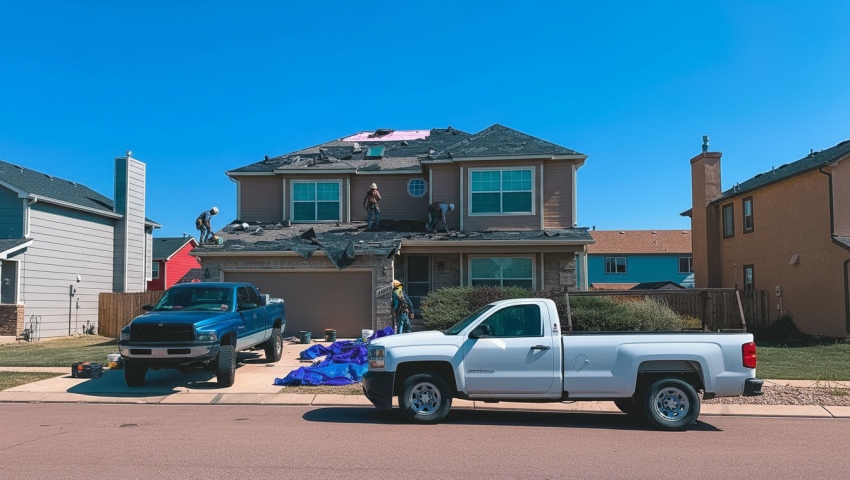
Denver’s unique climate creates roof failures that develop faster than typical warning signs suggest. Most homeowners miss critical damage until emergency repairs cost three times more than planned replacements.
You step outside after Denver’s latest hailstorm and your roof looks fine from the ground. Three months later, you’re dealing with water damage in your living room and facing an emergency repair bill that could have funded a complete replacement. This scenario plays out across Denver neighborhoods every year, and it’s entirely preventable if you know what to look for.
Understanding roof failure signs in Denver requires more than checking for obvious missing shingles. The combination of intense UV exposure at 5,280 feet, sudden temperature swings, and our notorious hail season creates a perfect storm of roofing challenges. This guide reveals the subtle warning signs that separate proactive homeowners from those facing costly emergency situations.
Key Takeaways
- Granule Loss Acceleration: Denver’s high altitude intensifies UV exposure, causing asphalt shingles to lose protective granules 40% faster than at sea level, creating vulnerable spots within 12-15 years instead of the typical 20.
- Hail Damage Timing: Most hail damage in Denver becomes visible 6-18 months after impact, when initial bruising develops into cracks and leaks during freeze-thaw cycles that occur up to 100 times per winter.
- Flashing Failure Patterns: Temperature swings of 60+ degrees between day and night cause metal flashing to expand and contract repeatedly, creating micro-cracks around chimneys, vents, and valleys within 8-10 years.
- Emergency vs. Planned Costs: Emergency roof repairs during Denver’s peak season (May-September) cost 200-300% more than planned replacements due to contractor availability and material shortages after major hail events.
- Insurance Claim Windows: Colorado law requires insurance companies to honor hail damage claims for up to two years, but documenting damage immediately after storms significantly improves claim approval rates and coverage amounts.
Why Denver’s Hail Season Makes Emergency Repairs More Expensive Than Planned Replacements
Every spring, Denver homeowners play a waiting game with Mother Nature. Between April and July, our city sits directly in Hail Alley, where atmospheric conditions create some of the most destructive hailstorms in North America. What many don’t realize is that the real damage often doesn’t show up until months later, when small impacts have had time to develop into major failures.
The economics of hail season create a vicious cycle that catches homeowners off guard. When a major storm hits Denver, every roofing contractor in the region gets booked solid within 48 hours. Material suppliers run short on popular shingle colors and styles. What should be a routine repair suddenly becomes an emergency situation with premium pricing, limited options, and months-long waiting lists for quality contractors.
Here’s how hail season impacts repair costs and availability across different scenarios:
| Repair Timing | Cost Multiplier | Contractor Availability | Material Selection |
|---|---|---|---|
| Pre-Season (March) | 1.0x (baseline) | Full availability | Complete selection |
| Peak Season (May-July) | 2.5-3.0x | 2-4 month wait | Limited colors/styles |
| Post-Storm Emergency | 3.5-4.0x | 6+ month wait | Take what’s available |
| Off-Season (Oct-Feb) | 1.2x | Good availability | Most options available |
Storm Aftermath Realities
- Contractor Surge Pricing: Quality roofers increase rates 150-200% during peak demand periods, while less experienced contractors flood the market with substandard work that creates bigger problems later.
- Material Shortages: Popular shingle brands like Owens Corning and GAF run out of matching colors, forcing homeowners to accept mismatched repairs or wait months for proper materials.
- Insurance Adjuster Delays: After major hail events, adjusters get backlogged for 4-6 weeks, delaying claim approvals while temporary damage worsens from additional weather exposure.
- Quality Control Issues: Overwhelmed contractors take shortcuts during busy periods, leading to improper installations that void warranties and create premature failures requiring complete re-work.
- Permit Processing Slowdowns: City building departments get flooded with applications, extending normal 2-week permit approvals to 6-8 weeks during peak repair seasons.
The smart money is on identifying potential issues before hail season arrives. A planned replacement in March costs significantly less than an emergency repair in June, plus you get first pick of contractors and materials. More importantly, you avoid the stress of living with tarps and buckets while waiting for repairs during Denver’s busiest roofing season.
The Three Roof Damage Signs Most Denver Homeowners Miss Until It’s Too Late
Walk through any Denver neighborhood after a hailstorm, and you’ll see homeowners checking their cars for dents while completely ignoring their roofs. This makes sense from ground level, where subtle roof damage is nearly invisible to the untrained eye. Unfortunately, the signs that matter most for preventing catastrophic failure are exactly the ones you can’t see from your driveway.
Professional roof inspectors know that the most expensive problems start small and hidden. A few missing granules here, a slightly lifted shingle there, or a hairline crack in flashing might seem insignificant. But in Denver’s climate, these minor issues become major headaches faster than anywhere else in the country.
Hidden Damage Indicators
- Granule Accumulation in Gutters: Excessive granules washing into gutters indicates advanced shingle deterioration, especially after Denver’s intense spring runoff when winter damage becomes apparent through increased granule loss.
- Subtle Shingle Lifting: Edges that lift slightly during wind events create entry points for moisture, which then freezes and expands during Denver’s frequent freeze-thaw cycles, accelerating failure.
- Flashing Discoloration: Metal flashing around chimneys and vents develops rust stains or color changes that signal micro-cracks allowing water penetration, often invisible from ground level but critical for waterproofing.
- Attic Temperature Variations: Uneven attic temperatures indicate compromised insulation or ventilation from roof damage, leading to ice dam formation during Denver’s unpredictable winter weather patterns.
- Interior Paint Bubbling: Small paint bubbles near ceiling corners or around light fixtures often indicate minor roof leaks that haven’t yet caused visible water damage but are actively compromising structural integrity.
These warning signs require a trained eye to spot and interpret correctly. What looks like normal wear to most homeowners represents the early stages of failure to experienced professionals. The key is catching these issues while they’re still manageable repairs rather than waiting until they become emergency replacements during the worst possible timing.
How Denver’s 300+ Sunny Days Actually Accelerate Shingle Deterioration
Denver’s reputation for gorgeous weather comes with a hidden cost that most homeowners never consider. Our 300+ days of sunshine per year, combined with the thin atmosphere at 5,280 feet elevation, creates UV exposure levels that would make a beach town jealous. While you’re enjoying another perfect Colorado day, your roof is getting hammered by radiation levels that can age shingles decades in just a few years.
The National Weather Service confirms that UV intensity increases approximately 4% for every 1,000 feet of elevation. This means Denver roofs face UV exposure roughly 20% more intense than coastal areas, while also dealing with dramatic temperature swings that cause constant expansion and contraction. It’s a one-two punch that turns the manufacturer’s 25-year warranty into a 15-year reality.
UV Damage Progression
- Granule Oxidation: UV radiation breaks down the ceramic coating on shingle granules, causing color fading and reducing their ability to reflect heat, which accelerates the deterioration of underlying asphalt layers.
- Asphalt Brittleness: Intense UV exposure causes asphalt to become brittle and crack, especially along shingle edges where thermal stress concentrates during Denver’s daily temperature swings of 40+ degrees.
- Thermal Shock Cycles: Daily heating to 150+ degrees followed by rapid cooling creates micro-fractures in shingles that propagate over time, eventually leading to complete shingle failure during moderate wind events.
- Protective Oil Evaporation: UV radiation accelerates the evaporation of protective oils in asphalt shingles, leaving them vulnerable to cracking and splitting during thermal expansion and contraction cycles.
- Accelerated Aging Timeline: Standard 25-year architectural shingles typically show significant deterioration after 12-15 years in Denver’s climate, requiring replacement much sooner than manufacturers’ warranties suggest.
Understanding UV damage helps explain why Denver roofs fail differently than those in other climates. The combination of intense radiation and thermal cycling creates a unique aging pattern that requires proactive replacement strategies. Waiting for obvious failure signs means you’ve already passed the point where preventive action could have saved thousands in emergency repairs and interior damage.
What Insurance Adjusters Look for During Denver Hail Damage Inspections
Insurance adjusters who work Denver’s hail corridor have seen it all, and they know exactly where to look for damage that homeowners miss. After processing thousands of claims in our unique climate, they’ve developed a systematic approach that focuses on specific failure patterns common to Front Range properties. Understanding their methodology helps homeowners document damage properly and avoid claim denials.
The key is knowing that adjusters aren’t just looking for obvious holes or missing shingles. They’re trained to identify the subtle signs of impact damage that will lead to premature failure, even if the roof appears functional at the time of inspection. Their job is determining whether hail impact has compromised the roof’s ability to perform its intended lifespan, not whether it’s currently leaking.
Adjuster Assessment Points
- Bruising Patterns: Adjusters look for circular bruises on shingles where hail impact has compressed granules without creating visible holes, knowing these spots will fail within 2-3 years of exposure.
- Edge Lifting: Hail impacts along shingle edges create micro-lifting that’s barely visible but allows wind-driven rain to penetrate, leading to gradual water damage and eventual shingle blow-off.
- Granule Displacement: Areas where granules have been knocked loose expose underlying asphalt to UV damage, creating accelerated aging patterns that adjusters recognize as legitimate damage requiring coverage.
- Impact Density: Adjusters count impacts per square to determine whether damage meets the threshold for replacement, typically requiring 8-10 visible impacts per 10×10 foot section for full coverage approval.
- Collateral Damage Indicators: They examine gutters, downspouts, air conditioning units, and outdoor fixtures for impact marks that corroborate roof damage claims and establish storm severity.
Working with experienced insurance claim specialists can make the difference between a successful claim and a denial. Professional documentation of damage using adjuster-recognized criteria significantly improves your chances of full coverage approval. The goal is presenting evidence in the language adjusters understand, not hoping they’ll discover damage on their own.
The Repair vs. Replace Decision That Saves Denver Homeowners Thousands
The most expensive mistake Denver homeowners make is choosing repairs when replacement makes financial sense. It’s counterintuitive, but sometimes spending more upfront saves significant money over time. The decision hinges on understanding how Denver’s climate accelerates normal aging and whether your roof can realistically handle another 5-10 years of our extreme weather patterns.
Professional contractors use a calculation that factors in current damage, remaining lifespan, and the likelihood of future problems. When a roof is already 60-70% through its expected life in Denver’s climate, repairs often become Band-Aid solutions that delay inevitable replacement while adding unnecessary costs. The math becomes especially compelling when insurance coverage is available for storm damage.
Decision Factors
- Age-to-Damage Ratio: Roofs over 12 years old with significant hail damage rarely justify repair costs, as remaining lifespan won’t support the investment before additional weather events cause more damage.
- Multiple System Failure: When gutters, siding, and roofing all show storm damage, insurance typically covers complete replacement, making piecemeal repairs financially wasteful compared to comprehensive restoration.
- Energy Efficiency Upgrades: Replacement allows installation of modern materials with better insulation and ventilation, reducing energy costs by 15-25% annually while improving comfort and home value significantly.
- Warranty Coverage Gaps: Patched repairs create warranty voids where old and new materials meet, leaving homeowners vulnerable to future problems without manufacturer protection or recourse.
- Resale Value Impact: Complete replacement adds $15,000-25,000 to home value, while visible repairs signal deferred maintenance to potential buyers and can actually reduce market appeal and pricing power.
The replace vs. repair decision requires honest assessment of your roof’s remaining viable life in Denver’s challenging climate. When you factor in energy savings, warranty protection, home value increase, and peace of mind, replacement often costs less than the cumulative expense of multiple repairs over the remaining roof life. Professional evaluation helps quantify these factors for informed decision-making.
Why Peak-to-Peak’s Altitude Changes How We Approach Roof Ventilation Repairs
Most roofing advice comes from sea-level perspectives that don’t account for Denver’s unique atmospheric conditions. At our elevation, air density is roughly 17% lower than at sea level, which fundamentally changes how ventilation systems work. What passes for adequate ventilation in coastal areas becomes insufficient here, leading to moisture problems, ice dams, and premature material failure.
The physics are straightforward but often overlooked. Thinner air means less efficient heat transfer through natural convection, requiring different ventilation ratios and airflow patterns to achieve the same results. Add our dramatic temperature swings and intense solar heating, and you need ventilation systems designed specifically for high-altitude performance rather than standard approaches.
Altitude Considerations
- Increased Ventilation Requirements: Denver homes need 20-30% more ventilation area than sea-level recommendations to achieve equivalent air exchange rates, requiring additional ridge vents, soffit vents, or powered ventilation systems.
- Pressure Differential Effects: Lower atmospheric pressure reduces the stack effect that drives natural ventilation, making passive systems less effective and often requiring strategic placement of intake and exhaust vents.
- Thermal Performance Changes: Reduced air density means less heat transfer capacity per cubic foot of airflow, requiring higher volume air movement to prevent ice dam formation during winter months.
- Moisture Management Challenges: Lower air pressure allows moisture to evaporate more readily but also makes it harder to remove humid air from attic spaces, creating unique condensation risks during temperature transitions.
- Wind Pattern Considerations: Mountain proximity creates unique wind patterns that affect ventilation performance, requiring careful vent placement to optimize natural airflow rather than fighting prevailing wind directions.
Proper ventilation repair in Denver requires understanding these altitude-specific factors rather than applying generic solutions. The investment in correctly designed ventilation systems pays dividends by preventing ice dams, reducing energy costs, and extending roof life. It’s one area where cutting corners to save money almost always creates bigger problems down the road.
The Material Upgrade That Pays for Itself in Denver’s Extreme Weather
When facing roof replacement in Denver, the material choice can make or break your long-term satisfaction and costs. While basic 3-tab shingles might save money upfront, they’re essentially guaranteed to fail prematurely in our climate. The upgrade to impact-resistant architectural shingles designed for extreme weather represents one of the best investments you can make in your home’s protection and value.
The numbers tell the story clearly. Class 4 impact-resistant shingles cost roughly 15-20% more than standard materials but can reduce insurance premiums by 10-30% annually. More importantly, they’re engineered to handle the specific combination of hail, UV exposure, and thermal cycling that destroys standard shingles in Denver’s climate.
Here’s how different roofing materials perform and pay back in Denver’s climate:
| Material Type | Initial Cost Premium | Insurance Discount | Expected Lifespan | Total Cost of Ownership |
|---|---|---|---|---|
| Standard 3-tab | Baseline | 0% | 12-15 years | Highest (frequent replacement) |
| Architectural | +25% | 5-10% | 18-22 years | Moderate |
| Class 4 Impact | +35% | 15-30% | 25-30 years | Lowest (durability + savings) |
| Premium/Designer | +50-75% | 15-30% | 30+ years | Moderate (luxury factor) |
Performance Benefits
- Hail Resistance Testing: Class 4 shingles survive 2-inch steel ball impacts at 20 mph without cracking, while standard shingles fail at 1.25-inch impacts, providing measurable protection against Denver’s frequent hailstorms.
- UV Protection Enhancement: Advanced granule technology reflects more UV radiation and includes algae-resistant properties, extending color retention and material integrity in Denver’s intense high-altitude sun exposure.
- Wind Uplift Ratings: Premium materials typically carry 130 mph wind ratings compared to 110 mph for standard shingles, providing better protection against Denver’s notorious downslope windstorms and microbursts.
- Thermal Cycling Durability: Enhanced asphalt formulations and reinforced backing materials handle Denver’s 60+ degree daily temperature swings without cracking, curling, or losing adhesion over time.
- Warranty Protection: Manufacturer warranties on premium materials often include wind and hail coverage that standard shingles exclude, providing additional financial protection against Denver’s weather-related damage.
The upgrade to impact-resistant materials represents insurance you pay for once rather than gambling with repairs every few years. When you factor in insurance discounts, extended lifespan, and reduced maintenance costs, premium materials often cost less over their lifetime than repeatedly replacing cheaper options. For Denver homeowners, it’s not just an upgrade, it’s a necessity for long-term financial protection.
Protecting Your Denver Investment
Recognizing roof failure signs in Denver requires understanding our unique climate challenges rather than relying on generic advice from other regions. The combination of intense UV exposure, frequent hail, and dramatic temperature swings creates failure patterns that develop faster and differently than typical roofing problems. Early detection and proactive replacement save thousands compared to emergency repairs during peak season.
Don’t wait for obvious leaks or missing shingles to signal roof problems. Professional roof installation specialists can identify subtle warning signs and help you make informed decisions about repair versus replacement timing. Whether you’re dealing with storm damage or planning ahead, getting expert evaluation protects your investment and gives you control over timing and costs rather than letting weather dictate emergency decisions.
Author
JJ Hedden is the owner of Peak to Peak Roofing with 15 years of experience navigating Denver’s unique roofing challenges. Having guided over 6,000 homeowners through roof repairs and replacements in Colorado’s extreme weather conditions, he understands how altitude, hail patterns, and UV exposure create failure modes that catch most homeowners off guard. His approach focuses on helping Denver families recognize warning signs early and make informed decisions that protect their homes and budgets.