
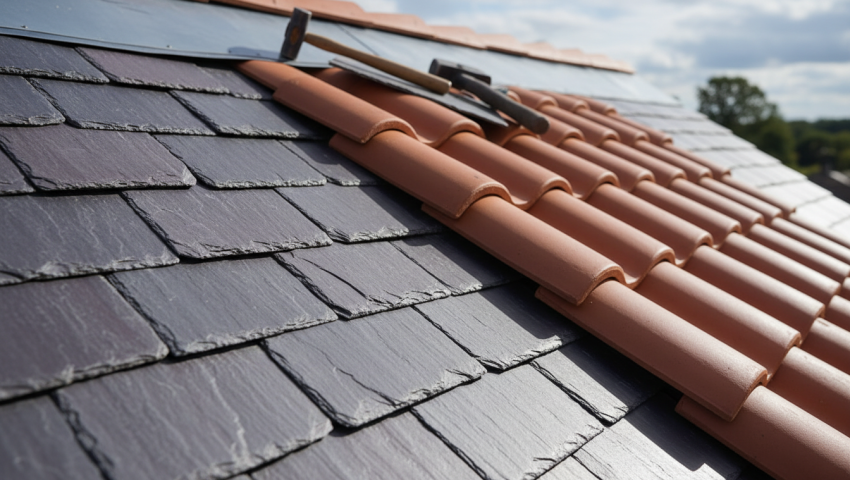
Expert Insight: Slate outlasts tile by decades but costs double upfront. Both require structural reinforcement for Denver’s snow loads and hail resistance.
You’re staring at roofing estimates that make your mortgage payment look reasonable, and you’re wondering if the premium for slate roofing is worth it over clay or concrete tile options. The price gap between these materials can hit $15,000 or more on a typical Denver home, yet both promise decades of protection against Colorado’s brutal weather. Here’s the thing: most homeowners focus entirely on upfront costs and miss the structural requirements that can double their budget.
The reality is that both slate and tile roofing demand significant structural modifications for Denver’s heavy snow loads and freeze-thaw cycles. You’ll discover why slate’s century-long lifespan doesn’t always justify the premium, where clay tiles actually outperform natural stone, and which hidden installation costs catch homeowners off guard. More importantly, you’ll learn which material makes sense for your specific situation in Denver, Colorado, and what questions to ask before committing to either option.
Key Takeaways
- Structural Reality: Both slate and tile require engineering evaluation for Denver homes due to 8-15 pounds per square foot dead loads, often necessitating rafter reinforcement and upgraded decking before installation begins.
- Lifespan Economics: Slate lasts 100-150 years versus tile’s 50-70 years, but the 2-3x higher upfront cost means you won’t break even for 40-60 years on lifecycle value.
- Weather Performance: Clay tiles handle Denver’s freeze-thaw cycles better than concrete tiles, while slate excels in hail resistance but becomes brittle in extreme temperature swings without proper grade selection.
- Installation Complexity: Slate demands specialized craftsmen and costs $20-30 per square foot installed, while tile ranges $10-15 but requires precise underlayment work for Colorado’s ice dam conditions.
- Repair Accessibility: Finding qualified slate repair technicians in Denver takes weeks or months, while tile repairs are more accessible but individual unit replacement often reveals color matching issues from UV fading.
Why Slate’s 100-Year Lifespan Doesn’t Always Justify the Premium
The slate industry loves to tout century-long lifespans, and they’re not wrong about the material’s durability. Welsh slate roofs from the 1800s still protect buildings across Europe, and Vermont quarries produce stone that can outlast several generations of homeowners. But here in Denver, Colorado, the math on slate’s premium pricing gets murky when you factor in real-world economics and maintenance realities.
Most homeowners assume that paying 2-3 times more upfront for slate automatically delivers better value over time. The problem is that you need to stay in your home for 40-60 years to reach the break-even point where slate’s longevity justifies the initial investment. During that time, you’ll face underlayment replacement cycles, potential structural repairs, and the challenge of finding qualified craftsmen for maintenance work.
Economic Realities
- Break-Even Timeline: At current pricing, slate takes 40-60 years to justify its premium over quality clay tile, assuming you never move or refinance.
- Underlayment Cycles: Even century-grade slate requires underlayment replacement every 25-35 years, costing $8,000-12,000 including tile removal and reinstallation in Denver.
- Resale Recognition: Premium slate adds 60-80% of its cost to home value, while quality tile adds 85-95%, making tile more attractive for shorter ownership periods.
- Insurance Premiums: Both materials qualify for impact-resistant discounts, but slate’s higher replacement cost can increase dwelling coverage requirements and premiums accordingly.
- Opportunity Cost: The $15,000-25,000 price difference invested conservatively at 6% annual return equals $60,000-100,000 over 30 years, often exceeding slate’s lifecycle advantage.
The key insight here is that slate’s exceptional longevity becomes an economic advantage only if you’re planning multi-generational ownership or building a legacy property. For most Denver homeowners who move every 7-12 years, quality clay tile delivers better financial returns while still providing 50-70 years of reliable protection against Colorado’s challenging weather patterns.
The Weight Factor That Eliminates Half of All Roofing Options
Walk into any Denver roofing consultation expecting to choose between slate and tile, and you might discover that your roof structure can’t handle either option without major reinforcement. Both materials weigh 8-15 pounds per square foot compared to asphalt shingles at 2-4 pounds, creating dead loads that exceed most residential roof designs. This weight difference isn’t just a minor consideration, it’s often the deciding factor that eliminates premium roofing options entirely.
The structural reality hits hardest on homes built before 1990, when building codes didn’t anticipate homeowners upgrading to heavy roofing materials. Your existing rafters, trusses, and decking were sized for standard asphalt shingles plus Denver’s 30-pound snow load requirements. Adding slate or tile without reinforcement can stress the structure beyond safe limits, particularly during heavy snow events when total roof loads can exceed 50 pounds per square foot.
Here’s how different roofing materials compare in structural requirements for typical Denver homes:
| Material Type | Weight (lbs/sq ft) | Structural Reinforcement | Typical Upgrade Cost |
|---|---|---|---|
| Asphalt Shingles | 2-4 | None Required | $0 |
| Concrete Tile | 9-12 | Often Required | $3,000-8,000 |
| Clay Tile | 6-9 | Sometimes Required | $2,000-6,000 |
| Natural Slate | 8-15 | Usually Required | $4,000-12,000 |
| Synthetic Slate | 4-8 | Rarely Required | $0-3,000 |
Structural Considerations
- Engineering Evaluation: Denver building codes require structural analysis for roofing materials exceeding 4 pounds per square foot, adding $800-1,500 to project costs before work begins.
- Rafter Reinforcement: Most homes need additional framing members or engineered lumber upgrades, typically costing $3,000-8,000 depending on roof complexity and accessibility for Denver contractors.
- Decking Upgrades: Standard 7/16-inch OSB sheathing often requires upgrade to 5/8-inch or 3/4-inch plywood for proper fastener holding power with heavy materials.
- Foundation Impact: Significant roof weight increases can require foundation evaluation, particularly on older Denver homes with shallow footings or marginal soil conditions.
- Permit Complexity: Heavy roofing materials trigger more extensive plan review and inspection requirements, extending project timelines by 2-4 weeks in Denver’s permitting process.
The structural weight factor often becomes the silent decision-maker in slate versus tile comparisons. Many Denver homeowners start shopping for slate and discover that the required reinforcement costs push their total project budget beyond what tile would cost, making the choice for them. Before falling in love with either material, get a structural evaluation to understand what’s actually possible on your specific home.
Where Clay Tiles Actually Outperform Slate in Durability
The conventional wisdom says slate always wins on durability, but that assumption crumbles when you examine how different materials handle Denver’s specific climate challenges. Clay tiles fired at 2000°F develop a vitrified surface that resists moisture absorption better than many slate grades, particularly the softer varieties that dominate the affordable slate market. This moisture resistance becomes critical during Colorado’s 150+ annual freeze-thaw cycles.
Here’s what most people miss: slate quality varies dramatically based on quarry location and geological formation. Welsh and Vermont slates perform exceptionally, but Chinese and some domestic slates absorb enough moisture to crack during freeze-thaw cycles. Meanwhile, quality clay tiles meeting ASTM standards consistently outperform mediocre slate in thermal cycling tests, making material grade selection more important than material type.
Performance Advantages
- Freeze-Thaw Resistance: Quality clay tiles absorb less than 6% moisture by weight, while soft slate grades can absorb 8-12%, leading to spalling and delamination in Denver’s climate.
- Thermal Expansion: Clay tiles expand and contract uniformly due to consistent firing processes, while slate’s natural grain structure creates stress points that can crack under thermal cycling.
- Color Stability: Fired clay pigments resist UV fading better than slate’s natural minerals, maintaining appearance for 50+ years compared to slate’s potential color shifts after 20-30 years.
- Impact Recovery: Clay tiles often crack cleanly and remain functional after hail impact, while slate tends to shatter completely, requiring immediate replacement to prevent water intrusion.
- Alkaline Resistance: Clay tiles resist Denver’s alkaline soil conditions and concrete contact better than slate, which can deteriorate when exposed to high-pH environments over decades.
The key insight is that material grade matters more than material type when it comes to long-term performance in Denver’s challenging climate. A premium clay tile from a reputable manufacturer will consistently outperform budget slate, while top-grade slate will exceed clay tile performance. The difference lies in understanding what you’re actually buying and matching material quality to your performance expectations and budget constraints.
The Hidden Installation Costs That Double Your Budget
You’ve budgeted for the material costs and basic installation, but then the contractor starts talking about ice barriers, specialized fasteners, structural reinforcement, and permit fees that weren’t in the original estimate. These ‘hidden’ costs aren’t really hidden, they’re just rarely explained upfront because they vary dramatically based on your home’s specific conditions and Denver’s building requirements. The reality is that premium roofing materials trigger a cascade of related upgrades that can double your anticipated budget.
The problem compounds because slate and tile installations can’t cut corners on supporting systems the way asphalt shingle jobs sometimes do. You need proper underlayment rated for the material weight, corrosion-resistant fasteners that won’t fail over decades, and flashing systems that match the roof’s expected lifespan. Skimping on any of these components turns your premium roof into an expensive maintenance headache within 10-15 years.
Budget Surprises
- Specialized Underlayment: Premium roofing requires high-temperature synthetic underlayment costing $1.50-3.00 per square foot compared to standard felt at $0.35 per square foot.
- Fastener Upgrades: Slate demands copper nails at $2-4 per pound, while tile needs stainless steel fasteners, both costing 3-5 times more than standard galvanized options.
- Flashing Systems: Copper or lead-coated steel flashing adds $3,000-8,000 to projects but becomes essential for matching the roof covering’s expected lifespan in Denver’s weather.
- Access Equipment: Heavy materials require specialized lifting equipment and staging, adding $1,500-4,000 to installation costs depending on roof height and complexity.
- Permit Premiums: Denver charges higher permit fees for heavy roofing materials due to additional plan review and inspection requirements, typically adding $500-1,200 to project costs.
The best defense against budget surprises is getting detailed estimates that itemize all supporting systems and potential structural modifications upfront. Reputable Denver contractors will walk your property and identify these requirements during the initial consultation, while fly-by-night operators often lowball estimates and add costs later. Understanding these hidden expenses helps you budget accurately and avoid contractors who promise unrealistic pricing.
Why Synthetic Slate Beats Natural Stone in Hail-Prone Areas
Denver sits squarely in ‘Hail Alley,’ where golf ball-sized hail strikes every few years and causes millions in roofing damage annually. Natural slate’s brittle structure makes it vulnerable to impact damage, often shattering completely when struck by large hailstones. This creates an expensive paradox: you pay premium prices for a material that can be destroyed by a single severe weather event that’s common in our area.
Synthetic slate products have evolved dramatically in recent years, offering impact resistance that natural stone simply can’t match. These engineered materials flex under impact rather than shattering, often achieving UL 2218 Class 4 impact ratings that qualify for significant insurance discounts. When you factor in Denver’s hail frequency and the cost of slate replacement, synthetic options often provide better long-term value despite lower prestige appeal.
Here’s how different slate options perform in Denver’s hail-prone environment:
| Material Type | Impact Rating | Hail Resistance | Insurance Discount | Replacement Cost |
|---|---|---|---|---|
| Welsh Slate | Class 1-2 | Poor | None | $25-35/sq ft |
| Vermont Slate | Class 2 | Fair | Limited | $20-30/sq ft |
| Synthetic Slate | Class 3-4 | Excellent | 10-20% | $8-15/sq ft |
| Polymer Slate | Class 4 | Superior | 15-25% | $6-12/sq ft |
Hail Performance
- Impact Flexibility: Synthetic slate bends and recovers from hail impact, while natural stone cracks or shatters completely, requiring individual tile replacement that often reveals color matching issues.
- Insurance Benefits: Class 4 impact-rated synthetic slate qualifies for 10-25% premium discounts with most Denver-area insurers, often saving $200-500 annually on homeowners insurance.
- Replacement Accessibility: Synthetic slate repairs can be completed by most qualified roofers, while natural slate requires specialized craftsmen who may not be available quickly after widespread hail events.
- Weather Consistency: Engineered materials perform consistently across temperature ranges, while natural slate becomes more brittle in extreme cold, increasing vulnerability during winter hail events.
- Warranty Coverage: Many synthetic slate products include comprehensive impact warranties, while natural slate warranties typically exclude weather-related damage, leaving homeowners responsible for hail repair costs.
For Denver homeowners prioritizing practical performance over prestige, synthetic slate often delivers superior value in our hail-prone climate. The combination of impact resistance, insurance discounts, and reliable repair availability makes these materials increasingly attractive, especially when you consider that a single severe hail event can destroy thousands of dollars worth of natural slate in minutes.
The Repair Reality: Finding Craftsmen for Premium Materials
Twenty years after installing your premium slate or tile roof, you discover that finding qualified repair technicians in Denver has become nearly impossible. The craftsmen who installed your roof have retired, moved away, or shifted to more profitable work, leaving you with a beautiful roof that nobody knows how to fix properly. This repair accessibility crisis affects both materials but hits slate owners particularly hard due to the specialized knowledge required for proper installation and repair.
The problem isn’t just finding someone willing to work on premium materials, it’s finding someone who understands the nuances of proper installation, color matching, and structural integration. Improper repairs can void warranties, create leak points, and damage surrounding materials, turning a simple fix into a major restoration project. This reality makes repair accessibility a critical factor in material selection that most homeowners never consider during initial installation.
Service Challenges
- Craftsman Shortage: Denver has fewer than 20 contractors specializing in slate repair, with wait times extending 4-8 weeks for non-emergency work during peak seasons.
- Skill Requirements: Proper slate repair requires understanding of historical installation methods, proper fastening techniques, and material compatibility that many general roofers lack completely.
- Color Matching: Natural slate fades and weathers differently across roof sections, making replacement tiles obvious even when sourced from original quarries decades later.
- Access Limitations: Many premium material specialists refuse to work on roofs above certain heights or slopes due to liability concerns and specialized equipment requirements.
- Cost Premiums: Emergency repairs on slate or tile roofs cost 2-3 times more than standard roofing work due to material handling requirements and craftsman scarcity.
Before committing to premium roofing materials, research the local service network and establish relationships with qualified repair technicians. Ask potential installers about their long-term service commitments and warranty support. The most beautiful roof becomes a liability if you can’t maintain it properly, making ongoing service accessibility as important as initial installation quality.
Climate Zones Where Tile Roofing Fails Catastrophically
While tile roofing performs excellently in Mediterranean and desert climates, certain environmental conditions can cause rapid deterioration and catastrophic failure. Denver’s unique combination of intense UV exposure, extreme temperature swings, and moisture cycling creates conditions where some tile types fail within 15-20 years instead of their expected 50-70 year lifespan. Understanding these failure modes helps you avoid costly mistakes when selecting tile grades and installation methods.
The failure patterns aren’t immediately obvious because tiles often look fine from ground level while developing structural problems that become apparent only during detailed inspection. Concrete tiles are particularly vulnerable to Denver’s alkaline soil conditions and freeze-thaw cycling, while clay tiles can develop hairline cracks that allow moisture penetration and subsequent spalling. These problems compound over time, eventually requiring complete roof replacement rather than simple repairs.
Failure Modes
- Efflorescence Damage: Concrete tiles in Denver’s alkaline environment develop white mineral deposits that indicate internal moisture movement and gradual structural degradation over 15-25 years.
- Thermal Shock: Rapid temperature changes from 90°F summer days to sudden thunderstorm cooling can crack tiles that don’t meet proper thermal expansion specifications for Colorado conditions.
- Underlayment Mismatch: Standard underlayment degrades faster under tile installations due to heat buildup, causing premature failure that compromises the entire roofing system within 20-30 years.
- Fastener Corrosion: Inadequate fastener materials corrode in Denver’s moisture and temperature cycling, leading to tile slippage and progressive roof failure starting around year 15-20.
- Ice Dam Vulnerability: Tile profiles that trap snow and ice create damming conditions that force water under tiles, causing leaks and structural damage during Denver’s frequent freeze-thaw cycles.
The key to avoiding tile roofing failures in Denver’s challenging climate is selecting materials specifically rated for freeze-thaw cycling and ensuring proper installation with compatible underlayment and fastening systems. Cheap tile installations that cut corners on supporting components often fail catastrophically within 20 years, while properly specified and installed systems can achieve their full lifespan expectations even in Colorado’s demanding environment.
Choosing Your Roofing Investment
The slate versus tile decision ultimately comes down to matching material characteristics with your specific priorities, budget, and long-term plans. If you’re building a legacy home and plan to stay for decades, premium slate offers unmatched longevity and prestige appeal. For most Denver homeowners, quality clay tile provides excellent performance at a more reasonable price point, with better repair accessibility and insurance benefits that make practical sense.
Before making your final decision, get a structural evaluation to understand what’s actually possible on your home, research the local service network for ongoing maintenance, and factor in the total cost of ownership including underlayment replacement cycles. Whether you choose slate or tile, investing in proper installation with quality supporting components will determine whether you get decades of reliable protection or expensive problems that emerge within the first 15-20 years. If you need help evaluating your specific situation and roofing options in Denver, Colorado, we can provide detailed assessments and recommendations based on your home’s unique requirements.
Author
JJ Hedden is a roofing specialist with extensive experience helping Denver homeowners navigate complex material decisions for premium roofing installations. With over 15 years of hands-on experience with slate, tile, and alternative roofing systems in Colorado’s challenging climate, he understands the real-world performance differences that matter most for long-term satisfaction. His practical approach focuses on matching roofing investments to homeowner priorities rather than pushing the most expensive options.