
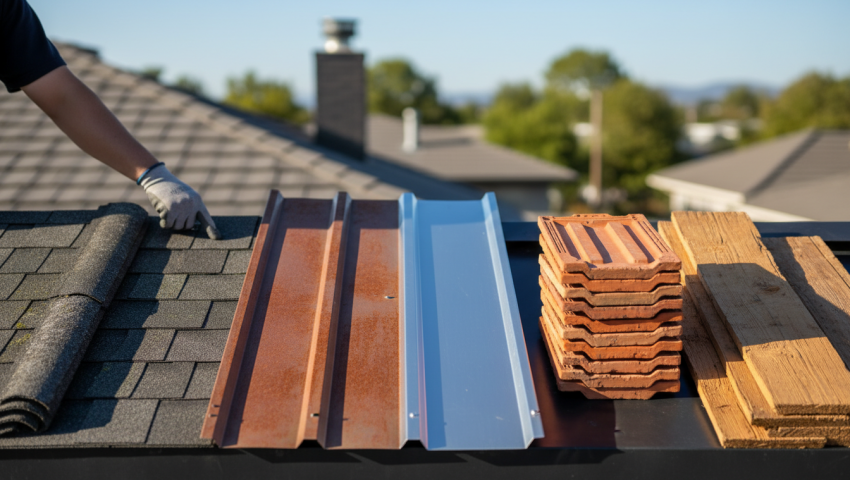
Expert Insight: Most roofing warranties promise decades of protection, but Denver’s extreme weather cuts actual lifespans significantly shorter than advertised.
You’ve probably heard that asphalt shingles last 30 years, metal roofs go 50, and tile endures a century. But here’s what roofing contractors won’t tell you upfront: those numbers are based on ideal conditions that don’t exist in Denver, Colorado. Between our intense UV exposure, sudden hailstorms, and brutal freeze-thaw cycles, even premium materials age faster than manufacturers admit.
Understanding real-world roofing materials lifespan isn’t just about planning your budget, it’s about making smart decisions that protect your home and your wallet. We’ll break down what actually happens to different materials over time, why installation quality matters more than brand names, and when replacing early actually saves money. By the end, you’ll know exactly what to expect from your roof and how to maximize whatever material you choose.
Key Takeaways
- Climate Reality: Denver’s high-altitude UV and hail reduce most roofing material lifespans by 20-40% compared to manufacturer estimates and national averages.
- Installation Impact: Poor workmanship can cut a roof’s lifespan in half, making contractor selection more important than material brand or warranty length.
- Maintenance Multiplier: Regular inspections and prompt repairs can double actual service life, especially for tile and metal systems in Colorado’s harsh climate.
- Warranty Disconnect: Most material warranties cover defects, not weather damage, leaving homeowners responsible for the most common failure causes in Denver.
- Replacement Timing: Strategic early replacement before major failure often costs 30-50% less than emergency repairs plus eventual full replacement within two years.
Why Most Roofing Material Warranties Don’t Match Real-World Lifespan
Walk into any roofing showroom and you’ll see impressive warranty numbers: 30-year shingles, 50-year metal, lifetime slate. These figures create expectations that rarely match reality, especially in Denver’s challenging climate. Manufacturers base their warranties on laboratory testing and ideal installation conditions, not the daily punishment of Colorado’s weather extremes.
The disconnect becomes clear when you understand what warranties actually cover. Most protect against manufacturing defects, not the environmental damage that actually kills roofs in Denver. Hail damage, UV degradation, wind uplift, and thermal cycling account for 80% of roof failures here, yet these aren’t warranty issues. According to energy efficiency research, reflective roofing materials can significantly impact longevity, but environmental factors still dominate actual service life.
Warranty Limitations
- Manufacturing Focus: Warranties cover material defects like delamination or premature granule loss, not weather-related damage that causes most Denver roof failures.
- Installation Exclusions: Poor workmanship voids most warranties, yet installation quality varies dramatically between contractors and directly affects material performance and longevity.
- Prorated Coverage: Many warranties reduce payouts over time, so a ‘lifetime’ warranty might only cover 40% of replacement costs after 15 years.
- Climate Disclaimers: Fine print often excludes coverage in ‘severe weather zones,’ which technically includes much of Colorado due to hail frequency.
- Maintenance Requirements: Warranties typically require documented professional inspections and repairs, conditions most homeowners don’t meet, voiding coverage when needed most.
Smart homeowners in Denver focus on realistic lifespan expectations rather than warranty length. A 25-year shingle that consistently delivers 18-22 years of service often provides better value than a 40-year product that fails at 20 years due to climate stress. The key is understanding your local conditions and choosing materials proven to handle them, not just those with the longest paper warranties.
The Climate Factor That Cuts Asphalt Shingle Life in Half
Denver sits at 5,280 feet, where UV radiation is 25% more intense than at sea level. This invisible enemy attacks asphalt shingles relentlessly, breaking down the petroleum-based binders that hold granules in place. While coastal areas might see 25-30 years from architectural shingles, Denver homeowners typically get 15-20 years from the same products due to this altitude effect.
The damage accelerates through a predictable pattern. First, granule loss exposes the asphalt mat to direct sunlight. Then thermal cycling between scorching summer days and freezing winter nights creates micro-cracks. Finally, our spring hailstorms find these weakened spots and cause failures that look sudden but actually result from years of UV damage. Government roofing guidelines emphasize the importance of reflective materials in high-UV environments, but even premium options struggle with Colorado’s intensity.
UV Damage Progression
- Granule Erosion: High-altitude UV breaks down the ceramic coating that protects shingles, with south-facing slopes losing 30-40% more granules than north-facing sections.
- Asphalt Oxidation: Direct sunlight hardens the flexible asphalt binder, making shingles brittle and prone to cracking during temperature swings common in Denver.
- Thermal Stress: Daily temperature variations of 40-50 degrees cause expansion and contraction that fatigues shingle materials faster than in stable climates.
- Accelerated Aging: What takes 20 years in moderate climates happens in 12-15 years here, with visible curling and cracking appearing much earlier than expected.
- Compound Effects: UV damage makes shingles more vulnerable to hail and wind, so storms that wouldn’t damage new roofs can destroy UV-weakened materials.
The solution isn’t avoiding asphalt shingles entirely, but choosing the right grade and planning accordingly. Class 4 impact-resistant shingles with reflective granules last longer in Denver, often reaching 20-25 years with proper maintenance. However, budgeting for replacement every 18-20 years, regardless of warranty length, prevents the financial shock of premature failure and allows for strategic timing rather than emergency replacement.
Metal Roofing’s 50-Year Promise vs. What Actually Happens at Year 25
Metal roofing manufacturers love to promote 50-70 year lifespans, and the core material can indeed last that long. However, the reality in Denver involves more nuance than marketing materials suggest. While the metal panels themselves resist UV damage and hail better than shingles, the supporting components often need attention well before the half-century mark.
The key insight is understanding that a metal roof is a system, not just panels. Fasteners, sealants, flashing, and trim pieces all have shorter lifespans than the metal itself. In Denver’s climate, thermal expansion and contraction stress these connection points, while UV exposure degrades sealants and gaskets. Industry research from NAHB shows that proper maintenance can extend metal roof life significantly, but neglecting these components can cause system failure even when panels remain sound.
Here’s a realistic timeline for metal roofing maintenance and component replacement in Denver’s climate:
| Years | Maintenance Need | Typical Cost Range |
|---|---|---|
| 5-7 | Fastener inspection and gasket replacement | $800-1,500 |
| 10-15 | Sealant renewal around penetrations | $1,200-2,500 |
| 15-20 | Major fastener system overhaul | $3,000-6,000 |
| 20-25 | Paint system recoating (if desired) | $8,000-15,000 |
| 25-30 | Flashing and trim replacement | $2,500-5,000 |
System Components
- Fastener Fatigue: Screws and clips experience stress from thermal movement, with gaskets typically needing replacement every 15-20 years to maintain watertight seals.
- Sealant Degradation: Butyl and silicone sealants around penetrations last 10-15 years in Denver’s UV exposure, requiring regular inspection and reapplication for leak prevention.
- Paint System Aging: Even premium Kynar coatings fade and chalk over time, with recoating needed every 20-25 years to maintain appearance and protection.
- Flashing Concerns: Transitions between materials and roof penetrations remain vulnerable points where improper installation or material mismatch can cause premature failure.
- Expansion Issues: Poor design for thermal movement can cause oil canning, fastener backup, and stress cracking at panel connections, especially on large roof areas.
Metal roofing in Denver typically delivers 40-50 years of solid performance with proper installation and periodic maintenance. The key is budgeting for component replacement and understanding that ‘maintenance-free’ doesn’t mean ‘maintenance-never.’ Homeowners who inspect fasteners and sealants every 5-7 years and address issues promptly often see their metal roofs reach or exceed manufacturer projections, making the higher initial investment worthwhile over the long term.
How Installation Quality Changes a 30-Year Roof Into a 15-Year Problem
The difference between a roof that lasts decades and one that fails prematurely often comes down to installation details that homeowners never see. In Denver’s challenging climate, these details become critical. Poor nailing patterns, inadequate ventilation, and improper flashing can cut any roof’s lifespan in half, regardless of material quality or warranty coverage.
Consider ventilation alone: Denver’s extreme temperature swings create massive thermal stress in attic spaces. Without proper air circulation, summer temperatures can reach 150°F while winter brings subzero cold. This thermal cycling ages materials rapidly and creates ice dam conditions that destroy even premium roofing systems. Professional installation addresses these factors, while shortcuts create expensive problems that appear years later.
Critical Installation Factors
- Nailing Precision: Overdriven nails puncture shingle seals, while underdriven nails allow wind uplift, both causing premature failure in Denver’s variable weather conditions.
- Ventilation Balance: Proper intake and exhaust ratios prevent moisture buildup and thermal stress that can reduce material lifespan by 30-50% in Colorado’s climate.
- Flashing Integration: Hand-formed flashing around chimneys and valleys must account for thermal movement and ice formation to prevent the leak sources that destroy roofs.
- Deck Preparation: Proper substrate ensures materials perform as designed, while rushed preparation creates uneven surfaces that stress materials and void warranties.
- Weather Timing: Installing during proper conditions ensures adhesives cure correctly and materials seat properly, critical factors for long-term performance in Denver’s environment.
The installation quality difference becomes obvious during Denver’s first major hailstorm or windstorm. Well-installed roofs weather these events with minimal damage, while poor installations fail catastrophically. Choosing contractors based on demonstrated local experience and proper licensing, rather than just price, often determines whether your roof investment delivers its expected lifespan or becomes an expensive lesson in false economy.
The Maintenance Schedule That Doubles Clay Tile Longevity
Clay and concrete tiles can last 50-100 years in Denver’s climate, but only with proper maintenance. The tiles themselves resist UV, hail, and temperature extremes remarkably well. However, the underlayment, fasteners, and flashing systems that support them need regular attention. Without this care, a century roof becomes a 20-year problem when water infiltration destroys the structure beneath.
The maintenance paradox with tile roofs is that small problems become expensive disasters quickly. A few loose tiles allow wind-driven rain to saturate underlayment, leading to deck rot and structural damage that costs far more than the original roof. Denver’s freeze-thaw cycles accelerate this process, making proactive maintenance essential rather than optional for tile roof longevity.
Maintenance Priorities
- Annual Inspections: Professional inspection after each hail season identifies loose or cracked tiles before they allow water penetration and structural damage.
- Underlayment Monitoring: Checking for signs of water infiltration every 3-5 years allows underlayment replacement before deck damage occurs, preserving tile investment.
- Fastener Maintenance: Replacing corroded nails and clips prevents tile slippage that can cascade into major roof failure during Denver’s severe weather events.
- Valley Cleaning: Removing debris from tile valleys prevents water backup and ice dam formation that can lift tiles and damage underlayment.
- Flashing Updates: Replacing step flashing and valley liners every 15-20 years maintains watertight integrity while preserving the tile investment above.
Homeowners who follow proper tile maintenance schedules often see 70-80 years of service from their roofs in Denver. The key is viewing maintenance as roof preservation rather than expense. Spending $2,000-3,000 every few years on proactive care protects a $30,000-50,000 tile roof investment and avoids the structural damage that can double replacement costs when neglect allows water infiltration.
Why Premium Materials Often Fail Faster Than Standard Options
Counter-intuitively, some premium roofing materials perform worse than standard options in Denver’s climate. This happens when manufacturers optimize for appearance, energy efficiency, or coastal conditions rather than the specific stresses of high-altitude, hail-prone environments. Premium doesn’t always mean durable when environmental demands exceed design parameters.
Take designer shingles with complex layering and adhesive systems. While beautiful, these intricate designs create more failure points than simple architectural shingles. Denver’s thermal cycling stresses these bonds, and hail finds the weak spots between layers. Similarly, some premium metal coatings prioritize color retention over impact resistance, making them vulnerable to our frequent storms despite their higher cost.
Premium Pitfalls
- Complex Adhesive Systems: Multi-layer premium shingles rely on adhesives that can fail under Denver’s extreme temperature cycling, creating delamination issues standard shingles avoid.
- Specialized Coatings: Some premium metal finishes prioritize appearance over durability, making them more susceptible to hail damage than standard paint systems.
- Aesthetic Compromises: Designer tiles with complex profiles can trap debris and ice, creating stress points that cause cracking in freeze-thaw conditions.
- Installation Sensitivity: Premium materials often require specialized installation techniques that increase the risk of contractor error and subsequent performance issues.
- Climate Mismatch: Materials optimized for coastal or moderate climates may lack the UV resistance and impact tolerance needed for Denver’s extreme conditions.
The lesson isn’t to avoid premium materials, but to choose them wisely. Premium products designed specifically for harsh climates often outperform standard options significantly. However, premium materials optimized for different environments or aesthetic goals may disappoint in Denver. Research the specific performance criteria that matter in Colorado rather than relying on general premium branding or national reviews.
When Replacing Before Failure Actually Costs Less Long-Term
Most homeowners wait until their roof fails completely before replacing it, but this approach often costs 30-50% more than strategic early replacement. In Denver’s climate, roofs typically show clear decline signs 3-5 years before total failure. Replacing during this window allows for planned timing, better material selection, and protection of home structure that emergency replacements can’t provide.
The math becomes clear when you factor in secondary damage. A failing roof that leaks for even one winter can cause insulation damage, drywall replacement, and mold remediation that doubles total project cost. Meanwhile, strategic replacement during good weather allows for better contractor selection, optimal material choices, and protection of your home’s interior and structure.
Here’s a cost comparison showing why strategic early replacement often saves money compared to waiting for complete failure:
| Replacement Timing | Roof Cost | Secondary Damage | Total Investment |
|---|---|---|---|
| Strategic (75% lifespan) | $15,000-25,000 | $0-500 | $15,000-25,500 |
| At failure point | $18,000-30,000 | $3,000-8,000 | $21,000-38,000 |
| Emergency (after leaking) | $20,000-35,000 | $5,000-15,000 | $25,000-50,000 |
| Delayed (structural damage) | $22,000-40,000 | $10,000-25,000 | $32,000-65,000 |
Strategic Timing Benefits
- Contractor Selection: Planned replacement allows choosing quality contractors during their slower seasons, rather than emergency availability during storm season rush periods.
- Material Optimization: Time for research enables selecting materials proven for Denver’s climate rather than accepting whatever’s available during emergency replacement situations.
- Weather Windows: Strategic timing avoids installation during Denver’s challenging weather periods, ensuring proper curing and installation conditions for optimal performance.
- Interior Protection: Replacing before failure prevents water damage to insulation, drywall, and belongings that can double total project costs.
- Financing Options: Planned replacement allows exploring financing options and comparing bids, rather than accepting emergency pricing when immediate action is required.
The optimal replacement window in Denver typically occurs when roofs reach 70-80% of their expected lifespan or show significant granule loss, curling, or multiple repair needs. This timing maximizes the value from your current roof while preventing the cascade of problems that occur when roofs fail completely. Planning ahead transforms roof replacement from an emergency expense into a strategic home improvement that protects your investment.
Making Smart Roofing Decisions
Understanding real-world roofing materials lifespan in Denver comes down to matching materials to our unique climate challenges rather than chasing warranty numbers or premium branding. Asphalt shingles deliver 15-22 years with proper selection and maintenance, metal systems provide 40-50 years with component care, and tile roofs can reach 70+ years with proactive upkeep. The key is choosing materials proven in Colorado’s conditions and planning for realistic maintenance needs.
Your roof decision should balance upfront cost, expected lifespan, and maintenance requirements based on your long-term plans. Whether you choose impact-resistant shingles for affordability, metal for longevity, or tile for permanence, success depends more on quality installation and proactive maintenance than material selection alone. Don’t wait for emergency replacement, plan strategically, and your roof investment will protect your home for decades to come.
Author
JJ Hedden is a roofing contractor who has guided Denver homeowners through material selection and replacement decisions for over 15 years. His experience with 6,000 roofing projects across Colorado’s Front Range provides practical insight into how different materials actually perform in our challenging high-altitude climate. JJ’s approach focuses on realistic lifespan expectations and strategic timing rather than marketing promises, helping homeowners make informed decisions that protect their investments long-term.