
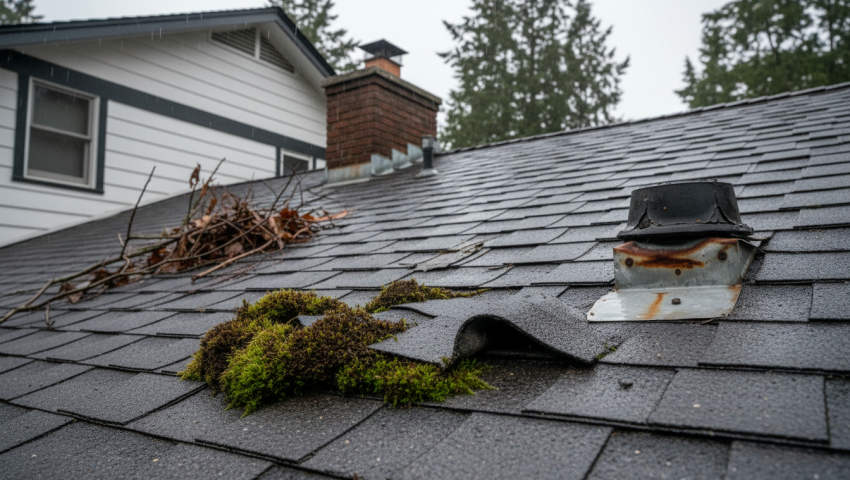
Expert Insight: Most roof leaks start months before you notice them. Denver’s freeze-thaw cycles create hidden damage that shows up suddenly.
You’re lying in bed when you hear it: that rhythmic drip-drip-drip coming from somewhere upstairs. By the time most Denver homeowners discover a roof leak, water has already been finding its way into their home for weeks or even months. What started as a minor issue has now become a race against time to prevent serious structural damage.
Understanding roof leak causes isn’t just about fixing the immediate problem. It’s about recognizing the warning signs before they escalate into emergency repairs. Denver’s unique climate creates leak scenarios that homeowners in other regions never face, making local knowledge essential for protecting your investment.
Key Takeaways
- Early Detection: Most roof leaks begin as microscopic water intrusion that gradually worsens over months before becoming visible inside your home.
- Climate Impact: Denver’s extreme freeze-thaw cycles create expansion and contraction that loosens fasteners and cracks sealants in ways other climates don’t.
- Hidden Damage: Water often travels along rafters and decking before dripping down, meaning the visible leak location is rarely where water actually enters.
- Flashing Failures: Improperly installed step flashing and valley metal account for nearly 60% of leak calls, yet most inspections miss these critical details.
- Prevention Strategy: Annual inspections focusing on sealant renewal and debris removal prevent 80% of emergency leak situations that occur during heavy weather.
Why Most Homeowners Miss the Early Warning Signs Until It’s Too Late
The biggest mistake Denver homeowners make is waiting for water to appear on their ceiling before taking action. By that point, moisture has likely been infiltrating your roof system for months, potentially causing rot in the decking, mold growth in insulation, and corrosion of metal components. The reality is that roof leaks announce themselves through subtle signs that most people dismiss as normal wear.
Professional roofers know what to look for because they understand how water behaves once it penetrates the outer barrier. A single loose shingle might seem harmless, but during Denver’s intense afternoon thunderstorms, wind-driven rain can force water under that compromised area. The water then travels along the underlayment or decking until it finds the path of least resistance, often emerging far from the original entry point.
Warning Indicators
- Granule Accumulation: Dark streaks or piles of granules in gutters indicate shingle deterioration that compromises the waterproof barrier above.
- Exposed Nail Heads: Thermal expansion in Denver’s climate causes nails to back out slightly, creating tiny entry points for moisture infiltration.
- Curling Edges: Shingle edges that lift or curl allow wind-driven rain to penetrate underneath, especially during Colorado’s microbursts and severe storms.
- Stained Fascia: Discoloration on fascia boards signals water running behind gutters, often from ice dam backup or valley overflow issues.
- Attic Moisture: Unexplained humidity or musty odors in your attic indicate active leaks that haven’t yet penetrated the ceiling below.
The pattern you’ll see most often is homeowners who notice one small issue but assume it’s not urgent. In Denver’s climate, that assumption can be costly. A loose shingle in October becomes a major leak pathway when January’s snow load and freeze-thaw cycles stress the surrounding materials. Catching these early indicators saves thousands compared to emergency repairs during a snowstorm.
The Three Leak Locations That Always Cost More Than Expected
Certain areas of your roof are leak magnets, and unfortunately, they’re also the most expensive to repair properly. These locations require specialized materials, complex installation techniques, and often involve multiple building systems. When these areas fail, the damage typically extends beyond the roof itself into structural components, insulation, and interior finishes.
What makes these locations particularly costly in Denver is how our weather amplifies the consequences of failure. A small chimney leak that might be manageable in a milder climate becomes a major problem when freeze-thaw cycles turn that moisture into ice, expanding cracks and forcing water deeper into the structure. Understanding why these areas fail helps explain why professional repairs cost more than simple patch jobs.
Problem Areas
- Chimney Intersections: Step flashing failures at chimney bases require custom metalwork and often reveal deteriorated mortar joints that need masonry repair simultaneously.
- Valley Convergence: Where two roof planes meet, water volume concentrates and overwhelms inadequate valley metal, requiring complete valley reconstruction with proper underlayment.
- Skylight Perimeters: Curb flashing around skylights involves multiple sealed joints that fail sequentially, often necessitating complete skylight removal and reinstallation with new flashing.
- Dormer Connections: Complex geometry where dormers meet main roofs creates multiple transition points that each require different flashing techniques and materials.
- Penetration Clusters: Areas with multiple vents, pipes, or equipment require coordinated flashing systems that interact with each other and the surrounding roof membrane.
These repairs cost more because they can’t be approached piecemeal. A proper chimney flashing repair involves removing shingles in a specific pattern, installing new step flashing with correct overlap sequences, and ensuring the counter flashing integrates properly with the chimney crown. Cutting corners on these details guarantees the leak will return, usually during the next major weather event.
How Colorado’s Freeze-Thaw Cycles Create Problems Other States Never See
Denver’s elevation and continental climate create a perfect storm for roof damage that homeowners in coastal or southern regions rarely encounter. Our temperature swings can exceed 40 degrees in a single day, causing roofing materials to expand and contract repeatedly. This constant movement stresses every sealed joint, fastener connection, and material interface on your roof.
The freeze-thaw cycle becomes particularly destructive when moisture has already penetrated the outer barrier. Water expands roughly 9% when it freezes, creating tremendous pressure inside small cracks or gaps. What starts as a hairline crack in a sealant bead becomes a significant opening after just a few freeze-thaw events. This is why energy-efficient roofing requires special attention to thermal movement in our climate.
Climate Effects
- Sealant Degradation: Rapid temperature changes cause caulks and sealants to lose elasticity and crack, especially around penetrations and flashing terminations.
- Fastener Withdrawal: Thermal expansion cycles gradually work nails and screws loose, reducing the holding power that keeps shingles and flashing secure.
- Ice Dam Formation: Denver’s sunny winter days create snowmelt that refreezes at roof edges, forcing water under shingles and overwhelming ice barriers.
- Material Brittleness: Repeated freeze cycles make asphalt shingles and rubber components more susceptible to cracking from impact or wind stress.
- Underlayment Failure: Temperature extremes accelerate the aging of synthetic and felt underlayments, causing them to crack and lose their backup waterproofing function.
In practice, this means that roofing materials rated for 25-year lifespans in moderate climates often show significant wear in 15-18 years here in Denver. The constant thermal stress doesn’t just shorten material life; it creates failure patterns that are difficult to predict. A roof that looks fine in September can develop multiple leak points by March after enduring a winter of freeze-thaw cycles.
Why a Roof That Passed Inspection Last Year Can Fail This Winter
Many Denver homeowners feel frustrated when a roof that recently passed inspection suddenly develops leaks. The reality is that roof failures often happen rapidly once certain thresholds are crossed. Materials that appeared serviceable during a visual inspection can deteriorate quickly when exposed to our severe weather patterns, especially if they were already approaching the end of their useful life.
Standard roof inspections focus on obvious problems like missing shingles or damaged flashing, but they can’t always detect materials that are on the verge of failure. A sealant that looks intact from the ground might have lost its adhesion properties, or underlayment that appears fine might have developed microscopic cracks that become major problems when stressed by snow loads and thermal movement.
Here’s how different roofing components deteriorate and their typical inspection limitations:
| Component | Failure Timeline | Inspection Difficulty |
|---|---|---|
| Sealants | 6-12 months rapid decline | Hard to detect adhesion loss |
| Underlayment | 2-3 years gradual cracking | Hidden under shingles |
| Flashing | 1-2 years corrosion spread | Often covered by materials |
| Fasteners | 6-18 months loosening | Requires removal to check |
| Shingle tabs | 3-6 months wind damage | Lifting not always visible |
Failure Triggers
- Weather Loading: A roof designed for 30-pound snow loads can fail catastrophically when a single storm deposits 40+ pounds per square foot on the structure.
- Material Fatigue: Components approaching replacement age can fail suddenly when stressed by wind, hail, or thermal cycling beyond their remaining capacity.
- Installation Defects: Poor workmanship from years past often doesn’t manifest as problems until materials age and lose their ability to compensate for improper installation.
- Maintenance Gaps: Deferred maintenance allows minor issues to compound, creating cascading failures when the system is stressed by severe weather.
- Hidden Deterioration: Internal damage from previous leaks weakens structural components that appear sound from the surface but can’t handle normal loads.
The pattern most professionals recognize is the ‘perfect storm’ scenario where multiple marginal components fail simultaneously during a significant weather event. A roof might have aging sealants, slightly loose fasteners, and worn underlayment that individually don’t cause problems, but when Denver’s next major hailstorm hits, all three issues converge into multiple leak points that require extensive repairs.
The Flashing Detail That Separates Amateur Repairs From Professional Fixes
The difference between a repair that lasts two years and one that lasts twenty often comes down to a single detail: proper step flashing installation and integration. Most homeowners don’t realize that flashing isn’t just about placing metal in the right location; it’s about creating a system where each piece sheds water to the piece below it in a specific sequence. Amateur repairs often focus on sealing gaps with caulk rather than addressing the underlying water management principles.
Professional roof repair techniques involve understanding how water behaves under different conditions. During Denver’s intense thunderstorms, wind-driven rain can force water upward and sideways, overwhelming flashing systems that only account for gravity-fed drainage. Proper installation creates multiple backup layers that handle these extreme conditions without relying solely on sealants.
Professional Standards
- Overlap Sequence: Each piece of step flashing must overlap the piece below by at least 2 inches and extend under shingles by 4 inches minimum.
- Material Selection: Flashing metal must be compatible with existing materials to prevent galvanic corrosion, especially important with Denver’s temperature extremes and moisture.
- Integration Method: Flashing must be woven with shingle courses, not just placed behind them, to create proper water shedding without relying on sealants.
- Expansion Accommodation: Joints must allow for thermal movement without breaking seals, using mechanical connections rather than adhesive-only attachments in critical areas.
- Backup Protection: Secondary barriers like ice-and-water shield must extend beyond flashing edges to catch water that bypasses the primary system during extreme weather.
What’s often missed in amateur repairs is that flashing works as an integrated system, not individual pieces. When one section is repaired incorrectly, it affects water flow patterns for the entire area. Professional repairs consider the whole system and often involve replacing more flashing than seems necessary to ensure proper water management throughout the affected zone.
What Your Insurance Adjuster Won’t Tell You About Gradual Leak Damage
Insurance adjusters operate under strict guidelines about what constitutes covered damage versus maintenance issues, but they rarely explain the gray areas that can significantly impact your claim. Gradual leak damage presents unique challenges because it’s often difficult to pinpoint exactly when the damage began and whether it resulted from a specific weather event or long-term deterioration. Understanding these distinctions can mean the difference between full coverage and claim denial.
The timing of leak discovery plays a crucial role in claim outcomes. A leak discovered immediately after a hailstorm is likely to be covered, while the same leak discovered months later might be classified as gradual damage resulting from deferred maintenance. However, many legitimate storm-related leaks don’t manifest symptoms until seasonal weather changes stress the damaged areas, creating documentation challenges for homeowners.
Coverage Issues
- Documentation Timing: Photos showing damage progression help establish whether deterioration was sudden or gradual, affecting coverage determinations and claim valuations.
- Causation Disputes: Adjusters often attribute leaks to maintenance issues rather than weather events, even when storm damage created the initial failure point.
- Scope Limitations: Claims may cover direct leak damage but exclude related issues like mold remediation or structural repairs that resulted from delayed discovery.
- Material Matching: Policies may not cover full roof replacement when only sections are damaged, leading to mismatched materials and aesthetic issues.
- Temporary Protection: Emergency tarping and water extraction costs are usually covered, but extended temporary repairs may not be if permanent fixes are delayed.
The key insight adjusters won’t volunteer is that proper documentation from the beginning significantly strengthens your position. Professional inspections that identify storm damage before leaks develop provide crucial evidence that damage was weather-related, not maintenance-related. This proactive approach often results in better claim outcomes and faster resolution.
The One Maintenance Step That Prevents 80% of Emergency Roof Calls
After analyzing thousands of emergency roof calls in the Denver area, one pattern emerges consistently: the majority of urgent leak situations could have been prevented with regular sealant inspection and renewal. Most homeowners focus on obvious maintenance like gutter cleaning while ignoring the small sealant beads around penetrations that actually prevent water intrusion. These seemingly minor details become critical failure points during severe weather.
Sealant maintenance isn’t glamorous, but it’s the most cost-effective prevention strategy available. A tube of quality sealant costs under $10 and can prevent thousands in emergency repairs. The challenge is knowing when and how to renew these seals before they fail completely. Denver’s climate is particularly hard on sealants, with UV exposure, thermal cycling, and moisture creating the perfect conditions for rapid deterioration.
Here’s a maintenance schedule that prevents most emergency leak situations:
| Maintenance Task | Frequency | Cost Prevention Ratio |
|---|---|---|
| Penetration sealant renewal | Every 2 years | 1:50 cost savings |
| Gutter cleaning and inspection | Twice yearly | 1:25 cost savings |
| Flashing condition check | Annually | 1:75 cost savings |
| Shingle damage assessment | After major storms | 1:40 cost savings |
| Attic ventilation verification | Every 3 years | 1:30 cost savings |
Prevention Protocol
- Sealant Inspection: Check all penetrations for cracks, shrinkage, or separation twice yearly, focusing on south-facing exposures that receive maximum UV damage.
- Material Selection: Use polyurethane or modified silicone sealants rated for exterior use and temperature extremes rather than basic acrylic formulations that fail quickly.
- Application Technique: Remove old sealant completely before applying new material, ensuring clean surfaces and proper adhesion for maximum longevity in Denver’s climate.
- Weather Timing: Schedule sealant work during stable weather periods when temperatures are above 40°F and no precipitation is forecast for 24 hours.
- Documentation Process: Photograph sealant conditions before and after maintenance to track deterioration patterns and plan future renewal schedules effectively.
In practice, homeowners who follow this maintenance protocol rarely experience emergency leaks during storms. The small investment in time and materials pays huge dividends when Denver’s next severe weather event tests your roof’s integrity. Most emergency calls come from homes where minor maintenance was deferred until small problems became major failures.
Protecting Your Denver Investment
Understanding roof leak causes gives you the power to protect your home before problems escalate into costly emergencies. Denver’s unique climate creates challenges that require local knowledge and proactive maintenance, but the investment in prevention pays dividends in avoided repairs and insurance claims. The key is recognizing that roof leaks rarely happen suddenly; they develop over time through predictable patterns that observant homeowners can catch early.
Don’t wait for water stains to appear on your ceiling before taking action. Regular inspections, timely sealant renewal, and professional assessment of your roof’s condition will keep your home dry and your investment secure. If you’re concerned about potential leak sources or need professional evaluation of your roof’s condition, we can help identify problems before they become emergencies and recommend the most cost-effective solutions for your specific situation.
Author
JJ Hedden is the owner of Peak to Peak Roofing with 15 years of experience helping Denver homeowners understand and prevent roof leak problems. His hands-on approach to leak diagnosis has resolved over 6,000 roofing issues, giving him unique insight into how Colorado’s climate creates specific failure patterns that other regions don’t experience. JJ’s expertise in identifying early warning signs has helped countless families avoid emergency repairs and costly water damage.