
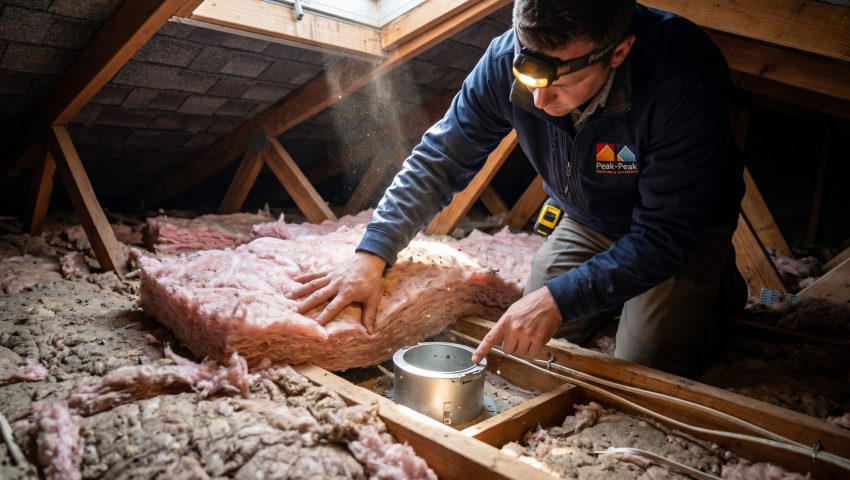
Most homeowners check insulation depth but miss critical air leaks that reduce performance by 40%. This guide reveals the complete evaluation process.
Walking into your attic to check insulation seems straightforward until you’re standing there wondering what you’re actually looking at. Many homeowners focus solely on insulation depth, completely missing the air leaks around recessed lights, plumbing penetrations, and top plates that can slash thermal performance by up to 40%. Without a systematic approach to evaluating attic insulation, you might add more material to an already failing system, wasting money while your energy bills stay high. The reality is that insulation evaluation requires understanding both thermal barriers and air sealing to get meaningful results.
This guide walks you through a complete attic insulation assessment that goes beyond measuring depth to identify the real performance gaps affecting your comfort and energy costs. You’ll learn to spot thermal bypasses, calculate actual R-value needs for Denver’s climate zone, and determine whether your current system meets ENERGY STAR recommendations for Colorado’s heating and cooling demands. By the end, you’ll have a clear action plan for addressing insulation deficiencies and know when professional assessment is worth the investment. These steps work for homes across Denver, Aurora, Littleton, Castle Pines, Parker, Brighton, Boulder, Thornton, Arvada, Erie, Westminster, Centennial, and throughout the Front Range.
Step 1: Document Current Conditions and Safety Hazards
Rushing into attic insulation evaluation without proper documentation and safety assessment leads to incomplete assessments and potential health risks. Many homeowners discover vermiculite insulation (which may contain asbestos) or encounter electrical hazards that require professional handling before any insulation work can proceed. Taking photos and notes during your initial walkthrough creates a baseline for comparison and helps you communicate findings to contractors if professional work becomes necessary. The key is establishing what you’re working with before making any changes to the existing system.
Start by checking for obvious safety concerns like exposed wiring, damaged ductwork, or signs of pest infestation that could complicate insulation evaluation. Look for water stains on rafters or ceiling joists that indicate roof leaks, as adding insulation over moisture problems only creates bigger issues down the road. Document the current insulation type, approximate depth in different areas, and any gaps or compressed sections you can see from the attic entrance. Most importantly, never step directly on drywall or ceiling joists without proper footing, as a fall through the ceiling creates expensive damage and potential injury.
Safety Essentials
- Protective Equipment: Wear long sleeves, pants, gloves, dust mask (N95 minimum), and safety glasses to protect against fiberglass particles and dust. Bring a flashlight or headlamp for adequate visibility in dark corners.
- Structural Precautions: Walk only on ceiling joists or use plywood boards to distribute weight across multiple joists. Never step directly on drywall or insulation, as this can cause ceiling damage or personal injury.
- Documentation Tools: Bring a camera, measuring tape, and notebook to record insulation types, depths, and problem areas. Take photos from multiple angles to capture coverage patterns and identify gaps you might miss during the initial walkthrough.
Once you’ve documented the current state and confirmed safe access, you’ll have a clear picture of what you’re working with and any immediate concerns that need addressing. This baseline documentation becomes invaluable when comparing different areas of the attic or discussing findings with insulation contractors. The next step focuses on measuring actual insulation performance rather than just visual appearance, which reveals the true thermal effectiveness of your current system.
Step 2: Measure Insulation Depth and Calculate Effective R-Value
Simply eyeballing insulation depth leads to wildly inaccurate R-value calculations, especially with settled or compressed material that looks adequate but performs poorly. Blown-in cellulose can settle 20-30% over time, while fiberglass batts lose significant thermal resistance when compressed even slightly. Without measuring at multiple points across the attic, you might miss areas where insulation has shifted away from critical zones like exterior walls or around HVAC equipment. The goal is determining actual thermal performance, not just material quantity, which requires systematic measurement and understanding of how different insulation types perform.
Use a ruler or tape measure to check depth at least 10-15 different locations, focusing on areas near exterior walls, around penetrations, and in the center of bays between joists. Pay special attention to corners and eaves where insulation often gets displaced during installation or settles unevenly over time. Different insulation materials have different R-values per inch, so knowing your material type is crucial for accurate calculations. Understanding building insulation principles helps you recognize when depth measurements don’t tell the whole story about thermal performance.
Here’s how different insulation materials perform per inch of thickness:
| Material Type | R-Value Per Inch | Typical Settled Depth | Performance Notes |
|---|---|---|---|
| Blown Fiberglass | R-2.2 to R-4.3 | Settles 10-15% | Prone to wind washing |
| Blown Cellulose | R-3.2 to R-3.8 | Settles 20-25% | Better air sealing properties |
| Fiberglass Batts | R-3.1 to R-3.4 | Minimal settling | Gaps reduce effectiveness |
| Mineral Wool | R-3.0 to R-4.2 | Minimal settling | Fire resistant, stable |
Measurement Points
- Perimeter Areas: Measure depth along exterior walls and in corners where heat loss is typically highest. These areas often have the least insulation due to installation challenges and space constraints around structural elements.
- Central Zones: Check insulation depth in the middle of long joist bays where material should be at its maximum thickness. Compare these measurements to perimeter readings to identify settling patterns or installation inconsistencies.
- Penetration Areas: Measure around plumbing vents, electrical boxes, and ductwork where insulation is often displaced or missing entirely. These thermal bypasses can significantly impact overall attic performance even when other areas appear well-insulated.
With accurate depth measurements from multiple zones, you can calculate the actual R-value of your existing insulation and identify areas where performance falls short of optimal levels. This data reveals whether your attic needs additional material, better coverage, or complete replacement to meet current energy efficiency standards. The next step examines air leakage patterns that can undermine even well-insulated attics, often representing the biggest opportunity for improvement.
Step 3: Identify Air Leakage and Thermal Bypasses
Air leaks represent the hidden performance killer in most attic insulation systems, often causing more energy loss than insufficient R-value. Common thermal bypasses include gaps around recessed lighting, plumbing and electrical penetrations, attic hatches, and the junction between walls and ceiling (top plates). Even small air leaks allow conditioned air to flow directly into the attic, bypassing the insulation layer entirely and creating convection currents that reduce the effective thermal resistance. Look for dirty or discolored insulation, which indicates air movement carrying dust and particles through gaps in the building envelope.
Use your hand to feel for air movement around potential leak points, especially on windy days when pressure differences make air flow more noticeable. Check for light coming through cracks or openings when viewed from the dark attic space, as these visual cues often reveal significant thermal bypasses. The most effective insulation systems combine adequate R-value with comprehensive air sealing, which is why identifying these leaks is crucial before adding more insulation material. This assessment sets the stage for understanding your attic’s ventilation needs, which must balance moisture control with thermal performance.
Step 4: Assess Ventilation Balance and Moisture Control
Inadequate or imbalanced attic ventilation creates moisture problems that can destroy insulation effectiveness and lead to ice dam formation during Denver’s cold winters. Many homeowners focus exclusively on insulation without considering how air movement affects thermal performance and moisture control. Blocked soffit vents, insufficient ridge ventilation, or missing rafter baffles can trap humid air in the attic space, leading to condensation, mold growth, and reduced insulation R-value. The Department of Energy guidelines emphasize that proper ventilation works hand-in-hand with insulation to maintain building envelope performance.
Check that soffit vents are clear of insulation and debris, allowing outside air to enter the attic space and flow toward ridge or gable vents. Look for signs of moisture problems like water stains, mold growth, or frost buildup on roof decking during winter months. Proper ventilation maintains temperature balance that prevents ice dams while removing moisture that could compromise insulation performance. In Colorado’s climate, where temperature swings can be dramatic, balanced ventilation becomes even more critical for maintaining consistent attic conditions throughout the year.
Here are the recommended ventilation ratios and their applications:
| Ventilation Type | Ratio Requirement | Application | Key Benefits |
|---|---|---|---|
| Standard Venting | 1:300 sq ft | Typical attic spaces | Moisture control, ice dam prevention |
| Enhanced Venting | 1:150 sq ft | High moisture areas | Better air exchange, faster drying |
| Balanced System | 50% intake/50% exhaust | All applications | Optimal airflow patterns |
Ventilation Checks
- Soffit Clearance: Verify that insulation doesn’t block soffit vents and that rafter baffles maintain clear airflow channels from eaves to ridge. Blocked intake vents create negative pressure that can pull conditioned air from living spaces.
- Ridge Ventilation: Check for adequate exhaust ventilation at the roof peak, whether through ridge vents, gable vents, or other exhaust systems. Insufficient exhaust creates stagnant air that traps moisture and heat in the attic space.
- Moisture Indicators: Look for water stains, mold, or frost on roof decking and framing members that indicate ventilation imbalances or air leakage from conditioned spaces. These signs often appear before insulation damage becomes obvious.
- Baffle Installation: Ensure rafter baffles are properly installed to maintain airflow while preventing insulation from blocking ventilation paths. Missing baffles allow insulation to settle into soffit areas, reducing both thermal and ventilation performance.
- Vent Calculations: Measure total intake and exhaust vent areas to verify they meet building code requirements of 1 square foot per 300 square feet of attic space, with balanced intake and exhaust distribution.
Proper ventilation assessment reveals whether your attic can handle additional insulation without creating moisture problems or ventilation blockages. Understanding the relationship between insulation, air sealing, and ventilation helps you plan improvements that work together rather than creating new problems. The next step involves determining the optimal insulation levels for your specific location and home characteristics, which varies significantly across Colorado’s diverse climate zones.
Step 5: Determine Climate-Specific R-Value Requirements
Denver’s Climate Zone 5B designation requires specific insulation levels that many homeowners underestimate, leading to inadequate thermal performance and higher energy costs. The Insulation Institute recommendations call for R-49 to R-60 in attics for this climate zone, significantly higher than older homes typically have. Factors like your home’s age, construction type, and heating system efficiency influence the optimal R-value target, with newer high-efficiency HVAC systems requiring better building envelope performance to achieve their rated efficiency. Colorado’s high altitude and intense solar radiation also create unique thermal loads that affect insulation requirements.
Consider your specific situation when setting R-value targets, as homes with ductwork in the attic, cathedral ceilings, or bonus rooms above garages may need higher insulation levels for comparable performance. Calculate the additional insulation needed by subtracting your current effective R-value from the target level, keeping in mind that mixing insulation types can affect overall system performance. Energy costs, comfort complaints, and ice dam history all provide clues about whether your current insulation meets the demands of Colorado’s climate. This analysis prepares you for the final evaluation step, which determines whether your findings warrant immediate action or professional consultation.
Step 6: Compile Findings and Prioritize Improvement Actions
Creating a clear action plan from your attic evaluation prevents the common mistake of addressing symptoms while missing root causes of energy loss and comfort problems. Many homeowners add insulation without fixing air leaks, or improve R-value while ignoring ventilation issues that will compromise the new material’s performance. Your evaluation should result in a prioritized list that addresses the most impactful improvements first, typically starting with air sealing before adding insulation material. Without this systematic approach, you might invest in expensive upgrades that deliver disappointing results because underlying problems weren’t addressed.
Review your measurements, photos, and observations to identify patterns that reveal the biggest opportunities for improvement. Air leaks around recessed lights, inadequate insulation depth near exterior walls, and ventilation imbalances typically offer the highest return on investment when corrected. Consider your budget, timeline, and skill level when prioritizing improvements, as some tasks require professional expertise while others can be handled by capable homeowners. The goal is creating a logical sequence of improvements that builds on each previous step rather than working against it.
Priority Framework
- Safety Issues First: Address any electrical hazards, structural concerns, or potential asbestos before proceeding with insulation improvements. These issues can make other work dangerous or impossible until resolved professionally.
- Air Sealing Priority: Seal thermal bypasses and air leaks before adding insulation, as this typically provides the highest energy savings per dollar invested. Focus on the largest leaks first, such as attic hatches, plumbing penetrations, and recessed lighting.
- Insulation Upgrades: Add insulation material only after air sealing is complete and ventilation paths are clear. Calculate the amount needed to reach target R-values while maintaining proper ventilation clearances throughout the attic space.
- Professional Consultation: Consider professional roof inspection for complex issues like ductwork modifications, structural concerns, or when your evaluation reveals problems beyond typical homeowner scope. Professional assessment can prevent costly mistakes and ensure code compliance.
Your completed evaluation provides the foundation for making informed decisions about attic insulation improvements that actually deliver the comfort and energy savings you’re seeking. Whether you proceed with improvements yourself or hire professionals, you now understand what your attic needs and why those specific improvements matter for your home’s performance. This systematic approach ensures that any money spent on insulation upgrades addresses real problems rather than just adding material to an already compromised system.
Taking Action on Your Assessment
You now have the tools and knowledge to evaluate your attic insulation needs systematically, moving beyond guesswork to make informed decisions about improving your home’s thermal performance. This evaluation process reveals not just whether you need more insulation, but what specific improvements will deliver the biggest impact on comfort and energy costs. The combination of R-value assessment, air leakage identification, and ventilation evaluation gives you a complete picture of how your attic system performs and where improvements are needed most.
Whether your evaluation reveals simple air sealing opportunities or the need for comprehensive insulation upgrades, you’re now equipped to prioritize improvements that work together for maximum effectiveness. For complex issues or when you prefer professional installation, our residential roofing team can help implement the improvements your evaluation identified. Remember to reassess your attic periodically, as insulation settles over time and building envelope performance can change with age, making regular evaluation a key part of maintaining your home’s energy efficiency.
Author
JJ Hedden is the owner of Peak to Peak Roofing with 15 years of experience helping homeowners understand how their building envelope affects comfort and energy performance. His hands-on experience with over 6,000 roofing projects across Colorado has revealed how attic insulation, air sealing, and ventilation work together to prevent common problems like ice dams and energy loss. JJ’s practical approach to building science helps homeowners make informed decisions about insulation upgrades that deliver real-world results.