
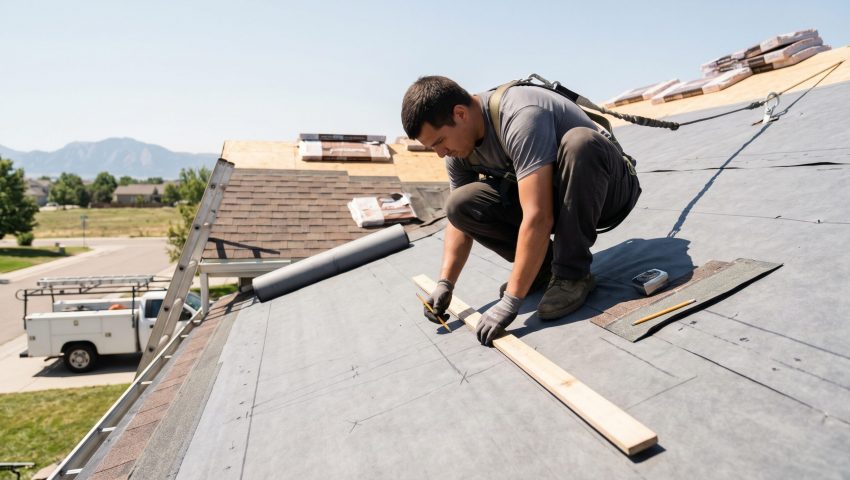
Most contractors start with material price alone, yet neglecting site‑specific factors inflates budgets. Adjusting for wind, snow load and local code requirements yields a tighter, realistic estimate.
Many building owners assume a flat per‑square‑foot price covers everything, but Denver’s high altitude and hail‑prone storms add hidden costs that most estimates miss. The reality is that wind uplift resistance, freeze‑thaw cycles and UV intensity drive material choices and labor hours. Ignoring these variables often leads to budget overruns and surprise repairs later on. That’s why a data‑driven approach beats a simple price lookup every time.
This guide walks you through the exact calculations you need for a reliable commercial roofing cost estimation, from measuring roof geometry to applying code‑based insulation values. After reading, you’ll see why a 20‑year NDL system paired with a high‑R polyiso layer can save both money and headaches. You’ll also learn how to factor in Denver’s specific climate and the latest ASCE wind design criteria, turning vague numbers into a concrete, actionable budget.
Step 1: Map the Roof Geometry and Access Constraints
First, walk the entire roof and record every dimension, slope, and obstruction like skylights or HVAC units. In practice, the pattern you’ll see most often is a series of irregular hips that throw off simple square‑foot calculations. Use a laser distance meter or a drone‑derived orthomosaic to capture accurate measurements and note any areas that will need crane staging or scaffold platforms. This step matters because every extra foot of deck or access challenge adds labor and equipment costs that quickly stack up.
If you skip this detailed mapping, you’ll likely underestimate material waste and overlook costly crane rentals, especially on larger flat roofs in Aurora or Littleton. Verify completeness by comparing your measurements against the building’s as‑built drawings and run a quick cross‑check with a building estimation worksheet. When the numbers line up, you can move confidently to the next phase of material selection.
Step 2: Select the Roof System Based on Climate and Use
Choosing the right membrane hinges on Denver’s hail frequency, UV exposure and the building’s occupancy. A 60‑mil TPO membrane with a high‑SRI coating works well for warehouses that need reflectivity, while a PVC system with chemical resistance suits food‑service facilities that discharge grease. In practice, the version that actually works looks more like a layered assembly: a reinforced cover board, a qualified‑R polyiso insulation, and a wind‑rated edge metal per ANSI/SPRI ES‑1.
Common pitfalls include selecting a thin membrane to cut material cost, only to face premature puncture from hail in Castle Pines. Confirm your choice by checking FM Global wind uplift ratings and UL impact class, then document the decision in a spec sheet. Once the system is locked in, you can calculate quantities and move toward cost modeling.
Below is a quick comparison of three popular membrane options for Denver commercial roofs:
| Membrane | Typical Thickness (mils) | Solar Reflectance Index | FM Wind Rating |
|---|---|---|---|
| TPO | 60 | 78 | 1‑90 |
| PVC | 50 | 70 | 1‑120+ |
| EPDM | 45 | 55 | 1‑60 |
Step 3: Calculate Material Quantities and Labor Productivity
Most estimators rely on generic labor productivity tables, yet Denver’s altitude reduces crew efficiency by about 10 percent because of thinner air and longer tool cycles. This step corrects that mistake by adjusting crew output and adding a weather‑contingency factor for high winds and hail. Start by multiplying the roof area by the membrane coverage factor, then add extra for waste, typically 5 percent for flat roofs with many penetrations.
Watch out for hidden fastener costs; high‑wind zones require denser screw patterns and edge metal that can double the fastener count. Successful completion looks like a detailed spreadsheet that lists each material line item, its unit cost, and the adjusted labor hours. When the totals reconcile with your earlier geometry sheet, you have a solid cost foundation.
Key Calculation Elements
- Membrane Area: Multiply roof square footage by 1.05 to cover overlap and waste, then apply the selected thickness cost per square foot.
- Insulation Volume: Use polyiso R‑value per inch (R‑6) and calculate required board thickness to meet IECC R‑30 minimum for commercial roofs in Denver.
- Fastener Density: Apply 6 fasteners per square foot for wind zones 3‑4, per ASCE 7‑16, and add 10 percent for hail‑prone exposure.
- Labor Hours: Base crew productivity at 250 sq ft per hour, then increase by 12 percent for altitude and 8 percent for safety compliance per OSHA roofing guidelines.
By the end of this step you’ll have a line‑item estimate that reflects real material waste, adjusted labor rates and code‑driven insulation values. This transparent breakdown makes it easy to spot cost drivers and discuss alternatives with stakeholders. The next step will translate these numbers into a final, market‑ready bid.
Step 4: Apply Code, Safety and Warranty Adjustments
A frequent misstep is to ignore local code amendments, which can add unexpected fees for storm‑water drainage or cool‑roof compliance. In Denver, the Green Buildings Ordinance may require a minimum SRI of 78 for new commercial roofs, influencing membrane choice and coating thickness. This step ensures your estimate includes all mandatory items, from flashing per ANSI/SPRI ES‑1 to fire‑rating compliance under the International Building Code.
Be careful with safety allocation; OSHA 29 CFR 1926 Subpart M mandates fall protection for any roof work over six feet, adding both equipment and training costs. A successful estimate will list a separate line for safety gear, scaffolding, and any required permits, and will reference the National Roofing Contractors Association’s quality‑control checklist for warranty eligibility.
Summary of typical compliance cost percentages for Denver commercial roofs:
| Item | Cost % of Total | Typical Range |
|---|---|---|
| Cool‑Roof Coating | 5‑7% | $0.45‑$0.60 per ft² |
| Flashing & Edge Metal | 3‑4% | $1.00‑$1.30 per lf |
| Safety & Scaffolding | 2‑3% | $0.25‑$0.35 per ft² |
| Warranty Premium | 1‑2% | 10‑year NDL add‑on |
Compliance Add‑Ons
- Cool‑Roof SRI: Add a reflective coating to meet the SRI 78 threshold, costing roughly $0.45 per square foot for high‑performance products.
- Flashing Details: Include edge metal and termination bars per ANSI/SPRI ES‑1, typically $1.20 per linear foot for standing‑seam aluminum.
- Safety Gear: Allocate $0.30 per square foot for fall‑protection systems and scaffolding, complying with OSHA Subpart M.
- Warranty Extensions: Factor in a 10‑year NDL premium when using FM‑rated membranes, which can reduce long‑term repair risk.
With code, safety and warranty items baked into the estimate, the budget now mirrors the full scope of a compliant Denver commercial roof project. This comprehensive view protects you from surprise change orders and supports a smoother permitting process. The final step will package everything into a clear, client‑ready proposal.
Step 5: Compile the Final Proposal and Review with Stakeholders
Gather all line items into a single document, add a clear summary table, and attach supporting data such as wind‑uplift ratings and SRI values. In practice, the version that actually works looks more like a concise PDF with a bold title, a brief scope description, and a breakdown of material, labor, and compliance costs. Include links to your commercial roofing experts page and a link to the NRCA for industry standards, giving the client confidence in the methodology.
If any cost line looks out of sync, double‑check the quantity calculations and verify that all local code adjustments are present. A final walkthrough with the building owner or facilities manager ensures everyone agrees on the assumptions before signing. Once approved, you can schedule the crew, order materials and lock in the project timeline.
Putting the Estimate Into Action
You now have a step‑by‑step framework that turns raw roof dimensions into a realistic commercial roofing cost estimation, accounting for Denver’s unique weather, code requirements and safety rules. This approach eliminates guesswork, reduces change‑order risk and gives you a transparent budget that stakeholders can trust.
Next, keep the estimate live by revisiting it whenever the building’s usage changes or when new code updates appear. For ongoing support, consider our commercial roof repair service or a full roof restoration to extend the system’s life. A well‑maintained roof protects your investment and keeps energy costs low for years to come.
Author
JJ Hedden is the owner of Peak To Peak Roofing and brings 15 years of hands‑on experience guiding Colorado businesses through complex roof projects. His practical perspective on cost estimation blends field observations with the latest industry standards, making his advice both realistic and actionable.