
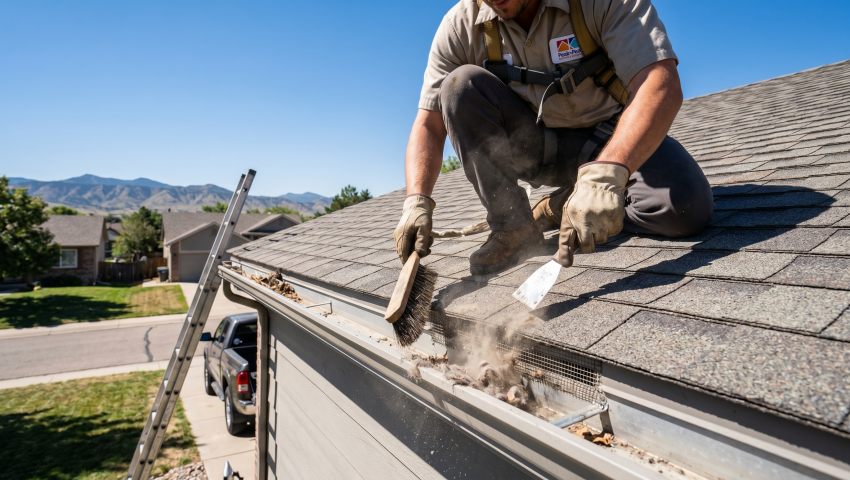
Most roof ventilation failures stem from blocked intake vents, not exhaust problems. This guide shows you how to restore proper airflow systematically.
Roof ventilation problems don’t announce themselves with dramatic leaks or obvious damage. Instead, they quietly create ice dams in winter, drive up cooling costs in summer, and slowly rot your roof deck from the inside out. Most homeowners across Denver, Aurora, and the Front Range discover these issues only after thousands of dollars in secondary damage has already occurred. The frustrating part is that proper attic ventilation could have prevented most of these problems entirely.
This guide walks you through identifying and repairing the most common roof ventilation issues systematically, from blocked soffit vents to inadequate ridge ventilation. You’ll learn to spot the warning signs that most people miss, understand why certain problems develop in Colorado’s climate, and implement fixes that actually work long-term. By the end, you’ll have restored proper airflow to your attic space and prevented the moisture buildup that destroys roofing materials from within.
Step 1: Inspect All Intake Vents for Blockages and Damage
Most ventilation failures start with blocked intake vents, yet this is the area homeowners check last when problems surface. Soffit vents become clogged with leaves, debris, or even insulation that’s been blown too close to the eaves during installation. When intake airflow stops, your entire ventilation system fails regardless of how many exhaust vents you have on the roof. The result is trapped moisture, temperature imbalances, and the perfect conditions for roof ventilation problems to compound over time.
Start your inspection by walking the perimeter of your home and examining every soffit vent opening. Look for obvious blockages like packed leaves or debris, but also check for more subtle issues like paint that’s sealed the vent openings or screens that have become clogged with dust and pollen. In areas like Thornton and Westminster, where cottonwood trees are common, you’ll often find these vents completely packed with fluffy seed material. Pay special attention to vents on the north side of your home, which tend to accumulate more debris and receive less natural cleaning from wind and weather.
Critical Checks
- Airflow Test: Hold a tissue or lightweight fabric near each vent opening on a breezy day to confirm air is actually moving through the opening, not just around it.
- Screen Condition: Remove and clean or replace damaged screens that are restricting airflow, but never leave vents completely unscreened as this invites pest problems.
- Interior Access: Check from inside the attic to ensure insulation hasn’t been blown against the soffit vents, creating an internal blockage you can’t see from outside.
Once you’ve cleared all visible blockages and confirmed airflow through your intake vents, you’ve addressed the foundation of most ventilation problems. The intake side of your system is now ready to work with your exhaust vents to create the balanced airflow that keeps your attic healthy. This sets you up for the next critical step, which involves examining the exhaust side of your ventilation system.
Step 2: Evaluate Ridge and Exhaust Vent Performance
Exhaust vents fail in ways that aren’t immediately obvious, especially ridge vents that can appear functional from ground level while actually providing little to no ventilation. Ridge vents often get compromised when roofing materials shift, when the ridge cap isn’t properly cut, or when the internal baffle system becomes damaged. Box vents and turbine vents have their own failure modes, from damaged spinning mechanisms to inadequate sizing for the attic space they’re supposed to ventilate. Understanding these roofing guidelines helps you identify problems that might otherwise go unnoticed for years.
Climb safely onto your roof or use binoculars to inspect each exhaust vent carefully. For ridge vents, check that the ridge cap has proper gaps and that you can see the internal baffle structure. Box vents should show no signs of damage to their housing or flapper mechanisms, while turbine vents should spin freely in light wind. Look for any vents that appear to have been sealed with roofing cement or caulk, which sometimes happens during hasty repair work. Test airflow by holding your hand near exhaust vents on a calm day to feel for air movement, keeping in mind that strong winds can create false readings.
Step 3: Calculate and Verify Proper Ventilation Ratios
Ventilation problems often stem from having the wrong balance between intake and exhaust capacity, not just blocked vents. The standard recommendation calls for one square foot of net free ventilation area per 150 square feet of attic floor space, split equally between intake and exhaust. However, many homes in Castle Pines and Parker were built with insufficient ventilation or had their ventilation compromised during renovations. You need to measure your actual attic square footage and calculate whether your current vent configuration can handle the load, especially given Colorado’s extreme temperature swings.
Measure your attic floor area by multiplying length times width, then divide by 150 to determine your total ventilation requirement. Check the net free area ratings on your existing vents, which should be marked on the vent housing or available from the manufacturer. If your calculations show a shortfall, you’ll need to add more vents rather than just cleaning existing ones. Remember that blocked or undersized intake vents create negative pressure that can actually pull conditioned air from your living space into the attic, wasting energy and creating moisture problems.
Step 4: Address Moisture and Temperature Warning Signs
Ventilation problems create specific patterns of moisture and temperature buildup that you can learn to recognize before they cause serious damage. Condensation on the underside of roof decking, frost buildup on nail points, and water stains around vent openings all signal that your ventilation system isn’t managing moisture effectively. In Colorado’s dry climate, these moisture issues might seem counterintuitive, but they’re actually more problematic because the extreme temperature differences between day and night create rapid condensation cycles. Checking for these warning signs helps you understand whether your ventilation repairs are addressing the root causes.
Use a flashlight to inspect your attic during different weather conditions, particularly after snow melts or during temperature swings. Look for dark stains on wood surfaces, white mineral deposits that indicate repeated wetting and drying, and any areas where insulation appears matted or discolored from moisture. Temperature differences across your attic space also reveal ventilation problems. Areas that are significantly hotter or more humid than others indicate poor air circulation that needs to be addressed through better vent placement strategies.
Here are the key warning signs that indicate specific types of ventilation problems:
| Warning Sign | Likely Cause | Priority Level | Typical Repair |
|---|---|---|---|
| Frost on nail points | Insufficient exhaust ventilation | High | Add ridge or box vents |
| Condensation on decking | Poor air circulation | High | Balance intake/exhaust ratio |
| Ice dams forming | Blocked soffit vents | Medium | Clear intake obstructions |
| Hot spots in summer | Inadequate overall ventilation | Medium | Increase total vent area |
| Musty attic odors | Trapped moisture | Low | Improve airflow patterns |
Step 5: Repair or Replace Damaged Ventilation Components
Damaged ventilation components often can’t be fixed with simple cleaning and require replacement or repair to restore proper function. Ridge vents with torn or missing baffles, box vents with damaged housings, and soffit vents with broken screens all compromise your ventilation system’s effectiveness. The key is identifying which components can be repaired versus which need complete replacement. Attempting to patch severely damaged vents usually creates bigger problems down the road, while replacing functional vents unnecessarily wastes money and creates new potential leak points.
Prioritize repairs based on the severity of damage and the component’s role in your overall ventilation system. Intake vents generally take priority over exhaust vents because blocked intake affects the entire system. When replacing vents, match or exceed the net free area of the original components to maintain proper ventilation capacity. For homes in areas like Brighton and Erie where wind exposure is significant, consider upgrading to more robust vent designs that can handle weather extremes better than basic models.
Repair Priorities
- Structural Integrity: Replace any vents with cracked housings, missing flaps, or damaged mounting systems that could allow water infiltration or pest entry.
- Airflow Capacity: Upgrade undersized vents or add additional units if your calculations showed insufficient total ventilation area for your attic space.
- Weather Resistance: Install wind-resistant or snow-resistant vent designs if your current vents frequently get blocked or damaged by Colorado weather conditions.
- Proper Sealing: Ensure all new installations include appropriate flashing and sealants to prevent water infiltration while maintaining the vent’s intended airflow characteristics.
With damaged components repaired or replaced, your ventilation system should now have the physical capability to move air effectively. The final step involves testing and fine-tuning the system to ensure all components work together properly. This verification phase confirms that your repairs have actually solved the underlying ventilation problems rather than just addressing surface symptoms.
Step 6: Test System Performance and Make Final Adjustments
Testing your repaired ventilation system requires checking airflow patterns under different conditions to confirm the repairs actually solved your problems. Simply having clean, unblocked vents doesn’t guarantee proper system performance if the components aren’t working together correctly. Use smoke pencils or incense sticks to visualize airflow patterns in your attic, checking that air enters through soffit vents and exits through ridge or exhaust vents. Monitor your attic temperature and humidity over several weeks to establish that the system is managing both heat and moisture effectively. Professional commercial roofing contractors often use specialized equipment for these tests, but homeowners can get reliable results with basic tools.
Schedule follow-up checks during different seasons to verify your ventilation system handles Colorado’s varying conditions. Summer testing should show that your attic doesn’t exceed outdoor temperatures by more than 10-15 degrees, while winter testing should reveal no condensation or frost buildup. If problems persist after your repairs, the issue might be inadequate total ventilation capacity rather than blocked components. Document your baseline measurements so you can track system performance over time and identify when maintenance or additional improvements become necessary.
Use these benchmarks to evaluate whether your ventilation system is performing correctly:
| Measurement | Summer Target | Winter Target | Action if Outside Range |
|---|---|---|---|
| Attic temperature vs outdoor | Within 10-15°F | Within 5-10°F | Add more exhaust capacity |
| Relative humidity | Below 60% | Below 50% | Improve air circulation |
| Airflow at soffit vents | Steady intake | Steady intake | Clear obstructions |
| Airflow at ridge vents | Steady exhaust | Steady exhaust | Check for blockages |
| Condensation presence | None visible | None visible | Balance intake/exhaust ratio |
Maintaining Your Restored Ventilation System
You’ve now systematically identified and repaired the most common roof ventilation issues that plague homes across the Denver metro area. Your intake vents are clear and functional, exhaust components are working properly, and the system is balanced to handle Colorado’s challenging climate conditions. These repairs will prevent the moisture buildup and temperature extremes that cause ice dams, reduce energy costs, and extend your roof’s lifespan significantly. The investment in proper ventilation pays dividends through lower utility bills and avoided damage to roofing materials.
Schedule ventilation system checks twice yearly, ideally in spring and fall, to catch problems before they compound. Focus your maintenance on keeping intake vents clear of debris and ensuring exhaust vents remain unobstructed by snow or ice buildup. If you discover issues beyond basic maintenance during these checks, or if you’re planning roof installation or major renovations, consulting with experienced professionals ensures your ventilation system continues protecting your investment. Proper ventilation is one of the most cost-effective ways to prevent expensive roofing problems, making this ongoing attention well worth the effort.
Author
JJ Hedden is the owner of Peak to Peak Roofing with 15 years of experience helping Colorado homeowners solve complex roofing challenges. Through over 6,000 roofing projects across the Front Range, he’s seen how proper ventilation prevents the majority of moisture-related roof failures that plague homes in Colorado’s extreme climate. His hands-on approach to ventilation system design has helped countless homeowners avoid costly repairs while extending their roof’s lifespan.