
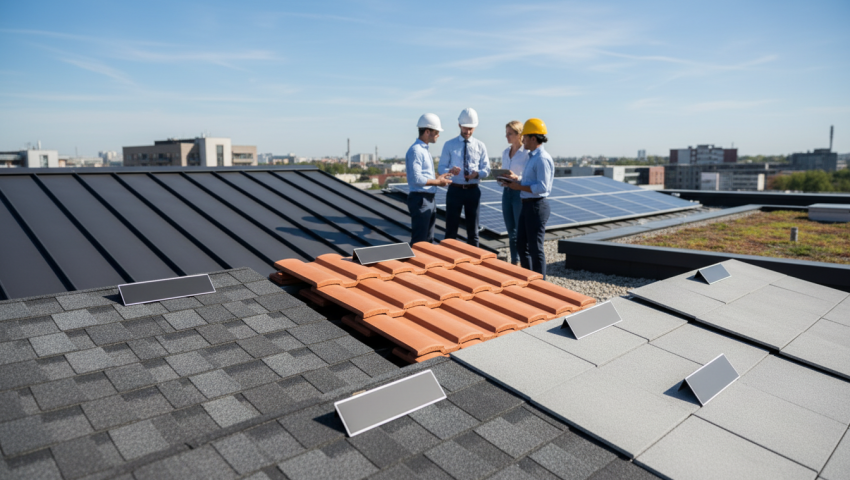
Expert Insight: Metal roofing now captures 40% of high-end residential projects. Climate zone considerations override budget in material selection decisions.
Walk through any upscale Denver, Colorado neighborhood today and you’ll notice something striking: the traditional asphalt shingle dominance is cracking. Homeowners are embracing roofing materials that would have seemed exotic just five years ago, driven by climate realities, energy costs, and evolving aesthetic preferences. The trends in roofing materials aren’t just about following fashion, they’re about responding to Colorado’s unique environmental challenges.
What’s driving this transformation goes beyond simple style preferences. Insurance companies are rewarding impact-resistant choices, solar integration demands are reshaping material compatibility, and Denver’s extreme weather patterns are forcing homeowners to think differently about longevity versus upfront costs. Understanding these shifts helps you make informed decisions that align with both current performance needs and future resale value in Colorado’s competitive housing market.
Key Takeaways
- Metal Roofing Surge: Standing seam metal now dominates luxury residential projects due to superior snow shedding, hail resistance, and 50-year lifespans that justify premium pricing.
- Climate-First Selection: Denver’s hail zone, UV intensity, and temperature swings make material choice more critical than budget considerations for long-term performance.
- Solar Integration Reality: New roofing projects increasingly plan for future solar installation, requiring structural analysis and compatible underlayment systems from the start.
- Synthetic Material Limits: Composite slate and cedar alternatives show premature weathering in Colorado’s high-altitude UV environment despite marketing claims.
- Warranty Complexity: Enhanced manufacturer warranties require complete system installation using approved components, creating hidden costs many homeowners discover too late.
Why Metal Roofing Suddenly Dominates High-End Residential Projects
Drive through Cherry Hills Village or Castle Pines and count the metal roofs, you’ll be surprised how quickly you lose track. What started as a commercial building trend has exploded into residential markets, with market research showing metal roofing capturing nearly 40% of premium home projects in 2026. The shift isn’t just aesthetic, it’s practical economics meeting Colorado’s demanding climate conditions.
The transformation stems from three converging factors that traditional materials can’t match. Snow loads that would stress asphalt shingles slide effortlessly off standing seam profiles, hail that dents cars bounces harmlessly off properly installed metal panels, and UV exposure that fades composite materials barely affects quality metal finishes. Insurance companies have noticed too, offering premium reductions for impact-resistant metal installations that often offset the higher material costs within seven years.
Here’s how metal roofing compares to traditional materials across key performance metrics:
| Material Type | Lifespan (Years) | Hail Resistance | Snow Shedding | Insurance Discount |
|---|---|---|---|---|
| Standing Seam Metal | 50+ | Class 4 | Excellent | 5-15% |
| Architectural Shingles | 25-30 | Class 2-3 | Poor | 0-5% |
| Composite Slate | 30-40 | Class 3-4 | Good | 5-10% |
| Clay Tile | 50+ | Class 2 | Fair | 0-5% |
Performance Advantages
- Snow Shedding Efficiency: Standing seam profiles create smooth surfaces that prevent ice dam formation and reduce structural snow loading by up to 60% compared to textured shingles.
- Impact Resistance Superior: 24-gauge steel with Kynar 500 finishes withstand Class 4 hail impacts that would require complete shingle replacement, often qualifying for insurance discounts.
- Thermal Movement Management: Mechanical seaming systems accommodate expansion and contraction cycles that cause premature failure in rigid roofing materials during Colorado temperature swings.
- Longevity Economics: Fifty-year manufacturer warranties with minimal maintenance requirements create total cost of ownership advantages despite 200-300% higher initial material costs.
- Resale Value Impact: Premium metal roofing adds 85-95% of installation cost to home value, compared to 65-75% recovery rates for high-end asphalt shingle systems.
The real surprise isn’t that metal roofing costs more upfront, it’s how quickly the performance advantages justify the investment in Denver’s climate. Homeowners who initially resist the price premium often become the strongest advocates once they experience their first major hailstorm or heavy snow season without damage or ice dam issues.
The Hidden Durability Problem with Synthetic Slate and Cedar
Synthetic roofing materials promise the beauty of natural slate or cedar without the weight, cost, or maintenance concerns. Marketing materials showcase stunning installations and impressive laboratory test results, but the reality in Colorado’s high-altitude environment tells a different story. Three years into widespread adoption, patterns of premature weathering, color degradation, and thermal cycling failures are emerging that manufacturers didn’t anticipate.
The core issue lies in polymer chemistry meeting extreme environmental conditions. Denver sits at 5,280 feet elevation where UV radiation intensity exceeds sea-level exposure by 25%, creating accelerated degradation of synthetic materials. Temperature swings from winter lows near zero to summer highs above 100°F stress polymer matrices beyond their design parameters, leading to micro-cracking, granule loss, and color fading that natural materials handle gracefully.
Failure Patterns
- UV Degradation Acceleration: High-altitude UV exposure causes color fading and polymer breakdown in synthetic materials 40% faster than manufacturer testing predicts.
- Thermal Cycling Stress: Daily temperature variations of 50-60°F create expansion-contraction cycles that crack synthetic slate edges and loosen fastener connections.
- Granule Adhesion Loss: Polymer-based granule attachment systems fail under thermal stress, creating bare spots and reduced weather protection within 5-7 years.
- Brittleness Development: Cold weather embrittlement makes synthetic materials prone to impact damage from hail or debris that wouldn’t affect fresh installations.
- Warranty Exclusions: Most synthetic material warranties exclude UV-related color changes and thermal cycling damage, leaving homeowners with limited recourse for premature failures.
This doesn’t mean synthetic materials are universally problematic, but their performance in Colorado requires realistic expectations. Homeowners attracted to synthetic options should factor in potential color changes, reduced lifespans, and limited warranty coverage when comparing total cost of ownership against natural alternatives or metal systems.
How Climate Zone Dictates Material Choice More Than Budget
Most homeowners approach roofing material selection with budget as the primary constraint, but Colorado’s climate zone 5B classification should drive the decision matrix. The combination of high-altitude UV exposure, extreme temperature swings, frequent hail events, and heavy snow loads creates performance demands that eliminate many materials regardless of price point. Understanding these climate-specific requirements prevents costly mistakes and premature replacements.
Denver’s unique position at the intersection of Great Plains weather patterns and Rocky Mountain elevation creates conditions that stress roofing materials in multiple ways simultaneously. Summer afternoon thunderstorms bring golf-ball-sized hail, winter brings snow loads exceeding 30 pounds per square foot, spring brings rapid freeze-thaw cycles, and year-round UV exposure at altitude accelerates material aging. Climate zone considerations become the primary filter for material selection, with budget accommodating the necessary performance level.
Climate Requirements
- Hail Impact Resistance: UL 2218 Class 4 rating becomes mandatory rather than optional, eliminating standard asphalt shingles and many composite materials from consideration.
- UV Stability Critical: High-altitude solar radiation requires materials with proven fade resistance and polymer stability, favoring metal, clay tile, or premium modified asphalt options.
- Snow Load Management: Roof pitch, material texture, and ice dam prevention features become primary selection criteria rather than secondary considerations in heavy snow zones.
- Thermal Cycling Tolerance: Materials must handle 100°F temperature swings without cracking, warping, or fastener loosening, eliminating many synthetic and composite options.
- Wind Uplift Resistance: Frequent chinook winds and thunderstorm downdrafts require materials tested to ASTM D3161 Class F or higher wind resistance standards.
The reality is that climate zone 5B effectively narrows material choices to a handful of proven performers, regardless of aesthetic preferences or initial budget constraints. Homeowners who prioritize climate compatibility from the start avoid the expensive lesson of replacing inappropriate materials within 10-15 years instead of the expected 25-30 year lifespan.
Solar Integration Requirements Are Reshaping Traditional Material Selection
Solar panel adoption in Denver has exploded 400% since 2020, driven by federal tax credits, state incentives, and Xcel Energy’s net metering programs. This surge is fundamentally changing how homeowners approach roofing material selection, even for those not immediately installing solar systems. The structural requirements, penetration considerations, and warranty implications of future solar installation now influence material choices from day one of roof replacement projects.
The challenge extends beyond simple compatibility to comprehensive system planning. Traditional roofing materials and installation methods often create complications for solar mounting systems, requiring expensive modifications or complete reinstallation. Smart homeowners are choosing solar-ready materials and installation techniques that accommodate future panel installation without compromising roof integrity or voiding warranties.
Solar Considerations
- Structural Load Planning: Solar panels add 3-4 pounds per square foot, requiring structural analysis and potential reinforcement during initial roof installation rather than expensive retrofitting.
- Penetration Management: Standing seam metal roofs allow clamp-on solar mounting without roof penetrations, while shingle systems require careful flashing and sealant details that may void warranties.
- Warranty Coordination: Solar installation often voids roofing material warranties unless specific procedures and approved mounting systems are used, requiring upfront planning and documentation.
- Conduit Pathway Planning: Electrical conduit routing from panels to inverters requires predetermined pathways that don’t compromise roof integrity or create leak points over time.
- Material Compatibility: Some roofing materials react poorly with solar mounting hardware or require specialized attachment methods that increase installation complexity and costs significantly.
The smart approach treats every new roof as potentially solar-ready, even if panels aren’t installed immediately. This forward-thinking strategy prevents the expensive retrofitting costs and warranty complications that plague homeowners who add solar to incompatible roofing systems later.
The Installation Reality Behind Trending Cool Roof Technologies
Cool roof technology promises significant energy savings by reflecting solar radiation rather than absorbing it as heat, but the installation reality in Denver reveals complications that marketing materials don’t address. While cool roof coatings and reflective materials can reduce cooling costs by 10-15%, they also create unexpected challenges in Colorado’s climate, including increased heating loads, ice dam formation, and application difficulties in variable weather conditions.
The fundamental issue is that cool roof benefits were developed and tested in hot climates where year-round cooling dominates energy consumption. In Denver’s climate zone 5B, where heating degree days exceed cooling degree days significantly, reflective roofing can actually increase total energy consumption during winter months. Additionally, the installation requirements for cool roof systems often conflict with traditional roofing practices and material warranties.
Installation Challenges
- Climate Mismatch Issues: Cool roof benefits diminish in heating-dominated climates like Denver, where reduced solar heat gain increases winter heating costs more than summer cooling savings.
- Application Weather Sensitivity: Cool roof coatings require specific temperature and humidity conditions during application, creating installation windows that conflict with Colorado’s variable spring and fall weather.
- Substrate Preparation Critical: Existing roof surfaces must be completely clean and properly primed for coating adhesion, often requiring expensive preparation that exceeds new material installation costs.
- Warranty Complexity: Cool roof coatings typically void underlying material warranties while offering shorter coverage periods, creating gaps in protection that many homeowners don’t discover until problems arise.
- Maintenance Requirements: Reflective coatings require regular cleaning and reapplication every 5-10 years to maintain effectiveness, adding ongoing costs that offset energy savings over time.
Cool roof technology works well in specific applications and climates, but Denver homeowners should carefully evaluate the total cost-benefit equation. The installation challenges and climate mismatch often make traditional high-performance materials a more practical choice than trendy cool roof systems.
Why Composite Materials Fail Where Natural Options Still Excel
The promise of composite roofing materials centers on combining the best characteristics of natural materials while eliminating their weaknesses, but real-world performance in Colorado exposes fundamental limitations in current composite technology. While composite slate, cedar, and tile products excel in laboratory testing, they consistently underperform natural alternatives in thermal cycling, UV resistance, and long-term durability when subjected to Denver’s demanding climate conditions.
The core challenge lies in the inherent properties of polymer-based composite materials versus the geological and biological evolution that created natural roofing materials over millions of years. Natural slate formed under extreme pressure and temperature conditions that exceed anything composite manufacturing can replicate, while cedar’s cellular structure provides flexibility and weather resistance that synthetic alternatives struggle to match.
Here’s how natural materials compare to composite alternatives across key performance areas:
| Performance Factor | Natural Slate | Natural Cedar | Composite Slate | Composite Cedar |
|---|---|---|---|---|
| UV Resistance | Excellent | Good | Fair | Poor |
| Thermal Cycling | Excellent | Excellent | Poor | Fair |
| Hail Impact | Good | Excellent | Fair | Poor |
| Aging Appearance | Improves | Improves | Degrades | Degrades |
| Repair Options | Individual | Individual | Section | Section |
Natural Advantages
- Thermal Mass Stability: Natural slate and clay tile provide thermal mass that moderates temperature swings, while composite materials expand and contract significantly with temperature changes.
- UV Resistance Superior: Natural materials develop protective patinas over time that enhance weather resistance, while composite materials degrade progressively under UV exposure.
- Impact Absorption: Cedar’s natural fiber structure absorbs hail impacts that would crack or dent synthetic alternatives, providing better long-term performance in hail-prone areas.
- Aging Characteristics: Natural materials develop attractive weathered appearances that enhance curb appeal, while composite materials show wear patterns that detract from home aesthetics.
- Repair Compatibility: Individual natural slate or cedar pieces can be replaced with matching materials decades later, while composite materials often require complete section replacement due to color and texture changes.
This doesn’t mean composite materials lack value, but their optimal applications differ from manufacturer marketing claims. Understanding where natural materials still excel helps homeowners make informed decisions about when composite alternatives provide genuine advantages versus when they represent expensive compromises.
The Warranty Gaps Most Homeowners Discover Too Late
Roofing material warranties appear straightforward in marketing literature, but the fine print contains exclusions and requirements that can void coverage for common installation practices and environmental conditions. Most homeowners discover these warranty gaps only when filing claims for premature material failure, wind damage, or installation defects. Understanding warranty limitations before material selection prevents expensive surprises and ensures realistic expectations about long-term protection.
The trend toward enhanced warranty programs creates additional complexity, as manufacturers require complete system installation using approved components to maintain coverage. This means using the manufacturer’s specific underlayment, starter strips, ridge caps, and fasteners, often increasing material costs by 20-30% while eliminating competitive bidding for individual components. Additionally, industry warranty trends show increasing restrictions on coverage for weather-related damage and installation variations.
Coverage Limitations
- System Requirements: Enhanced warranties require complete manufacturer systems including underlayment, fasteners, and accessories, eliminating cost-saving component substitutions that void coverage entirely.
- Weather Exclusions: Most warranties exclude damage from hail, wind, snow loads, and UV exposure, covering only manufacturing defects that represent less than 5% of actual roof failures.
- Installation Standards: Warranty coverage requires installation by certified contractors following specific procedures, creating liability for homeowners who use non-certified installers to save costs.
- Prorated Coverage: Many warranties provide prorated coverage that reduces claim payments over time, leaving homeowners responsible for increasing percentages of replacement costs as materials age.
- Transferability Limits: Warranty transfers to new homeowners often require fees, inspections, and paperwork that complicate home sales and reduce coverage for subsequent owners.
The key to warranty protection lies in understanding coverage limitations before material selection and ensuring installation practices maintain coverage throughout the warranty period. Homeowners who treat warranties as insurance policies rather than performance guarantees make better material choices and avoid costly coverage gaps when problems arise.
Choosing Materials for Colorado’s Future
The trends in roofing materials for 2026 reflect a fundamental shift from aesthetic-driven decisions to performance-based selection criteria. Denver homeowners who understand climate zone requirements, solar integration planning, and warranty realities make better long-term investments that protect both their homes and their budgets. The materials gaining popularity aren’t necessarily the newest or most heavily marketed, they’re the ones that deliver proven performance in Colorado’s demanding environment.
If you’re planning a roof replacement in Denver, Colorado, focus on materials that address your specific climate challenges rather than following national trends that may not apply to high-altitude conditions. Consider future solar installation, understand warranty limitations, and choose materials based on total cost of ownership rather than initial price. For expert guidance on material selection that matches your home’s specific needs and Colorado’s climate requirements, we can help you navigate the options and make informed decisions that protect your investment for decades to come.
Author
JJ Hedden is the owner of Peak to Peak Roofing with 15 years of experience helping Denver homeowners navigate material selection challenges in Colorado’s unique climate. His hands-on experience with over 6,000 roofing projects has provided deep insights into which trending materials deliver on their promises and which create expensive problems for homeowners. JJ’s expertise in climate-specific material performance helps homeowners make informed decisions that balance upfront costs with long-term durability in Colorado’s demanding environment.