
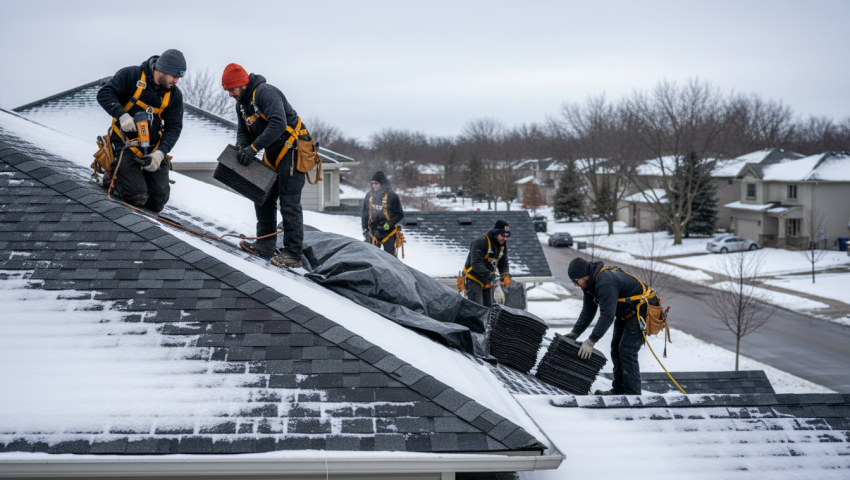
Expert Insight: Most winter roofing projects fail because contractors ignore material adhesion temperatures. Smart timing and proper techniques make winter installation possible.
You’re staring at water stains on your ceiling in January, and every contractor you call says the same thing: ‘We’ll put you on the spring list.’ But here’s what most homeowners in Denver, Colorado don’t realize about winter roofing installation – it’s not just about whether it can be done, it’s about whether it should be done. The difference between a successful winter roof and a warranty nightmare often comes down to a single temperature reading.
Most roofing companies either refuse all winter work or accept it without understanding the real risks involved. The truth is that winter installation in Denver’s climate requires completely different approaches to material handling, adhesion protocols, and quality control. When you understand what actually happens to roofing materials below certain temperature thresholds, you’ll know exactly when to move forward and when to wait for spring.
Key Takeaways
- Temperature Threshold: Asphalt shingles lose proper adhesion below 45°F, requiring hand-sealing and heated storage to maintain warranty coverage and performance.
- Snow Load Reality: Denver’s 30 psf snow load requirement exposes structural weaknesses that become critical safety issues during winter installation projects.
- Flashing Vulnerability: Step flashing at wall intersections fails first in freeze-thaw cycles, making proper installation technique more critical than material choice.
- Cost Premium: February installations cost 30% more than October due to material handling, extended timelines, and specialized cold-weather installation requirements.
- Underlayment Impact: Ice and water shield performance below 40°F determines whether your roof survives its first decade of Denver’s harsh weather cycles.
Why We Turn Down Most Winter Roofing Jobs (And When We Say Yes)
Most roofing contractors in Denver, Colorado will tell you they don’t work in winter, but they won’t explain why. The reality isn’t about comfort or convenience – it’s about the fundamental physics of how roofing materials behave in cold temperatures. When asphalt shingles drop below 45°F, the adhesive strips that create wind resistance and waterproofing simply don’t activate. This isn’t a minor inconvenience; it’s a complete failure of the system’s primary defense mechanism.
We turn down roughly 70% of winter roofing requests, but not for the reasons you might think. The decision comes down to three non-negotiable factors: sustained temperatures above 40°F for at least 48 hours after installation, dry conditions for the entire project duration, and structural integrity that can handle both construction loads and potential snow accumulation. When these conditions align, winter installations can actually outperform spring jobs because materials acclimate slowly and crews work with greater precision.
Approval Criteria
- Temperature Window: Sustained 45°F minimum for 72 hours post-installation ensures shingle adhesive activation and proper membrane bonding without warranty violations.
- Structural Assessment: Load calculations must account for construction materials plus potential snow accumulation, often revealing hidden framing issues before they become dangerous.
- Weather Monitoring: Real-time weather tracking with 7-day forecasts determines project feasibility, as unexpected storms can destroy partially completed installations.
- Material Conditioning: Shingles require 24-hour heated storage at 60-70°F before installation to maintain flexibility and prevent cracking during handling.
- Emergency Classification: Only urgent repairs threatening structural integrity or occupied spaces justify accepting marginal weather conditions for winter roofing work.
The contractors who accept every winter job without these criteria are the same ones generating callbacks and warranty claims come spring. When we do accept winter work, it’s because every variable aligns for success. This selective approach means higher upfront costs but eliminates the expensive failures that plague rushed winter installations across Denver’s roofing market.
The Temperature Threshold That Changes Everything About Material Performance
At exactly 45°F, asphalt shingles undergo a molecular change that most homeowners never see but always pay for. The butyl adhesive strips that bond shingle tabs together require this minimum temperature to soften and create the hermetic seal that prevents wind uplift. Below this threshold, the strips remain rigid, leaving individual shingles vulnerable to wind damage and water infiltration. This isn’t manufacturer marketing – it’s basic chemistry that determines whether your roof survives its first Denver windstorm.
The temperature threshold extends beyond just shingles to every component of your roofing system. Cold weather installation techniques become critical when ice and water shield membranes won’t adhere properly below 40°F, and even galvanized nails become brittle enough to snap during installation. Understanding these thresholds explains why experienced contractors use completely different protocols for winter work, including heated storage areas and modified installation sequences.
Material Limits
- Shingle Adhesion: Butyl strips require 45°F minimum to activate, with hand-sealing necessary below this temperature to prevent wind uplift and maintain manufacturer warranties.
- Membrane Performance: Self-adhering ice and water shield loses tackiness below 40°F, requiring primer application and extended pressure time for proper bonding.
- Fastener Brittleness: Galvanized roofing nails become prone to head separation below 20°F, necessitating stainless steel alternatives for extreme cold installations.
- Sealant Curing: Polyurethane and silicone sealants require 35°F minimum for proper cure, with uncured sealants failing completely during spring freeze-thaw cycles.
- Flashing Expansion: Aluminum and steel flashing contracts significantly in cold temperatures, requiring oversized expansion joints to prevent buckling during temperature swings.
These temperature thresholds aren’t suggestions – they’re engineering requirements that determine whether your roof performs as designed. Contractors who ignore these limits create time bombs that explode during the first warm weather when materials expand and contract at different rates. Understanding these thresholds helps you evaluate whether a winter installation proposal is realistic or reckless.
How Snow Load Calculations Expose Structural Problems You Never Knew Existed
Denver’s building code requires roofs to support 30 pounds per square foot of snow load, but most homeowners have no idea whether their roof actually meets this standard. Winter roofing projects force a structural evaluation that often reveals decades-old problems: undersized rafters, missing collar ties, or inadequate connections that have been hidden under layers of roofing materials. What starts as a simple roof replacement can quickly become a structural emergency when you discover your roof can’t safely support workers, materials, and potential snow accumulation.
The snow load calculation becomes even more critical during winter installations because you’re adding the weight of roofing materials, workers, and equipment to a structure that may already be stressed by existing snow. A typical roofing crew with materials adds 15-20 psf to the roof load, meaning your structure needs to handle 45-50 psf total during installation. Professional winter roofing requires structural engineers to verify load capacity before any work begins, often uncovering problems that would have caused catastrophic failure during the next heavy snow.
Here’s how different snow accumulation levels affect total roof load during winter installation:
| Snow Depth | Snow Load (psf) | Installation Load (psf) | Total Load (psf) |
|---|---|---|---|
| 6 inches | 15 | 20 | 35 |
| 12 inches | 30 | 20 | 50 |
| 18 inches | 45 | 20 | 65 |
| 24 inches | 60 | 20 | 80 |
Structural Risks
- Load Capacity: Combined snow load plus installation materials can exceed 50 psf, revealing undersized framing that requires immediate reinforcement before roofing work begins.
- Rafter Deflection: Existing structural damage becomes apparent under installation loads, with sagging rafters indicating compromised load paths that threaten worker safety.
- Connection Failures: Hurricane clips and rafter ties often show stress fractures during winter projects, exposing inadequate connections that compromise entire roof assemblies.
- Decking Integrity: OSB and plywood sheathing delaminates faster in cold temperatures, with existing moisture damage becoming structurally dangerous under combined loads.
- Truss Modifications: Previous HVAC or electrical work often compromises truss members, creating weak points that fail catastrophically when stressed by winter installation loads.
Snow load calculations during winter roofing aren’t just about code compliance – they’re about preventing structural collapse that can kill workers and destroy homes. The contractors who skip structural evaluation are gambling with physics, and physics always wins. When structural problems surface during winter projects, addressing them immediately costs less than rebuilding after a collapse.
The Flashing Detail That Fails First in Freeze-Thaw Cycles
Step flashing where your roof meets a wall fails more often than any other roofing component in Denver’s freeze-thaw climate, and winter installations make this failure almost inevitable if done incorrectly. The problem isn’t the flashing material itself – it’s the thermal movement between dissimilar materials that creates gaps where water infiltrates and freezes. When water freezes in these gaps, it expands with 1,700 pounds of pressure per square inch, literally tearing apart even properly installed flashing systems.
Most contractors focus on the visible flashing pieces but ignore the critical detail that actually prevents failure: the overlap sequence and sealant placement that accommodates thermal movement. During winter installations, this detail becomes even more critical because materials are already contracted from cold temperatures. When spring arrives and materials expand, improperly sequenced flashing creates stress points that crack sealants and open water infiltration paths that destroy wall systems from the inside out.
Failure Points
- Thermal Movement: Step flashing expands and contracts at different rates than wall materials, creating gaps that allow water infiltration and subsequent freeze damage.
- Sealant Placement: Sealants applied in cold temperatures don’t achieve proper adhesion, failing during first warm weather when thermal expansion stresses the bond.
- Overlap Sequence: Incorrect flashing overlap allows water to flow behind upper pieces, with freeze-thaw cycles gradually opening these infiltration points wider.
- Material Compatibility: Galvanic corrosion between aluminum flashing and steel fasteners accelerates in freeze-thaw conditions, destroying flashing integrity within five years.
- Installation Timing: Flashing installed below 35°F doesn’t conform properly to substrate irregularities, leaving gaps that become major leak points during spring snowmelt.
The flashing details that fail first are always the ones installed without accounting for thermal movement and material compatibility. Winter installations require modified techniques that anticipate spring expansion, including oversized overlap areas and flexible sealant systems. Getting these details right during winter installation prevents the expensive wall damage that typically doesn’t show up until years later.
Why February Installations Cost 30% More Than October Ones
The 30% cost premium for February roofing installations in Denver isn’t contractor greed – it’s the mathematical reality of cold-weather construction logistics. Material handling alone adds significant costs: shingles must be stored in heated warehouses, transported in insulated vehicles, and kept warm on-site with temporary heating systems. Labor productivity drops 40% in cold temperatures as workers move slower for safety and materials require extra handling time to prevent damage.
Beyond the obvious heating and handling costs, winter installations require specialized equipment and extended project timelines that compound expenses. Crews need heated break areas, additional safety equipment for icy conditions, and backup plans for weather delays that can stretch a three-day job into two weeks. Insurance costs increase due to higher accident risks, and material waste jumps as brittle shingles crack during handling and installation.
Cost Factors
- Material Conditioning: Heated storage and transportation systems add $500-800 per project, with shingles requiring 24-hour warming periods before installation begins.
- Labor Efficiency: Worker productivity drops 40% in temperatures below 32°F, extending project timelines and increasing labor costs proportionally.
- Equipment Rental: Temporary heating units, heated break areas, and specialized cold-weather safety equipment add $200-400 daily to project costs.
- Weather Delays: Average winter project experiences 3-5 weather delay days, with crew mobilization and demobilization costs accumulating for each interruption.
- Material Waste: Shingle breakage increases 25% in cold temperatures, with brittle materials requiring careful handling that slows installation and increases waste disposal costs.
The contractors offering winter pricing identical to fall rates are cutting corners somewhere – either on material conditioning, safety protocols, or warranty coverage. Understanding these cost factors helps you evaluate whether a winter bid reflects realistic project requirements or sets up future problems. The 30% premium isn’t markup; it’s the true cost of doing winter work correctly.
The Underlayment Decision That Determines Your Roof’s First Decade
The underlayment choice you make during winter installation will determine whether your roof survives Denver’s next ten freeze-thaw cycles or requires major repairs within five years. Standard felt paper becomes brittle and tears in cold temperatures, while synthetic underlayments maintain flexibility but cost 40% more. The critical factor isn’t initial cost – it’s how each material performs when installed below optimal temperatures and then subjected to decades of thermal cycling.
Ice and water shield placement becomes even more critical during winter installations because you can’t rely on shingle adhesion to provide secondary protection. The membrane must create a complete weather barrier on its own, which requires proper overlap, adequate adhesion, and compatibility with cold-temperature installation. Getting this wrong during winter installation creates leak points that won’t show up until spring snowmelt, when it’s too late to fix them without tearing off the entire roof.
Here’s how different underlayment options perform during winter installation conditions:
| Underlayment Type | Min Install Temp | Cold Flexibility | Winter Cost Premium |
|---|---|---|---|
| 15# Felt Paper | 50°F | Poor | Standard |
| 30# Felt Paper | 45°F | Fair | +15% |
| Synthetic | 20°F | Excellent | +40% |
| Ice & Water Shield | 40°F | Good | +60% |
Material Performance
- Felt Paper Limitations: Standard 15-pound felt becomes brittle below 40°F, tearing during installation and losing protective capability during first freeze-thaw cycle.
- Synthetic Advantages: Polypropylene underlayments maintain flexibility to -20°F, providing consistent protection throughout installation and long-term thermal cycling.
- Adhesion Requirements: Ice and water shield requires 50°F minimum for proper bonding, with primer application necessary for winter installations below this threshold.
- Overlap Specifications: Cold-weather installations require 6-inch minimum overlaps instead of standard 4-inch to compensate for reduced adhesion and thermal movement.
- Membrane Compatibility: Self-adhering membranes must be compatible with cold-applied primers and flexible enough to accommodate substrate movement without tearing.
The underlayment decision during winter installation isn’t about meeting minimum code requirements – it’s about creating a system that performs reliably for decades in Denver’s harsh climate. Contractors who default to the cheapest option during winter installations are creating future leak problems that will cost thousands more to repair than the initial upgrade would have cost.
What Happens When Shingles Hit 15°F During Installation
When asphalt shingles reach 15°F during installation, they transform from flexible building materials into brittle sheets that crack like glass under normal handling pressure. The asphalt becomes so rigid that walking on installed shingles can cause immediate fractures that penetrate completely through the material. These cracks don’t just affect appearance – they create direct water infiltration paths that bypass all the roof’s protective systems.
The molecular structure of asphalt shingles changes dramatically at extreme low temperatures, with the polymer modifiers that provide flexibility becoming ineffective below 20°F. This means shingles installed at 15°F will never achieve proper adhesion, even when temperatures rise, because the initial installation damage compromises the entire system. Contractors who attempt installation at these temperatures are essentially installing a roof that’s already failed, even if it looks acceptable from the ground.
Extreme Cold Effects
- Material Fracturing: Shingles become glass-brittle at 15°F, with normal walking pressure causing through-thickness cracks that create permanent leak points.
- Adhesive Failure: Butyl strips remain permanently rigid below 20°F, never achieving proper bond even when temperatures rise in subsequent months.
- Handling Damage: Standard installation techniques cause edge cracking and corner breaks in extreme cold, requiring complete material replacement rather than repair.
- Granule Loss: Thermal shock from rapid temperature changes causes massive granule shedding, exposing asphalt mat to UV degradation within first year.
- Warranty Voidance: Manufacturer warranties explicitly exclude installations below specified temperature thresholds, leaving homeowners with no recourse for premature failures.
Shingles installed at 15°F aren’t just compromised – they’re destroyed during the installation process itself. The contractors who attempt these installations are either ignorant of material science or deliberately deceiving customers about the viability of extreme cold installation. Understanding what happens at these temperatures helps you recognize when a contractor is proposing something that will fail regardless of their skill level.
Making Smart Winter Roofing Decisions
Winter roofing installation in Denver, Colorado isn’t impossible, but it requires understanding the real physics of how materials behave in cold temperatures and the true costs of doing it correctly. The temperature thresholds, structural considerations, and material performance factors we’ve covered aren’t theoretical – they’re the practical realities that determine whether your winter roof project succeeds or becomes an expensive failure. Smart homeowners use this knowledge to evaluate contractor proposals and timing decisions rather than simply accepting the first available option.
The contractors worth trusting for winter work are the ones who can explain these technical factors and demonstrate how they’ll address each challenge. They’ll show you heated storage areas, discuss material conditioning protocols, and provide detailed weather contingency plans. Most importantly, they’ll be honest about when conditions aren’t suitable for installation rather than pushing forward with work that’s destined to fail. If you’re facing a winter roofing decision in Denver, use these insights to separate the professionals from the opportunists.
Author
JJ Hedden is a roofing contractor who has navigated thousands of winter installation decisions across Colorado’s Front Range. With 15 years of experience managing cold-weather roofing projects, he understands the critical temperature thresholds and material science factors that determine winter installation success. His approach combines technical expertise with practical field experience to help homeowners make informed decisions about winter roofing timing and contractor selection.