1. Inspect Deck and Code Requirements
We measure the existing deck for structural integrity, check for rot or sagging, and confirm Denver permit requirements before ordering materials.


Peak To Peak Roofing installs standing seam metal roofing systems across Denver and the Front Range metro. Our crews work with mechanically seamed panels, concealed clip systems, and PVDF-coated Galvalume assemblies designed for hail impact, UV exposure, and thermal cycling.
Standing seam metal roofing across the City and County of Denver.
Certified, Accredited, And Reviewed






Gauge, coating, and clip spacing determine whether a metal roof shrugs off decades of Denver hail and UV or fails early. These are the specifications we build to on every standing seam install.
| Specification | What we install | Governing standard | Why it matters at altitude |
|---|---|---|---|
| Panel gauge | 24-gauge Galvalume for hail-prone roofs, 26-gauge for lighter-exposure sections | UL 2218 Class 4 impact testing | 24-gauge resists denting from hail without compromising the seam. 26-gauge costs less but shows cosmetic damage sooner. |
| Finish coating | PVDF, also called Kynar 500 | Manufacturer fade and chalk warranties, 30 to 40 years | UV radiation is roughly 25 percent stronger at 5,280 feet, so a coating that resists chalking and fading matters more here than at sea level. |
| Clip spacing | Calculated per project based on wind exposure category | ASCE 7 wind load provisions, panel tested to ASTM E1592 | Denver's Front Range gusts and thermal cycling require clip intervals engineered for the specific site, not a generic install manual. |
| Panel seaming | Mechanically seamed or snap-lock standing seam with concealed clips | Manufacturer installation specifications | Concealed fasteners eliminate the screw penetrations that back out during repeated freeze-thaw and thermal cycling. |
| Expected lifespan | 40 to 70 years depending on gauge, coating and maintenance | Manufacturer material warranties | Properly detailed flashing and clip spacing are what separate a 30-year roof from a 50-year roof, not the panel alone. |
Impact ratings reference UL 2218. Wind uplift testing references ASTM E1592. Clip spacing is calculated to ASCE 7 wind exposure for each site. Confirm specific ratings on the manufacturer product data sheet for the panel selected.
Most homeowners call after a hail event, but the real test of a metal roof happens over decades of UV exposure at 5,280 feet and temperature swings that can hit 50°F in a single afternoon. We specify standing seam assemblies with Class 4 impact ratings and PVDF coatings because those are the two factors that determine whether a roof lasts 25 years or 50. Exposed-fastener panels are cheaper up front, but every penetration is a future leak point when thermal cycling loosens screws. On older Denver bungalows, rafter framing was sized for lighter composition shingles, so we check whether the existing structure needs evaluation before adding a standing seam system, even though metal panels generally weigh less per square foot than asphalt.

You've probably noticed the number of roofing trucks in your neighborhood after every June hailstorm. That's because asphalt shingles fail predictably in Denver's climate, and insurance companies know it. Metal roofing eliminates the replacement cycle.

A metal roof is only as good as the substrate and flashing details underneath. We see callbacks from other contractors almost always trace back to skipped steps during deck prep or improper valley flashing. Our crews follow manufacturer installation manuals to the fastener, because that's what keeps the warranty valid and the roof watertight for 40 years. In Denver, panel orders and permit submittals go through Denver Community Planning and Development, and snow retention layout gets planned at the same time as panel seaming, since smooth standing seam sheds snow fast over entries and walkways.
We measure the existing deck for structural integrity, check for rot or sagging, and confirm Denver permit requirements before ordering materials.
Panel alignment starts at the eave with a starter strip, and clip spacing is calculated based on ASCE 7 wind exposure for the site.
Panels are seamed mechanically or snapped into clips, then flashing is fitted at walls, valleys, and penetrations before ridge cap installation.
Self-adhered membrane extends 24 inches past the interior warm wall line.
Loose or damaged sheathing is replaced and fastened to code spacing.
We pull permits, schedule inspections, and provide submittal packets for HOA review.
Metal roofing costs more up front than asphalt, but the total cost of ownership over 30 years is lower because you're not paying for two or three re-roofs. You're also not dealing with the hassle of insurance claims every time a hailstorm rolls through. The math works if you plan to stay in the house or want to add resale value.
No Replacement Cycle for Decades: One installation lasts 40 to 70 years depending on material and maintenance.
Energy Efficiency from Reflective Coatings: Cool roof finishes reduce attic heat gain and lower summer cooling costs.
Fire Resistance in Wildfire-Adjacent Areas: Class A fire ratings provide non-combustible protection in foothill and interface zones.
We installed a standing seam system in Wash Park last month where the homeowner had gotten three bids. The lowest one used 26-gauge panels with exposed fasteners and no thermal barrier. That roof would've needed attention in ten years, right around the time the next big hail event hits and everyone's scrambling for contractors again.
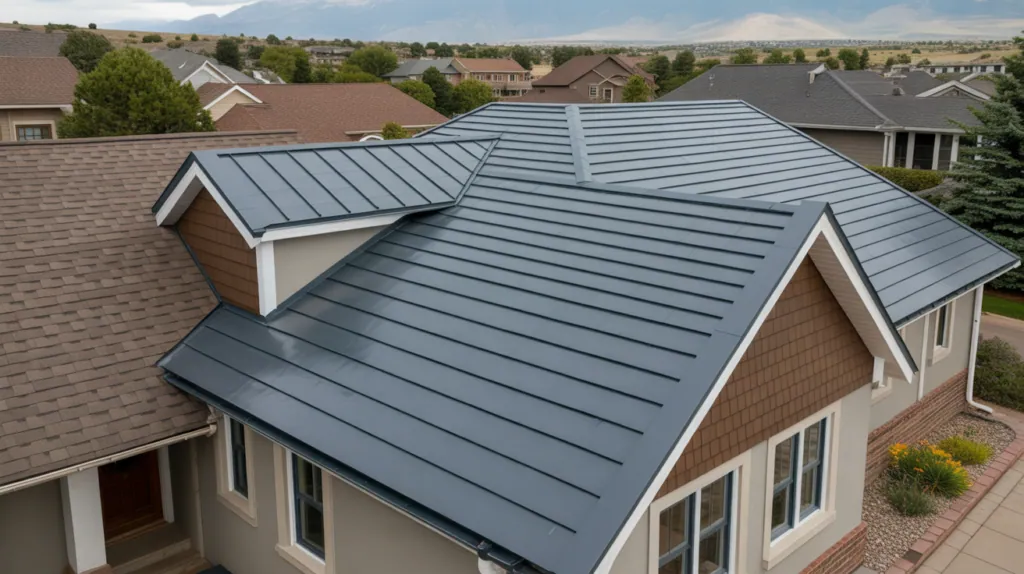
Peak To Peak Roofing serves homeowners throughout Denver and the surrounding metro area. Our crews regularly work in Aurora, Littleton, Castle Pines, Parker, Brighton, Thornton, Arvada, and Erie. We schedule installations around weather windows and coordinate permits with local building departments. Most projects are completed in two to four days depending on roof size and complexity.
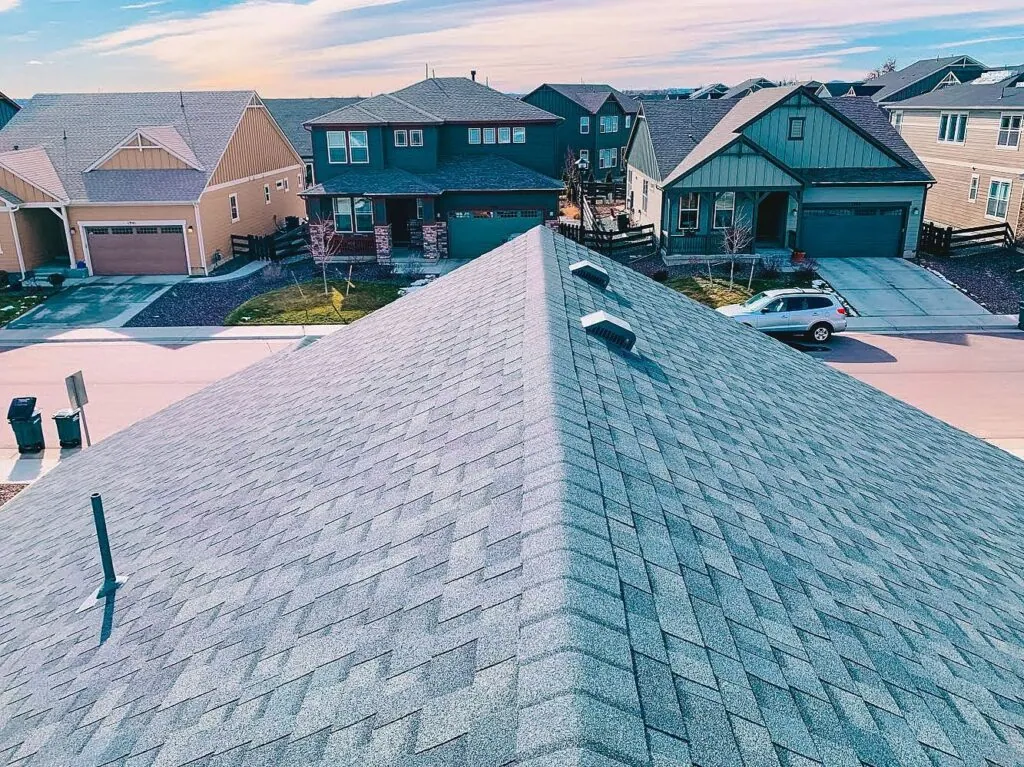
Peak To Peak Roofing serves homeowners throughout Denver and the surrounding metro area. Our crews regularly work in Aurora, Littleton, Castle Pines, Parker, Brighton, Thornton, Arvada, and Erie. We schedule installations around weather windows and coordinate permits with local building departments. Most projects are completed in two to four days depending on roof size and complexity.
We offer flexible scheduling throughout Denver and can accommodate most project timelines with advance notice. You can browse everything we do across the Front Range on our Peak to Peak Roofing Denver.
Which metal systems fit each part of Denver, the panel details that matter locally, and the permitting that applies.
Location & Neighborhoods
Target ZIP Codes
Local Landmarks & Housing Styles
Metal Systems That Fit Here
Panel Details & Permitting
Location & Neighborhoods
Target ZIP Codes
Local Landmarks & Housing Styles
Metal Systems That Fit Here
Panel Details & Permitting
Location & Neighborhoods
Target ZIP Codes
Local Landmarks & Housing Styles
Metal Systems That Fit Here
Panel Details & Permitting
Location & Neighborhoods
Target ZIP Codes
Local Landmarks & Housing Styles
Metal Systems That Fit Here
Panel Details & Permitting
Location & Neighborhoods
Target ZIP Codes
Local Landmarks & Housing Styles
Metal Systems That Fit Here
Panel Details & Permitting
Dispatched Directly From Our Denver Headquarters
Located at 4155 E Jewell Ave #1100, Denver, CO 80222. Our licensed inspectors provide zero-cost storm damage assessments and full Xactimate insurance support across every Denver ZIP code.
Same crews, same permit process, dispatched across the Front Range.
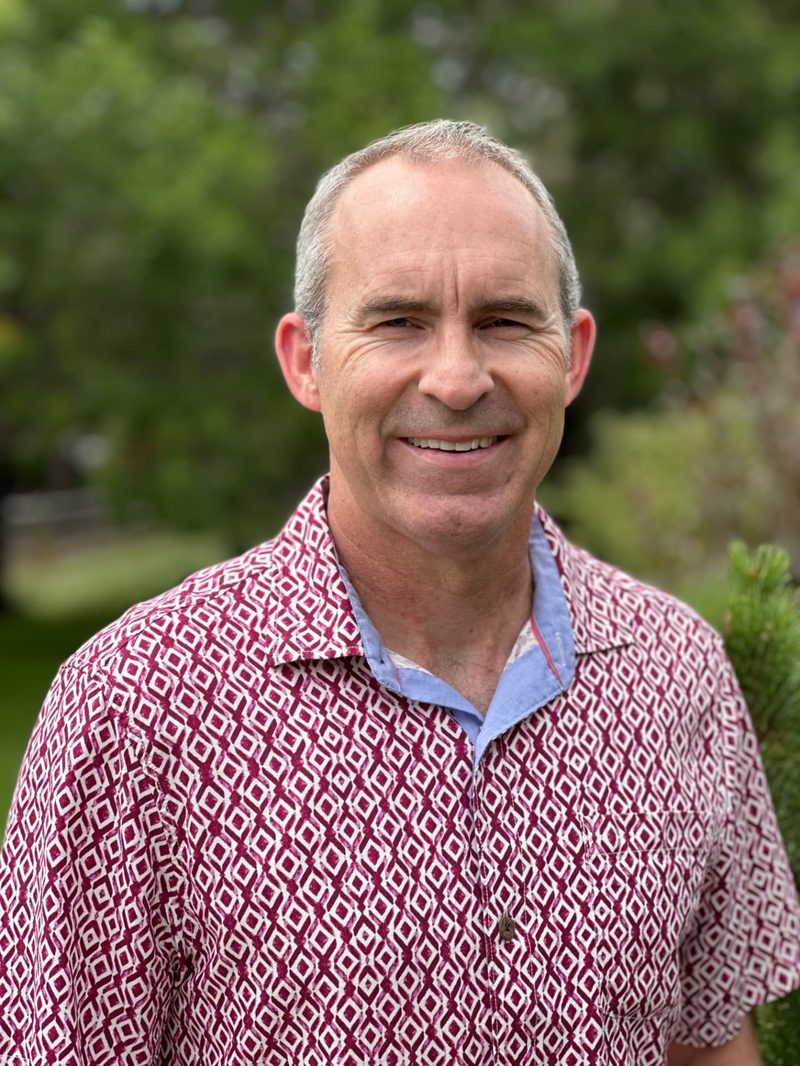
JJ Hedden
Founder & Owner
Meet The Owner
JJ Hedden founded Peak to Peak Roofing & Exteriors so Denver property owners would have a roofer who is still reachable after the truck pulls away. He came up through inspections, claims and installations, so the standards our crews work to are the ones he set on roofs himself.
Metal is unforgiving, so he sets the details before a panel is ordered: panel profile, fastener pattern, expansion, and the flashing and pitch transitions that decide whether a Denver metal roof stays tight for decades.
Denver storms are relentless. Get a comprehensive roof inspection today. Zero cost. Zero pressure. 100% peace of mind.




4.9/5 from happy homeowners
● Inspectors Available Today in Denver
Plus, get a free upgraded underlayment on any full replacement.
"Peak to Peak was great, they helped me with a repair on my roof. Helped me to extend the life of my roof."
- Luke Howard
Free inspection, same day answers