Document Roof Damage After Storm
Date-stamped photos of every roof plane, close-ups of suspect areas, and a NOAA hail swath overlay establish event timing and impact zone.


Peak To Peak Roofing documents hail impact on Denver roofs using test squares, drone surveys, and collateral metal checks. We prepare claim-ready scopes aligned with IRC R905 requirements and coordinate adjuster meetings throughout the metro area.
Hail damage documentation and repair across the City and County of Denver.
Certified, Accredited, And Reviewed






Hail measuring one inch or larger can crack asphalt shingles and dent metal flashing, though severity depends on wind speed at impact, shingle age, and roof pitch. Smaller hail rarely penetrates intact roofing materials. Insurance carriers approve claims based on documentation, not guesswork.
| Hail size | Typical field result | Test square finding | Documentation needed |
|---|---|---|---|
| Under 0.75 in | Rarely damages intact roofing materials. | Cosmetic granule displacement only in most cases. | Photo baseline recommended, full claim unlikely. |
| 1.00 in (quarter) | Cracks asphalt shingles and dents metal flashing depending on wind. | Bruising possible on aged or brittle shingles. | Test square photos, NOAA storm date overlay, soft metal comparison. |
| 1.50 to 1.75 in (golf ball) | Widespread bruising, dented ridge vents, split gutter seams. | 8 or more hits per test square typically meets replacement threshold. | Multi-plane test squares, infrared attic scan, Xactimate line-item scope. |
| 2.00 in and up | Fractured mat, torn shingles, punctured soft metals. | Impact density exceeds shingle's rated resistance (UL 2218 Class 4). | GPS-tagged damage map, manufacturer spec sheets, supplemental review request if underestimated. |
Damage outcomes describe typical field results and vary with wind speed, impact angle, shingle age and UL 2218 impact rating. Test square counts and NOAA storm swath data support claim documentation, but only an on-roof inspection can confirm damage on a specific home.
Most homeowners can't tell the difference between cosmetic granule loss and actual mat bruising that will leak. We use test squares on multiple roof planes, photograph dented vents and flashing, and compare findings to NOAA hail swath data for the storm date. Denver's housing stock complicates this further: a pre-war bungalow near Washington Park often carries older, more brittle composition shingles that bruise differently than the architectural shingles common on newer builds along the I-25 corridor. The goal is documentation that holds up during adjuster review, lines up with Denver Community Planning and Development's permit requirements for a full tear-off, and supports a compliant replacement scope.
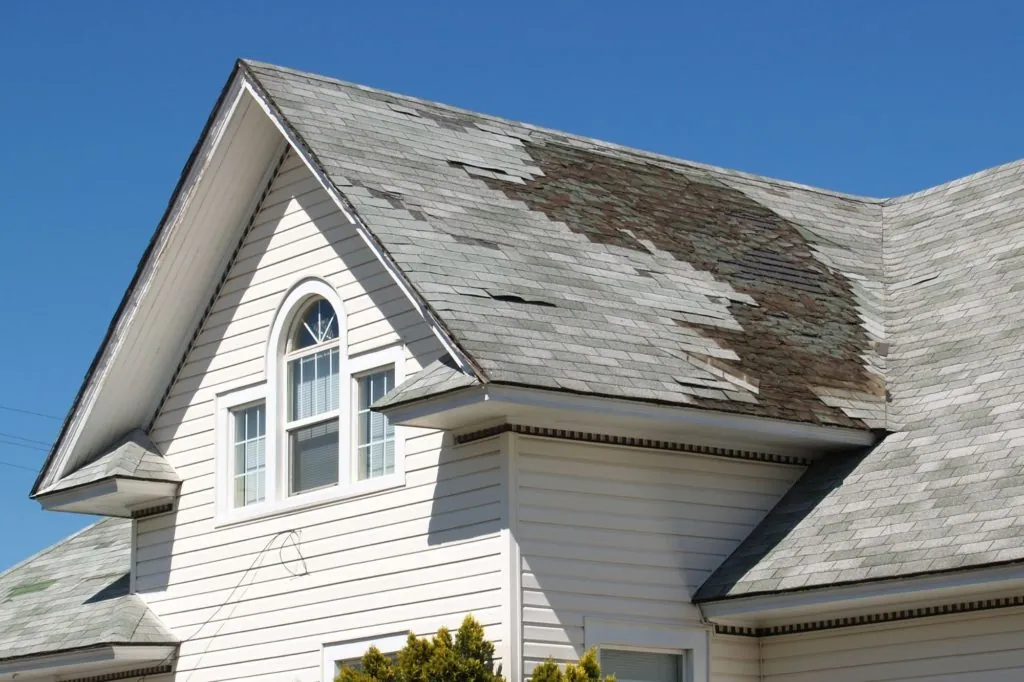
A shingle that survives a hailstorm in Houston may fail within two years here. Denver's elevation intensifies UV degradation, and our 40-degree temperature swings crack already-compromised mat fibers. We see this pattern consistently: hail creates the initial fracture, then Colorado's climate finishes the job. Older Denver neighborhoods with steeper original roof pitches, like the Denver squares near Congress Park, tend to show bruising sooner on south and west slopes, where sun exposure is highest.
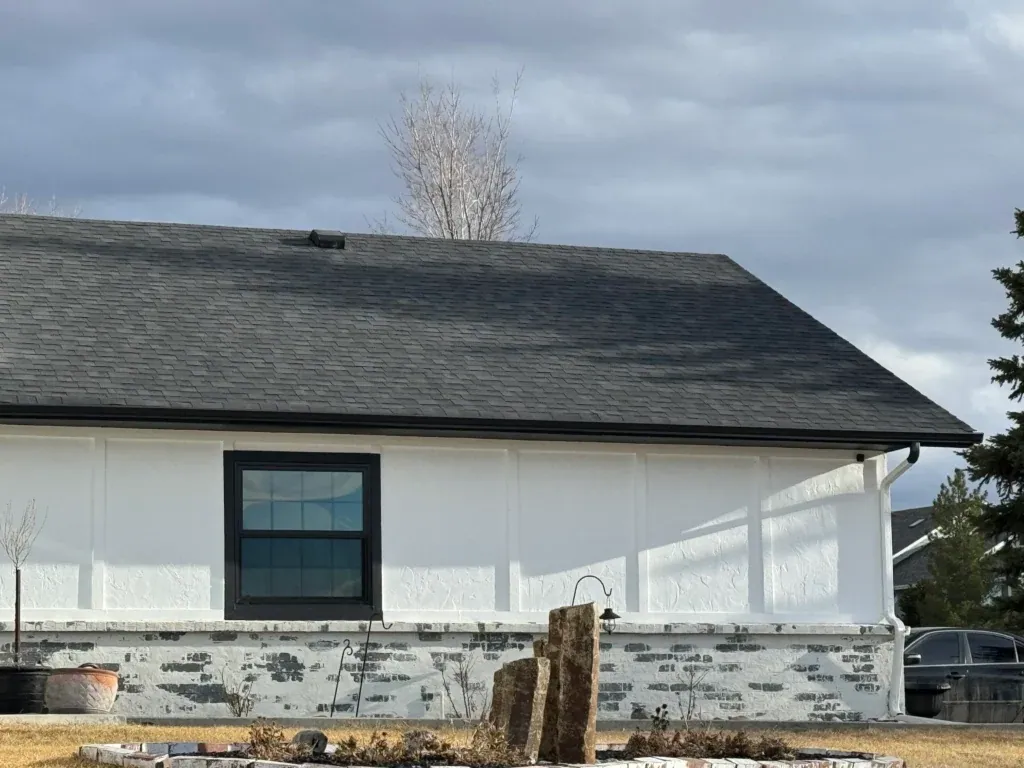
We had a client in Highlands Ranch where visible granule loss looked minor, but test squares revealed mat fractures across 60 percent of the south slope. The adjuster approved full replacement once we documented the bruising pattern and photographed dented ridge vents as corroborating evidence.
Date-stamped photos of every roof plane, close-ups of suspect areas, and a NOAA hail swath overlay establish event timing and impact zone.
Test squares reveal mat bruising, dented vents, flashing and gutters corroborate impact force, and infrared scans detect hidden moisture intrusion.
A line-item estimate in Xactimate format, code-required upgrades flagged, and photo documentation indexed to match the adjuster's inspection sequence.
Repair versus replacement depends on impact density, shingle age, and whether damage meets your carrier's threshold. We measure hits per test square and compare findings to policy language.
When adjusters underestimate damage, we build a GPS-tagged photo map and submit a supplement request with an annotated narrative explaining why the damage qualifies for replacement.
We provide itemized estimates in Xactimate format so you can compare line items directly with your adjuster's scope, with quotes valid for 30 days from inspection.
You just heard the weather alert ping on your phone, walked outside, and saw quarter-sized ice scattered across the driveway. Now you're staring up at the roof, wondering if those dark spots are shadows or actual damage. Most hail impact isn't visible from the ground, and waiting six months to investigate often means secondary water damage by the time you file a claim.
Granule accumulation in gutters and downspouts: excessive granule loss exposes fiberglass mat to UV damage.
Dented metal vents, flashing, and ridge caps: soft metal dents confirm hailstone size and impact force.
Shingle mat bruising visible in test squares: fractures weaken the asphalt layer even when the surface looks intact.
Cracked or split ridge cap shingles: ridge caps take direct hits and often fail first.
The longer you wait after a hail event, the harder it becomes to separate storm damage from normal wear. If you noticed dented gutters or damaged siding after the last storm, your roof likely took the same impact, and the clock on your claim window is already running.
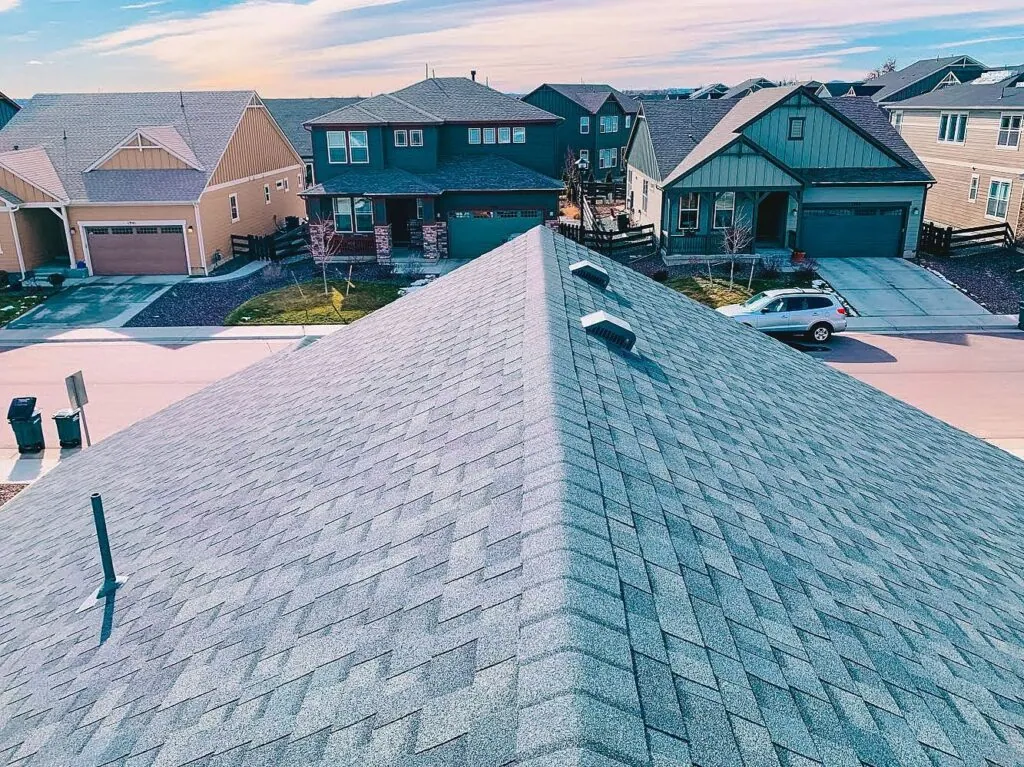
Repair versus replacement depends on impact density, shingle age, and whether the damage meets your insurance carrier's threshold. We measure hits per test square, assess remaining shingle life, and compare findings to policy language. The honest answer is that most hail events severe enough to dent metal components also fracture enough shingle mats to justify full replacement under a standard policy.
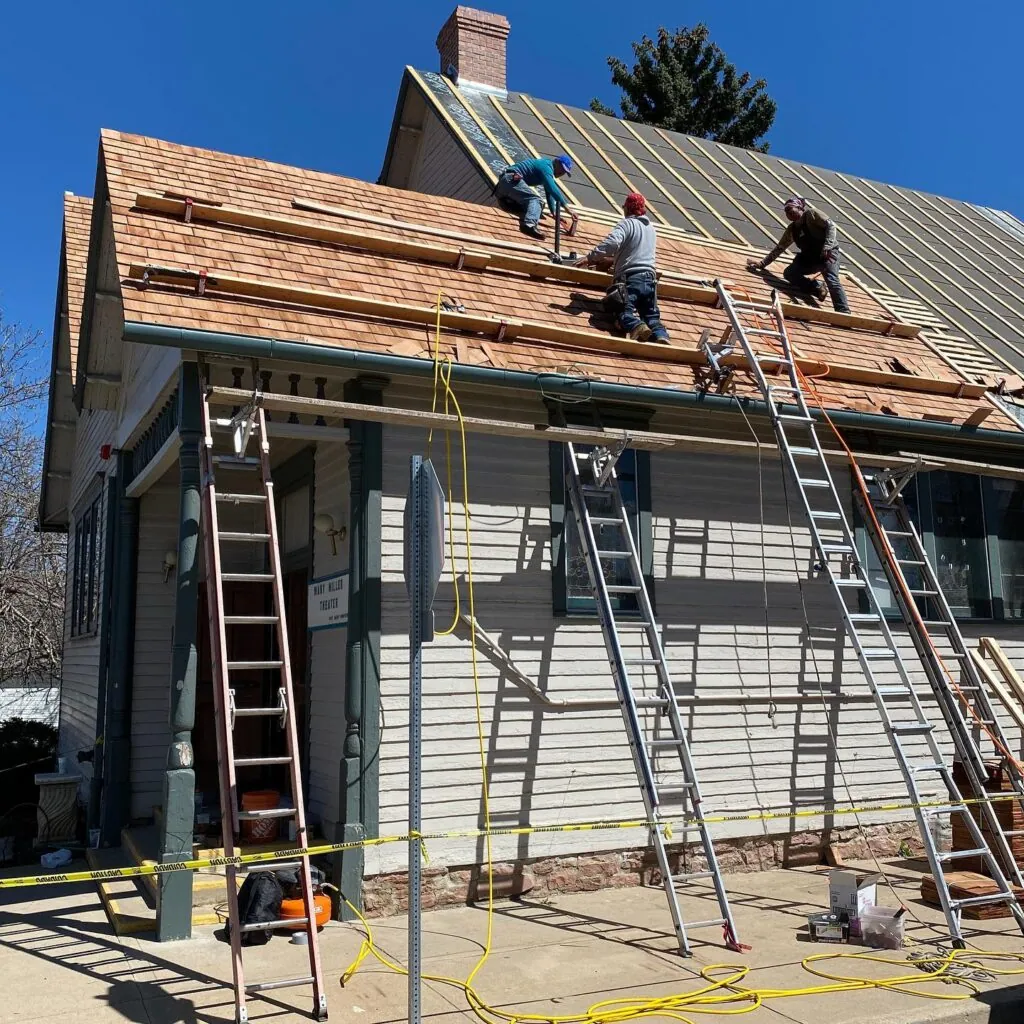
Peak To Peak Roofing serves homeowners throughout Denver and the surrounding metro area. Our team regularly works in Aurora, Littleton, Castle Pines, Parker, Brighton, Thornton, Arvada, and Erie. We schedule inspections around your availability and coordinate adjuster meetings at times that work for your claim timeline. No physical office visits required, we come to you.
We coordinate inspection timing with storm dates and adjuster availability throughout the Denver metro area, and we confirm whether Denver Community Planning and Development requires a permit for the resulting repair or replacement before work starts. You can browse everything we do across the Front Range on our Peak to Peak Roofing Denver.
Typical storm exposure across Denver, the damage patterns we document, and the impact-rated systems specified on rebuilds.
Location & Neighborhoods
Target ZIP Codes
Local Landmarks & Housing Styles
Typical Hail Damage Pattern
Storm Exposure & Rebuild Systems
Location & Neighborhoods
Target ZIP Codes
Local Landmarks & Housing Styles
Typical Hail Damage Pattern
Storm Exposure & Rebuild Systems
Location & Neighborhoods
Target ZIP Codes
Local Landmarks & Housing Styles
Typical Hail Damage Pattern
Storm Exposure & Rebuild Systems
Location & Neighborhoods
Target ZIP Codes
Local Landmarks & Housing Styles
Typical Hail Damage Pattern
Storm Exposure & Rebuild Systems
Location & Neighborhoods
Target ZIP Codes
Local Landmarks & Housing Styles
Typical Hail Damage Pattern
Storm Exposure & Rebuild Systems
Dispatched Directly From Our Denver Headquarters
Located at 4155 E Jewell Ave #1100, Denver, CO 80222. Our licensed inspectors provide zero-cost storm damage assessments and full Xactimate insurance support across every Denver ZIP code.
Same crews, same permit process, dispatched across the Front Range.

JJ Hedden
Founder & Owner
Meet The Owner
JJ Hedden founded Peak to Peak Roofing & Exteriors so Denver property owners would have a roofer who is still reachable after the truck pulls away. He came up through inspections, claims and installations, so the standards our crews work to are the ones he set on roofs himself.
After a Denver storm he still checks the test squares and impact mapping himself, because hail documentation either holds up in front of an adjuster or it does not. Nothing gets written up as storm damage unless the photos support it.
Denver storms are relentless. Get a comprehensive roof inspection today. Zero cost. Zero pressure. 100% peace of mind.




4.9/5 from happy homeowners
● Inspectors Available Today in Denver
Plus, get a free upgraded underlayment on any full replacement.
"Peak to Peak was great, they helped me with a repair on my roof. Helped me to extend the life of my roof."
- Luke Howard
Free inspection, same day answers